Whatcom Transportation Authority has restructured the bus routes serving Western Washington University this summer, replacing a tangle of six overlapping campus routes with a simplified system built around a single high-frequency backbone line, new neighborhood connections, and a dedicated campus circulator designed to handle peak ridership when fall quarter begins in September.
The changes, which took effect this summer ahead of a planned fare increase on fixed routes from $1 to $2 in September, represent the most significant redesign of WTA's campus service in years. They affect not just the roughly 16,000 students who attend Western but also residents in several Bellingham neighborhoods whose bus access was restructured as part of the same overhaul.
What Changed and Why
The old system had six overlapping routes funneling through the Western campus, a configuration that created rider confusion and operational inefficiency without delivering reliable, legible service. The new model is built around Route 190, which now serves as the primary spine connecting the campus to the broader Bellingham transit network, running every 15 minutes during peak periods with reduced frequency during low-demand summer months.
Two entirely new routes, numbered 97 and 98 and branded as the Campus Circulator, will activate when fall quarter begins to help manage the surge in ridership that hits the system when several thousand students return to campus. The circulator runs between Bill McDonald Parkway at Samish Way and Billy Frank Jr. Street at Holly Street, providing a consistent loop for students moving between Bellingham Station and campus access points.
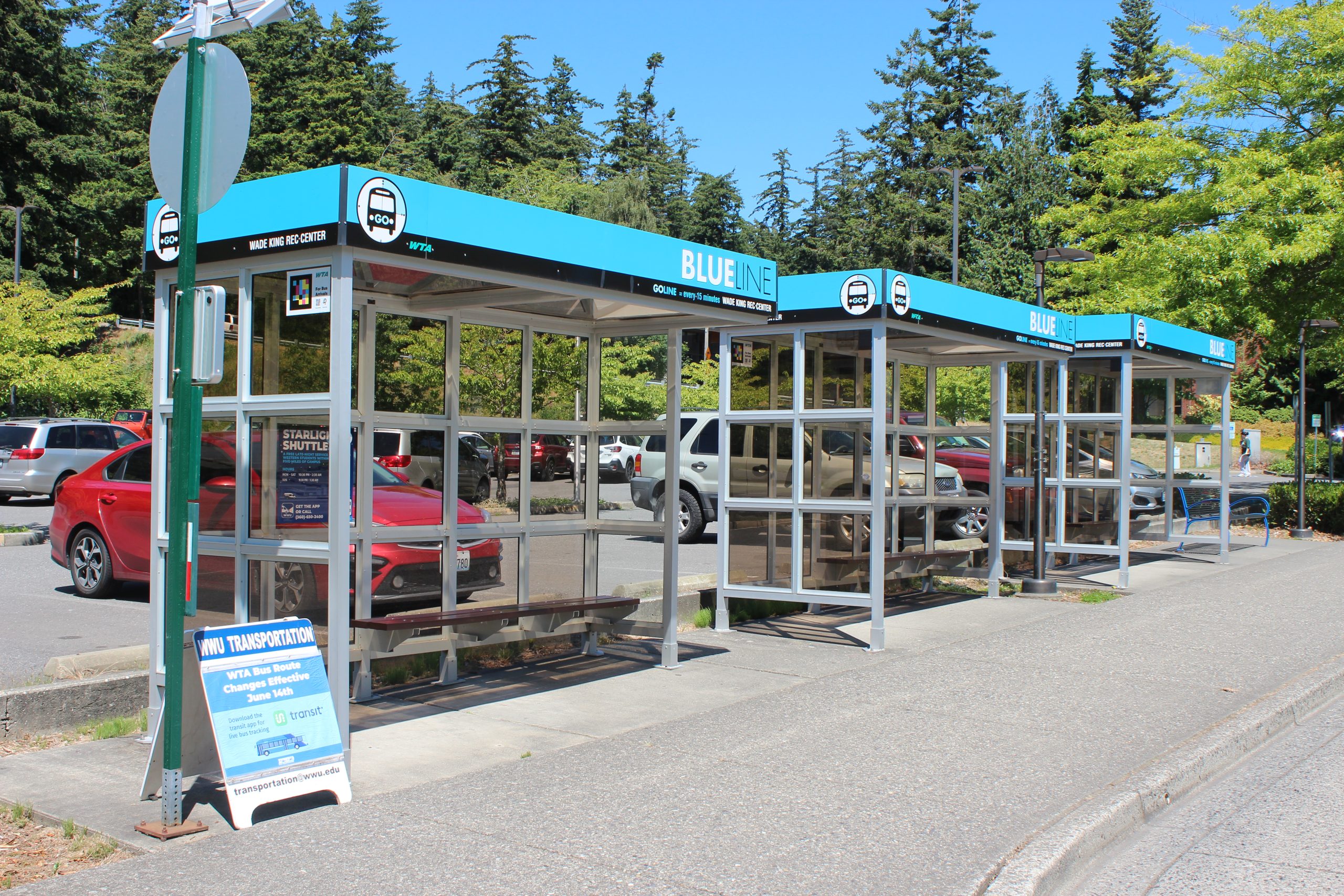
Three additional new routes were also introduced as part of the broader restructuring. Route 5 replaces the old Route 105 and provides a more direct link between downtown Bellingham and Fairhaven via Samish Way, with a transfer point to Route 190 at Bill McDonald Parkway. Route 6 connects the Puget and York neighborhoods to downtown, stripping out the campus-area segments of the old Routes 196 and 197 with transfers to Route 190 at Bellingham Station. Route 7 serves south campus and the Happy Valley neighborhood, replacing portions of the old Routes 107 and 108 and some shuttle service, with transfers at Western's Rec Center bus stop.
Route 14 also saw minor adjustments, with frequency reduced from two buses per hour to one during some periods, with Route 14S providing supplemental service during heavier demand windows.
What Students and Staff Are Saying
Western's associate director of active transportation, Andrea Reiter, described the university's relationship with WTA as foundational to how the campus functions. Western students represent about 40 percent of all WTA rides, and transit use to and from campus already exceeds the number of personal vehicle trips. "As you can imagine, we heavily rely on WTA's expertise for moving our community around," Reiter said. "The new service changes will help more off-campus students get to and from campus easily by riding the bus."
Students who were already using the system this summer offered mixed early assessments. Keilahni Pelton, who regularly uses Routes 190 and 14, described the experience so far as "about the same," noting that the old Routes 196 and 197 that passed through campus were gone under the new system. Matteo Nocco, who uses Route 7, observed a slight change in the route pattern in Happy Valley. "The 7 used to go straight past Birnam Wood, but now it does the whole loop down around Happy Valley," he said. "That adds a couple of minutes, but it's not that bad."
Kea Lani Diamond, a student who lives in Happy Valley, voiced concern about capacity. "I don't think they will help," she said of the new routes serving her neighborhood. "I'm kind of worried that the Happy Valley routes are going to be more crowded." WTA planning director Tim Wilder acknowledged that the real test comes in September when fall quarter begins and ridership spikes. It is simply too early in the summer to fully evaluate the redesign against its peak-demand performance.
The September Fare Increase
The route changes arrive as Whatcom Transportation Authority prepares to raise fixed-route bus fares from $1 to $2 on September 1, the first significant fare increase in years. For most riders, the doubling of the base fare represents a real change in the cost of daily transit use.
Western students are largely shielded from that increase, at least for now. In April, Western secured a one-year extension of its universal bus pass agreement with WTA, which provides all enrolled students with transit access as part of their fees at a negotiated rate. That agreement runs through September 2027, giving the university and WTA time to negotiate the next deal before students feel the full fare increase directly.
Reiter said the university is mindful of balancing WTA's financial needs against keeping student fees affordable. "Western wants a low price so we do not need to raise the fees for students too much, while WTA has increasing expenses running their current level of service."
For riders who are not Western students and will feel the fare increase directly, the doubling from $1 to $2 per ride adds up across a week or month of daily commuting. WTA offers reduced fare programs for qualifying low-income riders and older adults; information on those programs is available through the agency's website. Earlier coverage of the WTA fare increase and what riders need to know is available in our prior reporting on the policy change. Current route maps and schedules reflecting the 2026 service changes are posted at ridewta.com.