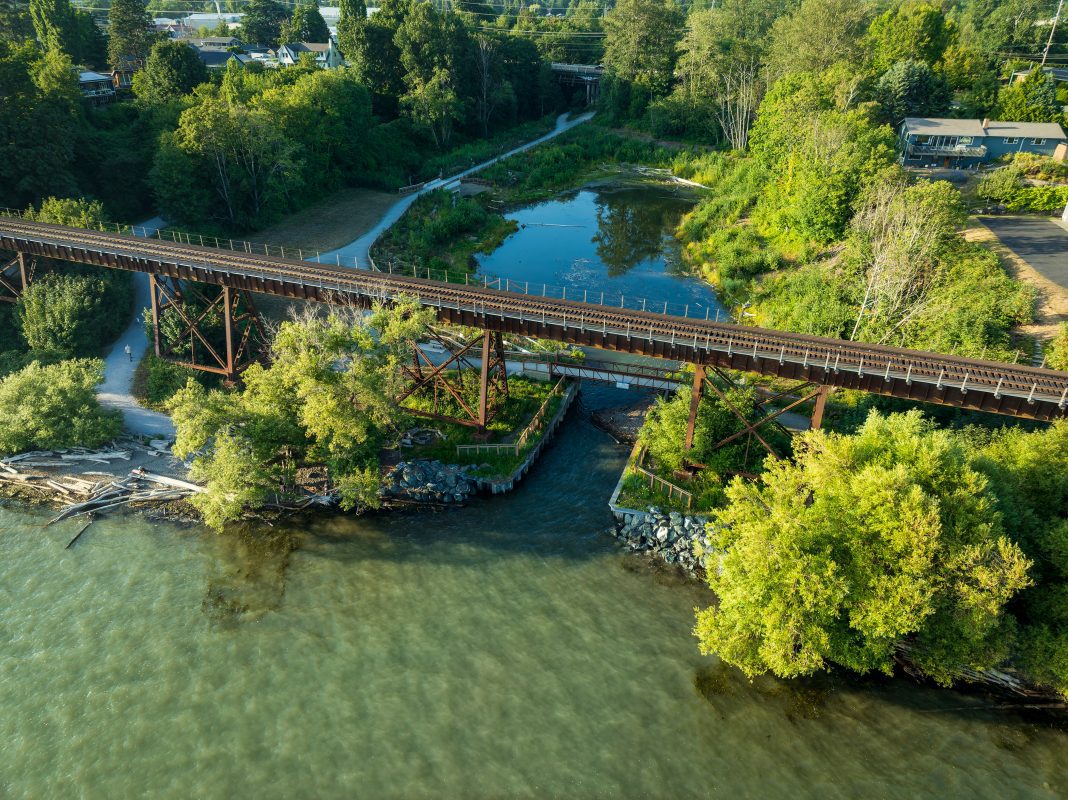
Residents walking their dogs at the Little Squalicum off-leash area or visiting the Little Squalicum Pier may notice construction activity in the creek nearby this month. It is not a new project but a continuation of one that ended in 2024: crews have returned to the site to reposition boulders and large wood in the creek channel as part of ongoing maintenance work tied to the Little Squalicum Estuary restoration, according to the City of Bellingham's August 20 Inside Bellingham newsletter.
The work is being conducted during the approved window for in-water construction, with protective measures in place to shield fish and other aquatic life from disturbance. Crews are expected to continue this phase of work through early September, after which native plantings will go in this fall to stabilize the restored streambanks through the wet season.
Why Follow-Up Restoration Work Matters
The Little Squalicum Estuary project, completed in 2024, was one of the most significant habitat restoration efforts along Bellingham's urban shoreline in recent years. Estuary habitat where freshwater streams meet Puget Sound plays an outsized role in the lifecycle of salmon and other fish species, providing shallow, productive foraging habitat for juvenile fish before they transition to saltwater. Restoring estuary function in an urban environment, where streams are often channelized, culverted, or hemmed in by impervious surfaces, is technically complex and rarely finished in a single construction phase.
The current effort to reposition boulders and large wood in the creek reflects a standard practice in modern stream restoration: monitoring conditions after initial construction and making adjustments as the channel responds to water flow, sediment movement, and seasonal changes. What looks like ordinary rock and wood placement is actually precise bioengineering, using the physical properties of streambanks to create stable habitat features for fish and wildlife without the need for ongoing mechanical intervention.
The City of Bellingham has been expanding its investment in urban stream and estuary restoration over the past decade, with projects at sites including Whatcom Creek, Squalicum Creek, and now Little Squalicum. Each project is treated as a long-term commitment rather than a one-time construction event, with city crews and contractors returning periodically to monitor conditions and adapt the restoration as needed.
Other City News This Week
The Inside Bellingham newsletter, which the city publishes weekly to keep residents informed about municipal projects and upcoming decisions, also highlighted several other developments worth noting for Bellingham residents.
New parking rules are coming to parts of the city. The city did not provide full detail in the newsletter excerpt, but changes to parking regulations in targeted areas reflect the city's ongoing effort to manage parking demand following the elimination of minimum parking requirements for new developments, a policy the City Council approved earlier this year.
The Bellingham Public Library is seeking artists for an upcoming opportunity. The library has historically served as an important venue for local and regional artists, and details on the current call are expected to be available through the library's website and social media channels. Artists interested in submitting work or applying for library exhibition space should watch for the formal announcement.
The city's "Ask Us Anything" public engagement series has concluded. The program gave Bellingham residents a structured opportunity to pose questions directly to city departments and receive substantive answers, and city officials described it as a success. Whether it becomes a recurring format will likely depend on how staff and residents evaluate its usefulness compared to other engagement tools.
What to Watch For This Fall
The Little Squalicum restoration work is expected to wrap up this fall with native plantings along the creek corridor. Native riparian plantings, typically species like red osier dogwood, willow, and native sedges, play a critical role in holding streambanks in place during winter storms, shading the creek to keep water temperatures cool for fish, and providing terrestrial habitat for birds and insects. The plantings will be the most visible element of this phase of work once in-water construction concludes in early September.
Residents interested in the city's broader environmental work, including its climate action commitments, lake health initiatives, and stormwater management programs, can find resources through the city's environment pages at cob.org. The weekly Inside Bellingham newsletter is a reliable source of advance notice on city projects, public hearings, and upcoming road or utility work, and residents can subscribe for free through the city's website.
For those who want to see the restoration work up close, the Little Squalicum off-leash area and pier are accessible from the north end of Bellingham along the waterfront trail system. Crews are working during standard construction hours, and the park and pier remain open to the public during the restoration activity. More information on Bellingham waterfront environmental projects is available in earlier local coverage. Additional details on the city's restoration timeline and native planting schedule are expected through the city's official communications channels as crews progress through the fall work window.