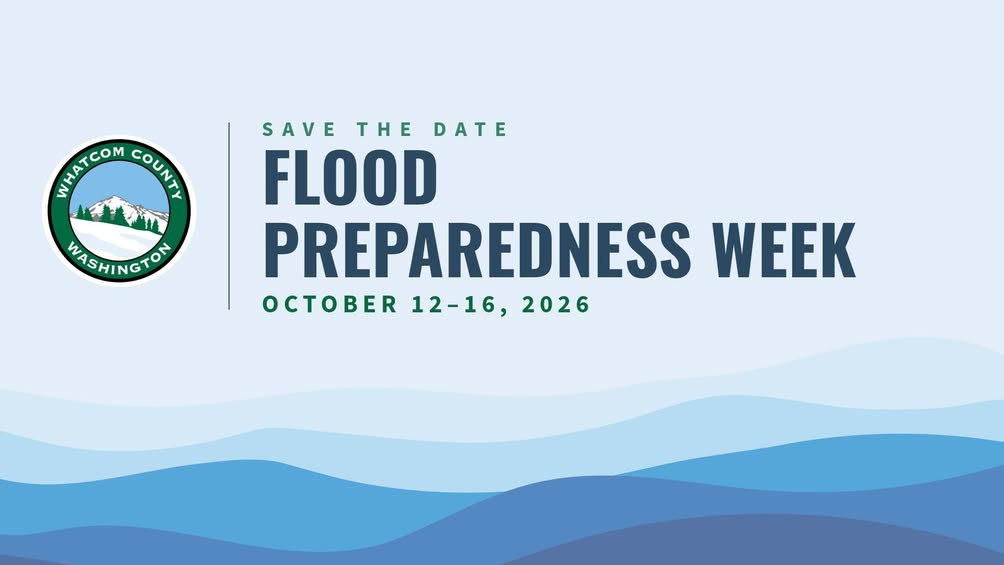
Flood season is approaching in Whatcom County, and local emergency managers are asking residents to start getting ready now. Whatcom County Public Works and the county's Division of Emergency Management have announced that Flood Preparedness Week will run October 12 through 16, offering residents a week of resources, tips, and local information to help them prepare before the rains arrive in force.
The announcement comes as the county moves out of a long dry stretch. The September 16 Emergency Management Daily Briefing noted that most of Whatcom County is currently in moderate drought, with the far eastern portions of the county experiencing extreme drought conditions. That dry ground, combined with the region's typical fall transition to heavy precipitation, can increase runoff and flood risk when the rains do arrive.
What Flood Preparedness Week Will Cover
Throughout the week of October 12-16, Whatcom County will share simple steps, local resources, and information to help residents prepare for flooding before it happens. Specific events and activities have not yet been announced, but the county has encouraged residents to watch for updates and to start gathering information now.
Residents can find flood preparedness resources, flood zone maps, and emergency planning guides at whatcomcounty.us under the flood preparedness section. That page includes information on how to sign up for WhatcomReady emergency alerts, which are the county's primary system for notifying residents about rising waters, road closures, and evacuation orders during flood events.
Signing up for WhatcomReady alerts is one of the single most important steps any Whatcom County resident can take ahead of flood season. The alert system delivers notifications by phone, text, or email and is free to use. Residents who have not yet enrolled are encouraged to do so before October.
Why Flood Risk Is Real in Whatcom County
Whatcom County has experienced two major flooding events in recent years, both of which caused significant damage to homes, roads, and farmland. County Executive Satpal Sidhu, who announced this week that he will not seek reelection in 2027, cited those two devastating floods as among the most significant challenges his administration has faced. The events underscored the importance of both infrastructure investment and individual household preparedness.
The Nooksack River and its tributaries run through the heart of the county, from the Mount Baker Wilderness down through farms and communities to Bellingham Bay. Heavy fall and winter rains, combined with snowmelt from the Cascades, can push river levels quickly. Communities in lower-lying areas along the river, including parts of the Everson, Sumas, and Nooksack areas, as well as agricultural land in the Lynden and Ferndale corridors, can be affected when the river rises.
Bellingham residents are not immune either. Neighborhoods near Whatcom Creek and low-lying areas near the bay can experience localized flooding during intense rain events, and roadway flooding on key commuter routes can disrupt travel throughout the city.
What You Can Do Before October
Emergency managers recommend that households take a few simple steps to get ready well before flood season peaks. Start by knowing your flood zone. The FEMA Flood Map Service Center allows property owners to check their flood zone designation using their address. Knowing whether your home sits in a high-risk zone helps you understand whether flood insurance makes sense and what your evacuation options might be.
Next, build or refresh a household emergency kit. Flood preparedness kits should include several days of water and non-perishable food, medications, copies of important documents stored in a waterproof container, a battery-powered or hand-crank radio, flashlights, and cash. If you rely on a basement or ground-level storage area, consider moving valuables and essential items to higher levels of your home now.
Homeowners with sump pumps should test them before the rainy season. Check that exterior drainage around your home directs water away from the foundation, and clear gutters and downspouts of leaves and debris.
If you live on a county road that has flooded in previous years, identify alternate routes now, when conditions are dry and you have time to drive them. Road closures during a flood can happen quickly, and knowing your options in advance reduces stress and improves safety.
For the latest county road conditions and closure notifications during emergencies, the Whatcom County Public Works department maintains current road status information online. More details on Flood Preparedness Week activities will be announced as October approaches. For background on how flood emergencies have unfolded in the region, recent county infrastructure decisions reflect just how seriously local leaders are taking long-term resilience planning.