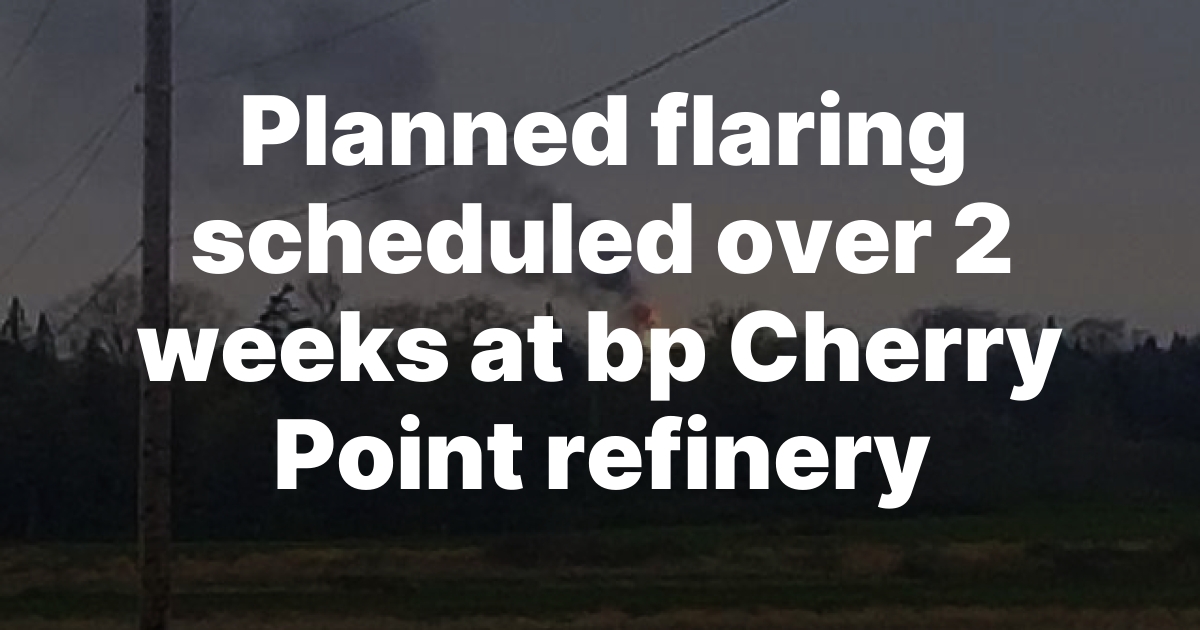
Residents near Blaine, Birch Bay, and the Cherry Point industrial area may notice visible flames at the BP Cherry Point Refinery over the coming weeks. The facility has notified Whatcom County Fire District 7 that planned maintenance activities currently underway may result in visible flaring for the next two weeks or longer, according to an announcement made Tuesday, September 15.
BP has confirmed the work is routine and scheduled, not a response to an emergency. Personnel are monitoring emissions and working to minimize flaring throughout the maintenance period, the company said. Residents who see flames or unusual light from the direction of the refinery during this period can consider it consistent with the planned work that has already been disclosed to local fire authorities.
What Flaring Is and Why It Happens
A flare is an industrial safety device designed to burn off excess gases and relieve pressure from refinery equipment during periods when those gases cannot be routed back into the production process. Flares are visible as a flame at the top of a tall structure, and they can produce both light and a low rumble or roar depending on the volume of gas being burned at a given moment. The sound and the size of the visible flame can vary significantly throughout the course of a maintenance event, which may last days or weeks depending on the complexity of the work being performed.
Temporary flaring is a standard safety mechanism used throughout the petroleum refining industry during planned maintenance shutdowns and equipment changes. When a portion of a refinery is taken offline for maintenance, engineers must manage the gases that would normally flow through that equipment. Routing those gases to a flare allows the refinery to dispose of them safely without allowing pressure to build to dangerous levels or allowing unburned hydrocarbons to escape into the atmosphere uncontrolled. The visible flame is an indicator that the safety system is functioning as designed.
According to BP, flares are used to manage excess gases during operations in order to protect workers and nearby communities by disposing of materials in a controlled manner. The company noted that personnel are actively monitoring emissions throughout the maintenance period and are working to minimize flaring to the extent operationally possible. Minimizing flaring is both a regulatory requirement and a practical goal for refineries, since the gases being burned represent product that has economic value when captured and processed rather than combusted at the flare stack.
Flaring at Cherry Point is regulated by multiple agencies. The Northwest Clean Air Agency monitors air quality and emissions from industrial facilities in Whatcom and Skagit counties, including Cherry Point, and refinery flaring events are subject to reporting requirements and emission limits. The Washington State Department of Ecology and the U.S. Environmental Protection Agency also have oversight roles over refinery emissions during flaring events. Refineries are required to report significant flaring episodes to the relevant regulatory agencies, and those agencies may conduct follow-up review depending on the duration and volume of the event.
Cherry Point's Role in Whatcom County
The BP Cherry Point Refinery is the largest oil refinery in Washington State and one of the largest private employers in Whatcom County. Located on the shore of Birch Bay near Blaine, the facility processes crude oil into gasoline, diesel, jet fuel, and other petroleum products that supply markets across the Pacific Northwest and beyond. The refinery receives crude oil primarily by tanker at its marine terminal and moves finished products by pipeline, tanker, and rail to distribution points across the region.
Cherry Point is part of the county's broader heavy industrial zone along the northern Whatcom shoreline, which also includes the former Alcoa smelter site and associated port and rail infrastructure that has served the industrial corridor for generations. The refinery has operated at the Cherry Point site for decades, and planned maintenance outages that involve some level of visible flaring occur periodically as part of normal operations. Long-term residents of the Blaine, Birch Bay, and Semiahmoo areas are generally familiar with the sight of flaring from the facility, but the two-week or longer duration of the current event makes it worth flagging for newer residents who may not have encountered it before.
Whatcom County Fire District 7 covers the Cherry Point area and maintains a close working relationship with the refinery, including a formal notification process for planned flaring events. That process allows fire personnel to be aware of expected activity so they can respond appropriately if community members call 911 to report what they are seeing as a potential fire. Having advance notice of planned flaring helps WCFD7 distinguish between a genuine emergency and a normal operational condition, which allows fire resources to remain available for actual emergencies rather than being dispatched unnecessarily to investigate planned refinery activity.
What Residents Should Know
If you see visible flames or unusual light from the Cherry Point facility in the coming weeks, it is consistent with the planned maintenance activity that has already been reported to local fire officials. There is no need to call 911 simply because you observe flaring during this maintenance window. However, if you observe anything that appears significantly different from typical flaring, such as a very large uncontrolled fire, a sudden change in flame character, or smoke that appears dark and heavy rather than the lighter combustion products typical of a flare, calling 911 remains appropriate.
BP has asked that anyone with questions or concerns about the current maintenance activity contact their community affairs staff directly at (360) 371-1500 or by email at CHPCommunityAffairs@bp.com. The company's community affairs team can provide updates on the status of the maintenance work and an expected timeline for the conclusion of visible flaring.
Air quality in Whatcom County is being monitored through this period. As of the September 16 Emergency Management Daily Briefing, air quality across the county was rated good, and there were no active advisories or watches in effect. Residents sensitive to air quality, including those with asthma, chronic obstructive pulmonary disease, or other respiratory conditions, can monitor current conditions through the Northwest Clean Air Agency website, which publishes real-time air quality index data from monitoring stations across Whatcom County. If air quality conditions change during the maintenance period, NWCAA would issue an advisory through its standard notification channels.
For background on environmental news around Bellingham's waterfront and industrial areas, read about the recent cleanup milestone at the Harris Avenue Shipyard.