One boat. That is all it takes to trigger a beach closure or shut down oyster harvesting operations in Whatcom County's marine waters. Whatcom County Public Works is reminding boaters this summer that improper sewage disposal from vessels is a direct threat to the waterways and shellfish beds that define this region, and free resources exist to help boat owners do the right thing.
The Problem With Boat Sewage in Bellingham Bay and Beyond
Recreational boating season brings thousands of vessels onto Bellingham Bay, Birch Bay, the Lummi Nation's tidelands, and the broader Salish Sea waters surrounding Whatcom County. Many of those boats carry holding tanks for sewage, but not every operator pumps those tanks out properly before the waste becomes a water quality problem.
When raw or inadequately treated sewage enters marine waters, the bacterial contamination can reach shellfish beds within hours. Oysters, clams, and other filter feeders concentrate pathogens, and even low levels of fecal coliform bacteria can cause the Washington State Department of Health to issue emergency closures of shellfish harvesting areas. Those closures affect commercial shellfish growers, tribal harvesters who have rights to those tidelands, and recreational diggers who rely on the resource.
Bellingham Bay and the waters around Lummi Island support active shellfish operations. The Lummi Nation maintains treaty-protected harvesting rights across a significant portion of the marine waters in this region. A single vessel improperly dumping its holding tank in the wrong location can contaminate an area large enough to trigger a closure that affects hundreds of people and lasts for weeks while bacteria levels drop back to safe thresholds.
Beach closures for swimming follow the same logic. County beaches, including those at Birch Bay State Park and along the Bellingham waterfront, can be posted as unsafe for swimming when bacterial counts spike. Those closures often trace back to stormwater runoff, but vessel sewage contributes to the overall contamination load in popular anchoring areas.
Where to Pump Out: Free and Low-Cost Options Across the County
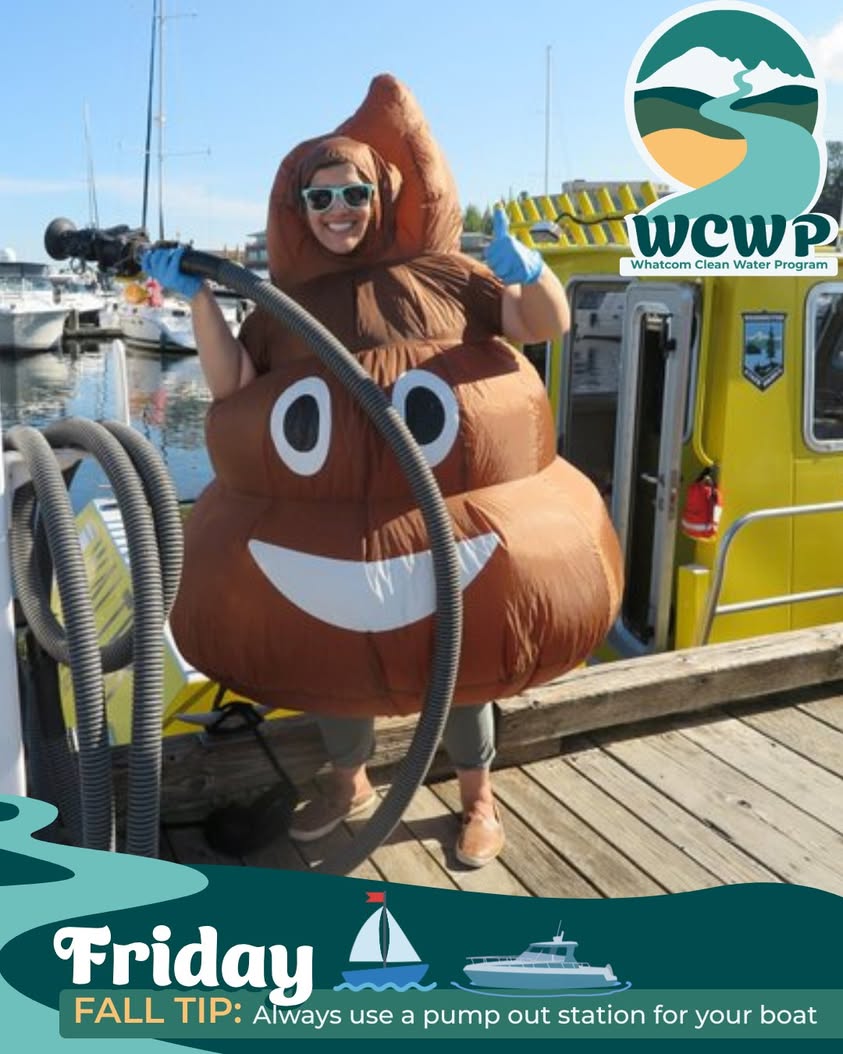
Washington State has made it straightforward for boaters to dispose of holding tank waste properly. The Pump Out Washington program maintains an interactive map of pump-out stations across the state, including locations in and around Whatcom County's marinas and boat launches.
The Port of Bellingham operates pump-out facilities at Squalicum Harbor, the largest marina in Whatcom County and home to hundreds of recreational and commercial vessels. Fairhaven Shipyard and several other marine facilities along the waterfront also offer pump-out access. Many of these stations are either free or available at nominal cost, subsidized by the state's Clean Vessel Act funds to encourage proper disposal.
Boaters planning overnight anchoring in the bay or in the waters around Lummi Island and Eliza Island should plan ahead and confirm their holding tanks are empty before heading out. Washington state law prohibits the discharge of untreated sewage within three miles of shore. In inland marine waters, including the waters of Puget Sound and the Salish Sea that surround Whatcom County, federal and state regulations prohibit any overboard discharge from vessels equipped with holding tanks.
Protecting Water Quality While Enjoying Whatcom County's Outdoors
Whatcom County Public Works offers additional guidance for boaters and outdoor recreationalists through the county's I Recreate Outdoors program, which covers best practices for minimizing environmental impact while using the county's parks, trails, waterways, and public lands.
The program addresses not just boating but camping, hiking, fishing, and other activities where human waste and litter can degrade the natural resources that residents and visitors value. It is part of a broader county effort to manage the environmental impact of growing recreational use on public lands and waters.
Water quality protection in Whatcom County sits at the intersection of public health, economic interest, and tribal treaty rights. The stakes are high enough that agencies across the region, from the county public works department to the Lummi Nation's natural resources program to Whatcom County Health and Community Services, invest significant resources in monitoring marine water quality throughout the year.
For boaters who have not yet located their nearest pump-out station, the Pump Out Washington website allows users to search by city or zip code. Squalicum Harbor's facilities are accessible from the main marina entrance off Roeder Avenue in Bellingham. The harbor master's office can provide current operating hours and any temporary closures for maintenance.
The message from Whatcom County this summer is simple: responsible boating means pumping out before getting on the water, not after the damage is done. The shellfish beds, the beaches, and the neighbors who depend on them will all be better for it.