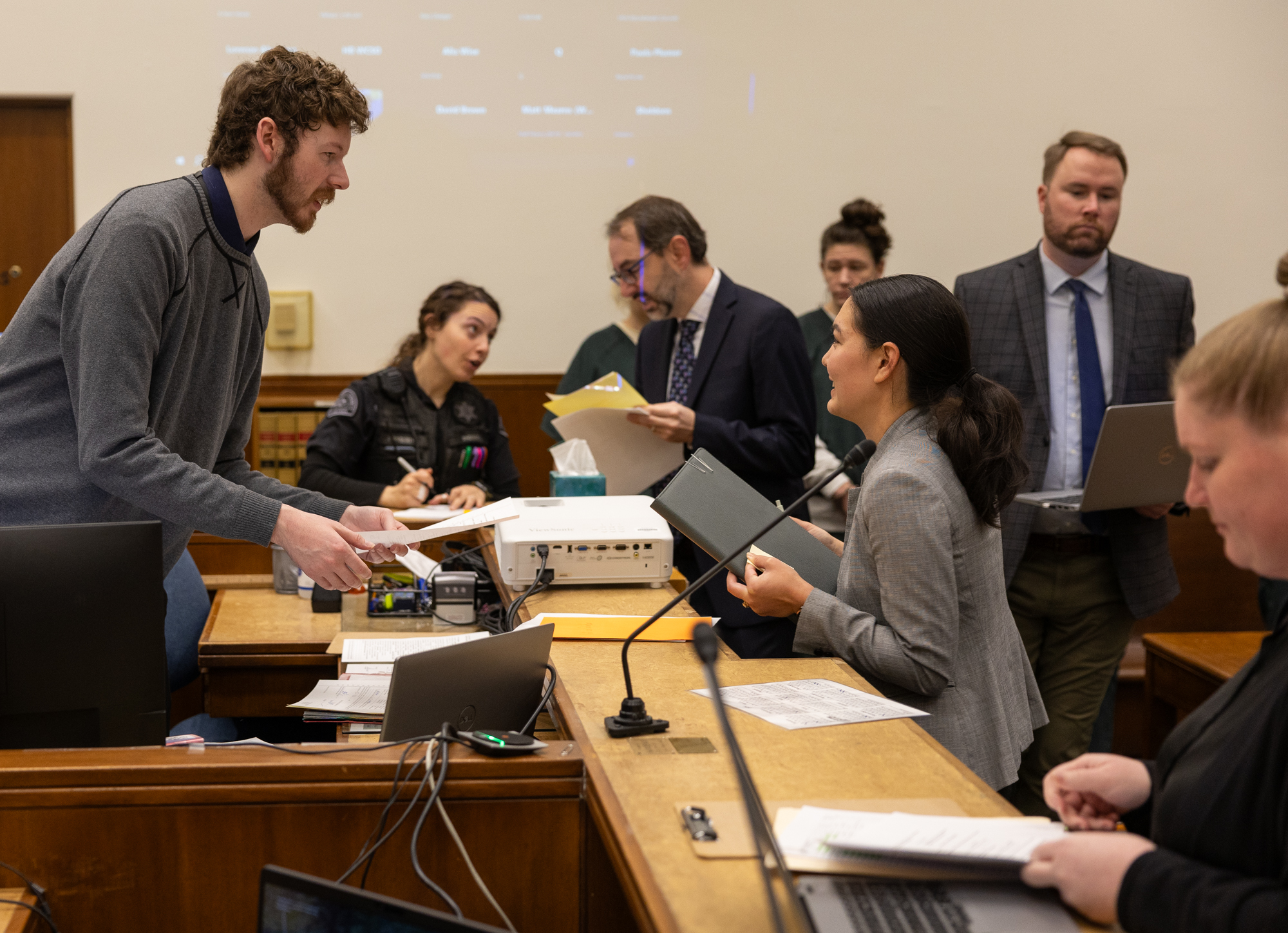
Whatcom County Prosecutor Eric Richey declined to allow an outside investigation into a human resources complaint filed against him and his second-in-command earlier this year, according to internal documents reviewed by Cascadia Daily News. The complaint alleged ethical violations and election interference during a period when multiple members of the prosecutor's own office were running against each other in a contested election for Richey's seat.
The situation puts a spotlight on a structural problem in county government: when a complaint is filed against an elected official who also controls his own office's budget, staffing, and daily operations, the normal levers of accountability may not function as intended.
The Complaint and What HR Recommended
Assistant Chief Criminal Deputy Prosecuting Attorney Dona Bracke filed a complaint with the Whatcom County HR department in early February, targeting Richey and Chief Criminal Deputy Prosecutor Erik Sigmar. Bracke was herself a candidate in the prosecutor's race at the time, running against Sigmar for the position that Richey currently holds.
In her complaint, Bracke told Cascadia Daily News she was concerned that Richey was, intentionally or not, "weaponizing" employees against her. The specific conduct alleged involved actions that she believed amounted to interference in the election by using office resources or relationships to disadvantage her campaign.
Whatcom County HR director Melissa Keeley reviewed the matter and, after seeking legal guidance, recommended obtaining outside counsel to review the complaint and recommend next steps. That recommendation reflected standard practice for situations where the subject of a complaint holds authority over the people conducting the review, and where impartiality cannot be guaranteed through internal processes alone.
How Richey Responded
When Bracke informed Richey that she had filed the complaint, he was "furious," she recalled. "He was beside himself."
The following day, Richey went directly to the HR office to tell Keeley that there would be no outside investigation, arguing that it would create "too much disruption" and that outside investigators would not fully understand the nuances of the situation. He suggested instead that he and Bracke work with a mediator, a proposal Keeley supported.
Within an hour of that conversation, Richey returned to Keeley's office to report that Bracke had agreed to simply talk it out without mediation. Bracke told CDN that she did not see the point of mediation because the reputational harm to her within the office had already occurred. She asked Richey to send an all-staff email addressing the situation, a request that reflected her interest in some form of public acknowledgment rather than a private resolution that left colleagues unaware of the complaint's existence or outcome.
The episode illustrates how little formal recourse exists when an elected official at the county level declines to follow a human resources recommendation. Unlike employees who are subject to personnel decisions made above them in a chain of command, elected officials like the county prosecutor are accountable primarily to voters, not to HR departments or county administrators.
Why This Matters for Whatcom County Residents
The Whatcom County Prosecuting Attorney's Office is one of the most consequential departments in local government. The prosecutor decides which criminal cases to pursue, how to allocate staff and resources, and how to represent the county in civil legal matters. The office employs dozens of attorneys, investigators, and support staff whose professional lives are directly affected by the culture and leadership at the top.
When candidates for that office are running against each other while still employed in the office, the potential for conflicts of interest is real and significant. Bracke's complaint described a workplace environment in which she felt the power dynamics of the office were being used in ways that affected her ability to compete fairly in a public election. Whether or not Richey acted intentionally, the HR department's recommendation of an outside review was a recognition that the situation warranted independent scrutiny.
That recommendation was blocked by the very person it was meant to scrutinize. The outcome, a private conversation in lieu of an independent investigation, left no formal record of findings and no accountability mechanism beyond whatever Bracke and others may pursue through other channels.
Multiple HR complaints involving candidates running for prosecutor have been filed since February, according to Cascadia Daily News reporting, suggesting that the tensions within the office have not been fully resolved by the mediation-free approach Richey favored. The prosecutor's race itself was heavily contested, drawing significant public interest and raising broader questions about how the office would be led going forward.
What Comes Next
The Whatcom County Council does not have direct supervisory authority over the elected prosecutor, but it does control the office's budget and could, in principle, request an independent review through other mechanisms. Whether elected officials or county administrators take any further action in response to the blocked investigation is an open question.
Residents who want to follow developments in the prosecutor's office, the HR complaint process, or related county governance issues can track reporting through local outlets or attend Whatcom County Council meetings, which are open to the public and include opportunities for public comment. The council's meeting schedule and agendas are posted on the county website.
For context on other recent Whatcom County governance stories, coverage of the county's new jail site decision offers a look at how major institutional choices in Whatcom County get made, and who has a say in them.