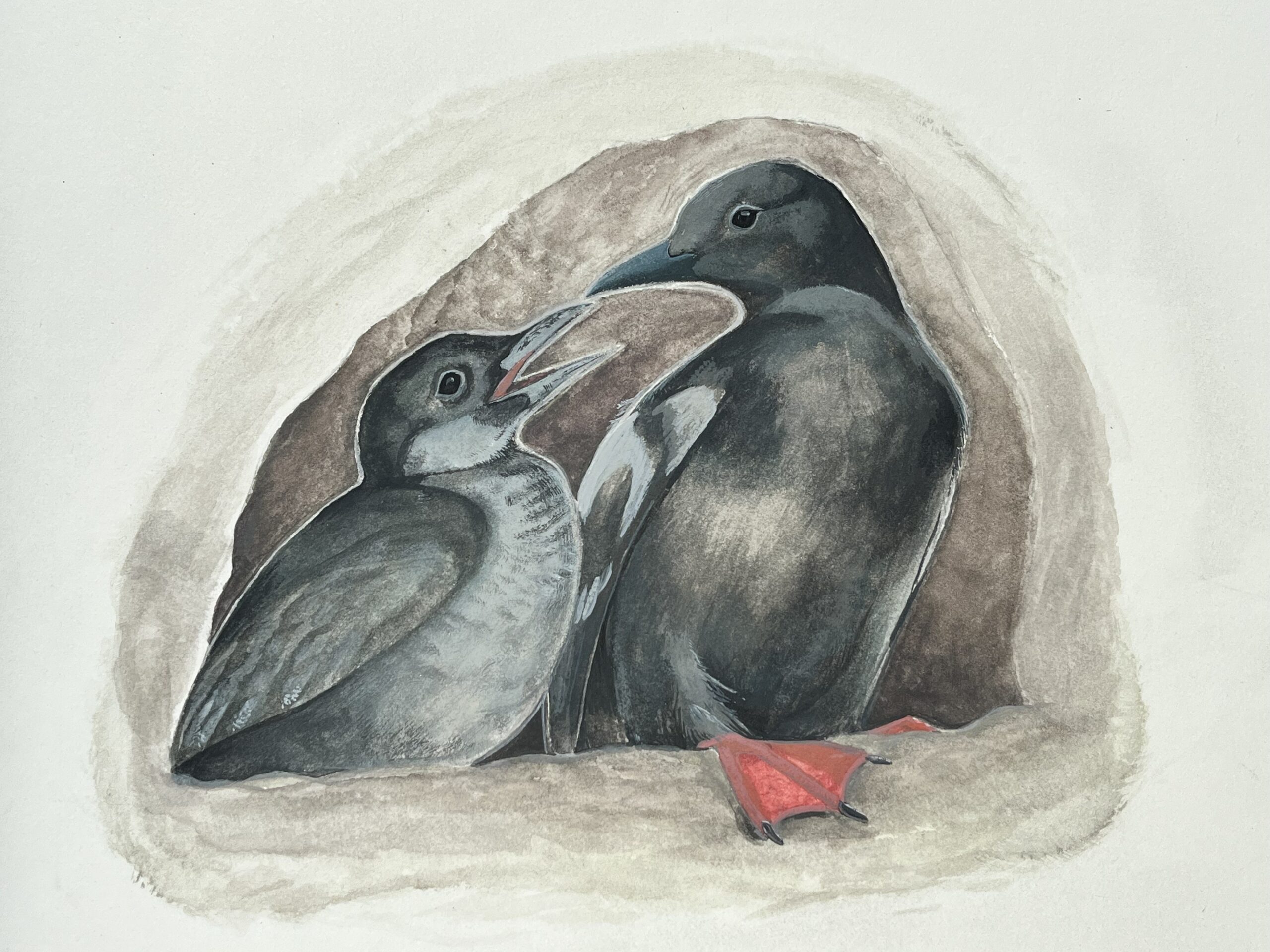
A small, red-footed seabird with striking black-and-white plumage has become an unlikely focal point for conversations about the environmental health of the Salish Sea. The pigeon guillemot, a year-round resident of the waters surrounding Whatcom County, serves as one of the clearest natural indicators scientists have for measuring how well our nearshore ecosystem is functioning. When guillemot populations decline, it is a signal that something in the food web, water quality, or habitat is slipping. When they thrive, the prognosis for the broader ecosystem tends to be more encouraging.
A recent guest commentary in Cascadia Daily News, written by local bird researcher Bean Drake, laid out the case for why residents of Bellingham and the broader Whatcom County shoreline communities should pay closer attention to this species, and how everyday people can contribute to tracking it.
What Makes the Pigeon Guillemot Worth Watching
The pigeon guillemot belongs to the alcid family, a group that also includes puffins, murres, auklets, and murrelets, all of which can be spotted in and around the Salish Sea. Unlike many seabirds that migrate long distances, pigeon guillemots stay close to shore throughout the year, making them a consistent presence along the Bellingham Bay waterfront, Lummi Island coastlines, Birch Bay, and the rocky bluffs and breakwaters scattered across northern Whatcom County.
Because they live and forage so close to human activity, their population numbers respond directly to what people do on and near the water. They dive no deeper than about 100 feet to hunt small fish and crustaceans, placing them squarely in the middle of the local food chain. That position makes them what ecologists call an indicator species: their abundance or scarcity reflects conditions throughout the ecosystem rather than just their own individual circumstances.
In 2020, data collected by the Washington Department of Fish and Wildlife and the Pigeon Guillemot Survey estimated the Puget Sound pigeon guillemot population at roughly 6,430 individuals, one of the lowest densities recorded for the species in 20 years. That figure caught the attention of researchers and conservation advocates who had been tracking steady declines linked to a range of human-caused pressures.
Threats the Birds Face Near Bellingham
Three interconnected threats drive most of the concern around pigeon guillemots in the Salish Sea region: oil spills, overfishing, and coastal development. Each one affects the birds differently but the cumulative effect is a population under sustained pressure.
Oil spills represent one of the most acute dangers. When oil coats a guillemot's feathers, it destroys the insulating and waterproofing properties the bird depends on to survive cold Pacific Northwest waters. The 1989 Exxon Valdez oil spill in Alaska provided a grim case study: pigeon guillemot mortality rates spiked, eggs and chicks failed at elevated rates, and on Naked Island in Alaska, one of the species' significant breeding colonies declined by more than 90 percent in the years following the disaster. The Salish Sea is home to active shipping lanes that see tanker and cargo traffic on a regular basis, keeping spill risk a standing concern for local wildlife managers.
Overfishing depletes the small fish and crustaceans that guillemots depend on for food. When forage fish populations drop, guillemots must spend more energy hunting and may fail to find enough calories to sustain themselves and their chicks through nesting season. The NOAA Northwest Fisheries Science Center has tracked forage fish dynamics in Salish Sea waters for years, finding that factors like ocean warming and commercial fishing pressure both contribute to periodic crashes in the small schooling fish that seabirds rely on.
Human development along the shoreline, including breakwater construction, marina expansion, and recreational boat traffic, can disturb the cliff-face and earthen burrow nesting sites that guillemots use each breeding season. The breakwater repair project at Vendovi Island, reported on earlier this summer, brought attention to exactly this kind of conflict between infrastructure maintenance and seabird habitat. Vendovi Island sits just south of Bellingham Bay and hosts a meaningful guillemot nesting colony, making the timing and methods of any construction work there a matter of genuine ecological concern.
How Whatcom County Residents Can Help Track the Birds
Drake's commentary made a specific appeal to Bellingham-area residents: citizen science monitoring of pigeon guillemots is meaningful, accessible, and genuinely needed. Unlike research requiring specialized equipment or permits, guillemot surveys typically involve systematic observation from known shoreline vantage points during the breeding season, recording counts of adults, chicks, and behavioral cues.
The Pigeon Guillemot Survey network has been coordinating volunteer monitoring efforts across the Salish Sea for years and welcomes new participants from the Whatcom County area. Volunteers typically receive training on identification and data recording, then take on regular observation shifts at assigned beach or bluff sites. The data flows into broader population trend analyses used by researchers and wildlife managers to inform conservation decisions.
Bellingham's waterfront, the bluffs near Larrabee State Park south of town, and the western shorelines of Lummi Island are all areas where guillemots have been observed regularly. Even informal records submitted through platforms like eBird contribute to the scientific understanding of where these birds are nesting and how their numbers are changing season to season.
What the Numbers Mean for the Broader Salish Sea
The pigeon guillemot's story is really the Salish Sea's story in miniature. The same water quality conditions that allow guillemots to find enough food also determine whether orca populations have enough Chinook salmon, whether shellfish beds stay healthy enough for commercial and tribal harvest, and whether Bellingham Bay beaches remain safe for swimming and recreation. Monitoring a single indicator species gives scientists and policymakers a relatively simple way to track a deeply complex system.
Residents interested in learning more about local wildlife monitoring opportunities or the health of Salish Sea habitat can find background on prior coverage of Northwest environmental issues in this look at shoreline cleanup efforts near Bellingham Bay. For the latest on pigeon guillemot research and volunteer opportunities, the Pigeon Guillemot Survey website is the best starting point for anyone ready to contribute observations from Whatcom County's shoreline this season.