Road crews will be working on two major Whatcom County routes this week, with lane closures on northbound I-5 near Ferndale starting Monday night and ongoing single-lane restrictions on Highway 9 that will escalate to a full closure in August. Commuters who regularly travel these corridors should review the schedule now to plan ahead.
I-5 Northbound Near Ferndale: Monday Night into Tuesday
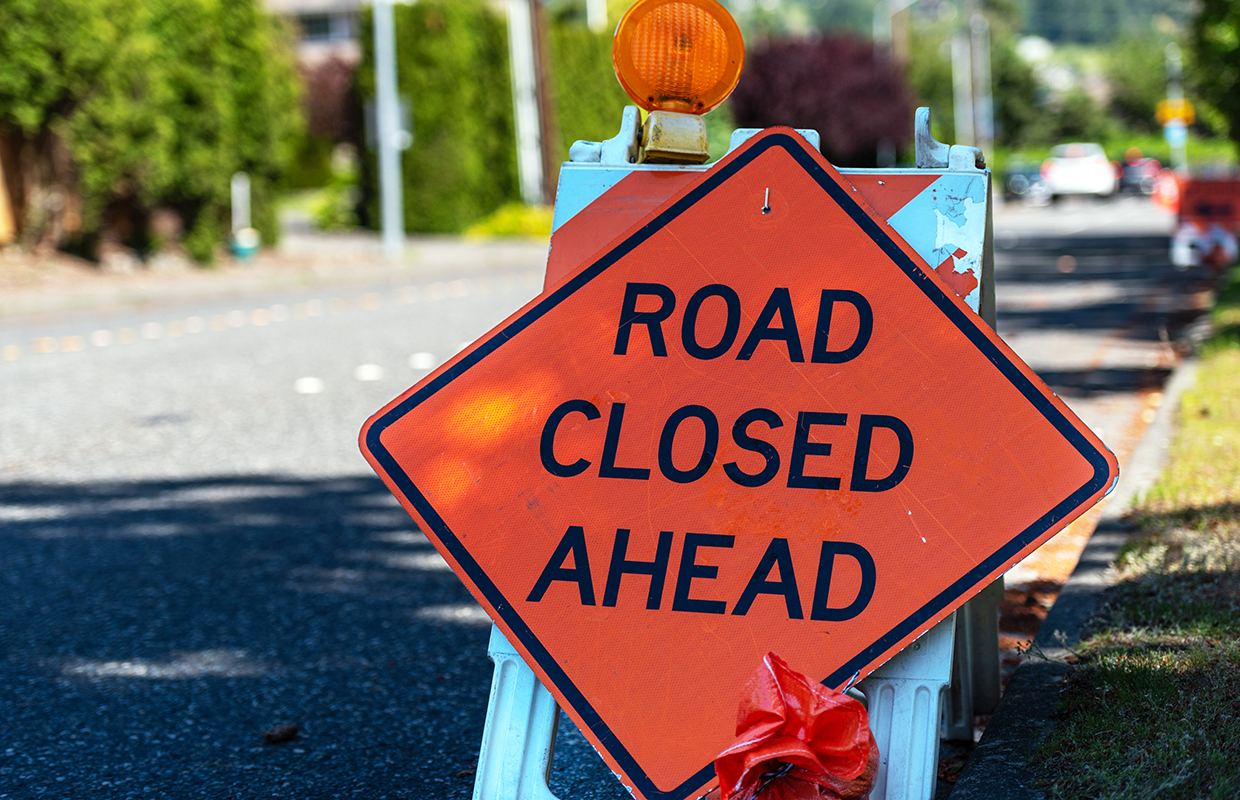
The right lane of I-5 northbound near West Smith Road in Ferndale will be closed starting at 8 p.m. Monday, July 27. Washington State Department of Transportation crews will be repairing road sensors embedded in the pavement, a routine but necessary maintenance task that keeps traffic monitoring systems accurate. Work is expected to be complete by 3 a.m. Tuesday, July 28, meaning the closure will last approximately seven hours overnight.
Road sensors embedded in the pavement of major highways serve an important function that most drivers never think about. They feed real-time traffic data into WSDOT's statewide monitoring network, informing the variable speed limit signs, ramp meters, and travel time estimates that appear on overhead message boards and in navigation apps. When sensors fail or degrade, the data they feed becomes inaccurate, which can affect traffic management decisions across a stretch of highway. Keeping those sensors in working order is maintenance that pays off in smoother traffic operations over time, even if the overnight closure it requires is a minor inconvenience for late-night travelers.
For most commuters, this overnight window minimizes disruption. Drivers traveling northbound on I-5 through Ferndale late Monday night or in the early morning hours of Tuesday should expect single-lane traffic near the West Smith Road interchange and plan for possible slowdowns if traffic volume is higher than typical for that time of night. The closure is in the northbound direction only; southbound traffic on I-5 is not affected.
Highway 9: Single-Lane Restrictions and a 42-Day Full Closure Coming in August
The more significant road work is on Highway 9, where fish passage restoration projects are creating disruptions on two separate sections of the road and will eventually force a full closure on one of them.
Near Kalloch Road north of Sedro-Woolley, Highway 9 has been reduced to one lane through Thursday, July 30. Single-lane alternating traffic will return the following Monday, August 3, and will remain in place for 42 straight days as crews complete a fish passage project in that section of the highway. A 42-day closure of a single lane on a state highway is a significant commitment that reflects the scale of the fish passage work being done. Fish passage culvert replacements typically require removing old undersized culverts that block salmon migration and installing wider, open-bottom structures that allow fish to move freely upstream. The work involves heavy equipment, significant excavation near or beneath the roadway, and careful timing to minimize impacts during critical fish migration windows.
On a separate section of Highway 9 near Mount Vernon Big Lake Road, single-lane alternating traffic is also in effect Monday through Thursday this week. That section will then be closed completely for seven days beginning August 12, as WSDOT completes a second fish passage project. A full seven-day road closure on Highway 9 will require drivers to find alternate routes for that stretch during the closure window. Highway 9 in this area connects communities along the Skagit-Whatcom border region and carries a significant volume of agricultural and commuter traffic; those who use it regularly should begin mapping alternatives now rather than discovering the closure on the first morning it is in effect.
Why Fish Passage Work Matters
Fish passage culvert replacement is one of the most impactful investments Washington state makes in salmon recovery. Hundreds of road culverts across Puget Sound watersheds have blocked fish migration for decades, preventing adult salmon from reaching spawning habitat and juvenile fish from reaching rearing grounds. A 2018 federal court order required Washington state to accelerate culvert replacement on state highways, and WSDOT has been working through the backlog of undersized and fish-blocking structures ever since. The court order arose from a case brought by 21 tribal nations whose treaty fishing rights were being effectively undermined by barriers that prevented salmon from reaching traditional fishing grounds. Replacing those culverts is not just environmental work; it is fulfillment of treaty obligations that carry the force of federal law.
The Nooksack River watershed, which drains most of Whatcom County, is home to Chinook, Coho, Chum, and Pink salmon runs, as well as steelhead trout. These fish are central to tribal fishing rights, the commercial fishing industry, and the broader ecological health of streams that feed into Bellingham Bay and the Salish Sea. Each culvert replaced on a state highway is one more barrier removed from a fish's path to spawning grounds, and the cumulative effect of hundreds of such replacements across the region is measurable population-level improvement in salmon abundance over time.
The Skagit River system, which drains the area where the Highway 9 work is being done, is one of the most productive salmon rivers in Washington and supports the largest remaining wild Chinook run in the contiguous United States outside of Alaska. Work to improve fish passage in Highway 9 culverts near Sedro-Woolley directly benefits that fishery by opening upstream habitat that has been cut off for decades.
For commuters, the short-term inconvenience of lane closures and detours is the tradeoff for work that will benefit the regional environment for decades. WSDOT updates road conditions and project status through its real-time travel information tools, which include a statewide map of active construction zones. Drivers who travel Highway 9 regularly between Sedro-Woolley and Mount Vernon should bookmark those tools and check for updates as August approaches.
The 42-day single-lane restriction starting August 3 and the full seven-day closure starting August 12 overlap, meaning that stretch of Highway 9 will face restrictions continuously from late July well into September. Residents in communities along that corridor should identify alternate routes now and factor extra travel time into their plans for the coming weeks. For the latest on other road projects affecting Whatcom County this summer, see the recent update on the Lynden roundabout project and ongoing work across the county.