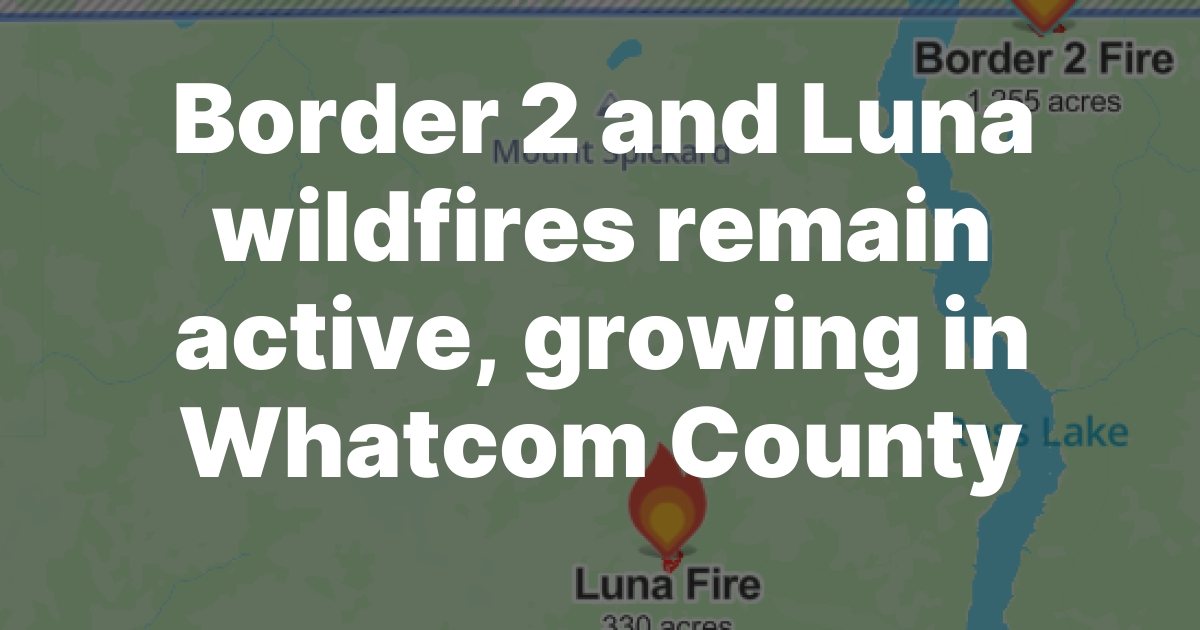
Two lightning-sparked wildfires continue to burn and grow in the remote eastern reaches of Whatcom County, prompting active suppression efforts, trail and camp closures, and a continued burn ban across the county. The Border 2 Fire and the Luna Fire are both burning within the North Cascades National Park Service Complex under full suppression management, with no containment reported as of late July.
Border 2 Fire: Size, Location, and Suppression Effort
The Border 2 Fire is burning on the northeast side of Ross Lake, about 0.8 miles from the Hozomeen area near the Canadian border. The fire was last estimated at 1,255 acres. Activity decreased on July 25 but increased again on July 26 under warmer and drier conditions. The fire has been burning since July 16, when lightning ignited it in steep, remote terrain deep within the park.
Suppression resources committed to the Hozomeen area include two Type-3 helicopters, Air Attack, four Scoopers, two Wildland Fire Modules, and one firefighting ground crew. Personnel are installing hose lay along the road system in preparation for potential defensive firefighting operations to protect structures in the area. The fact that crews are prepping for structure protection rather than aggressive fire line construction reflects the difficulty of reaching the fire in terrain that is largely inaccessible by ground. Hozomeen sits at the northern end of Ross Lake and is reachable by road only through Canada via a seasonal gravel route from Hope, British Columbia, making it one of the most logistically challenging spots in the entire park to support firefighting operations. Water-scooping aircraft working off the surface of Ross Lake offer one of the few practical tools for aerial attack in this kind of terrain, which explains why the four Scoopers committed to the fire represent such a significant portion of the suppression strategy.
The North Cascades National Park Service Complex is managing the response and providing updated information as conditions change. Area, trail, and camp closures are in effect around the Border 2 Fire for public safety. Visitors to the north Ross Lake area should expect smoke impacts and should not attempt to access closed zones. The closure boundaries are intended to keep the public clear of both active fire and the aircraft operations overhead, where low-flying tankers and helicopters create serious hazards for anyone on the ground or water below.
Luna Fire: Size and Location
The Luna Fire, which ignited on July 2, is smaller than the Border 2 but remains active. It was last estimated at 330 acres and is burning east of Big Beaver Creek and north of McMillan Creek in Whatcom County. The fire sits in mountainous terrain that is similarly difficult to access for ground crews.
Closures are in effect around the Luna Fire as well. Hikers, campers, and paddlers planning to visit the Big Beaver Creek area or McMillan Creek corridor should check current closure maps before heading out. Big Beaver Creek is one of the most celebrated backcountry paddling and hiking routes in the North Cascades, popular for its old-growth lowland forest and relatively gentle terrain compared to the surrounding peaks. The closure of that corridor during peak summer season is a significant loss for the backcountry community, but conditions in both fire areas are considered unsafe for public access. Smoke, falling snags, and the unpredictable behavior of fire in steep unroaded terrain make these closures both appropriate and necessary.
Just east of Whatcom County, the Ptarmigan Fire in Okanogan County has expanded to over 2,700 acres, indicating that the broader North Cascades region is experiencing an active fire season driven by dry conditions and lingering drought. The Washington Department of Ecology declared a drought for Whatcom County on April 8, 2026, and that designation remains in effect. Below-average snowpack on Mount Baker and the North Cascades peaks meant that streams dried earlier than normal this summer, and vegetation moisture levels across the east slopes of the range have been well below historical averages since late June.
Fire Rules, the Burn Ban, and Air Quality
Throughout the North Cascades National Park Service Complex, campfires and the burning of wood, briquettes, or any other solid fuel in fire pits, pans, or barbecue grills are prohibited. Gas or propane devices are permitted only if no flammable material is within three feet. Drones are prohibited in the fire-affected areas. The drone prohibition is significant given the popularity of recreational drone flying in spectacular mountain terrain; drones can interfere with aerial firefighting operations in ways that are both dangerous and potentially criminal under federal law.
A Stage 2 burn ban has been in effect county-wide since July 17 and remains in place until further notice, prohibiting all open burning in Whatcom County. The Washington Department of Natural Resources has set fire danger for the lowlands at High and the Cascades at Moderate to High. Air quality in most of Whatcom County was rated good on Monday morning, though some areas showed levels that could affect sensitive individuals. Smoke from the eastern fires can drift into populated lowland areas when winds shift from the east, and residents with respiratory conditions should monitor conditions closely during periods of east wind. Children, the elderly, and anyone with asthma or heart disease are considered sensitive populations for air quality purposes.
Residents and outdoor recreationists are encouraged to monitor air quality through the Whatcom County Health wildfire smoke tracker and to sign up for county emergency alerts at WhatcomReady.org for real-time notifications if conditions change. Anyone planning a trip into the Mount Baker Wilderness, the Ross Lake area, or other backcountry zones in eastern Whatcom County should verify current trail and camp status with the park service before departing. Conditions in active fire years can change quickly, and closures that are in place when you plan a trip may have expanded by the time you arrive.
The fires mark the latest chapter in what has been an active wildfire season for the North Cascades. For background on how the Border 2 Fire began and its earlier growth, see previous reporting on the North Cascades Border 2 Fire as the situation developed earlier this month.