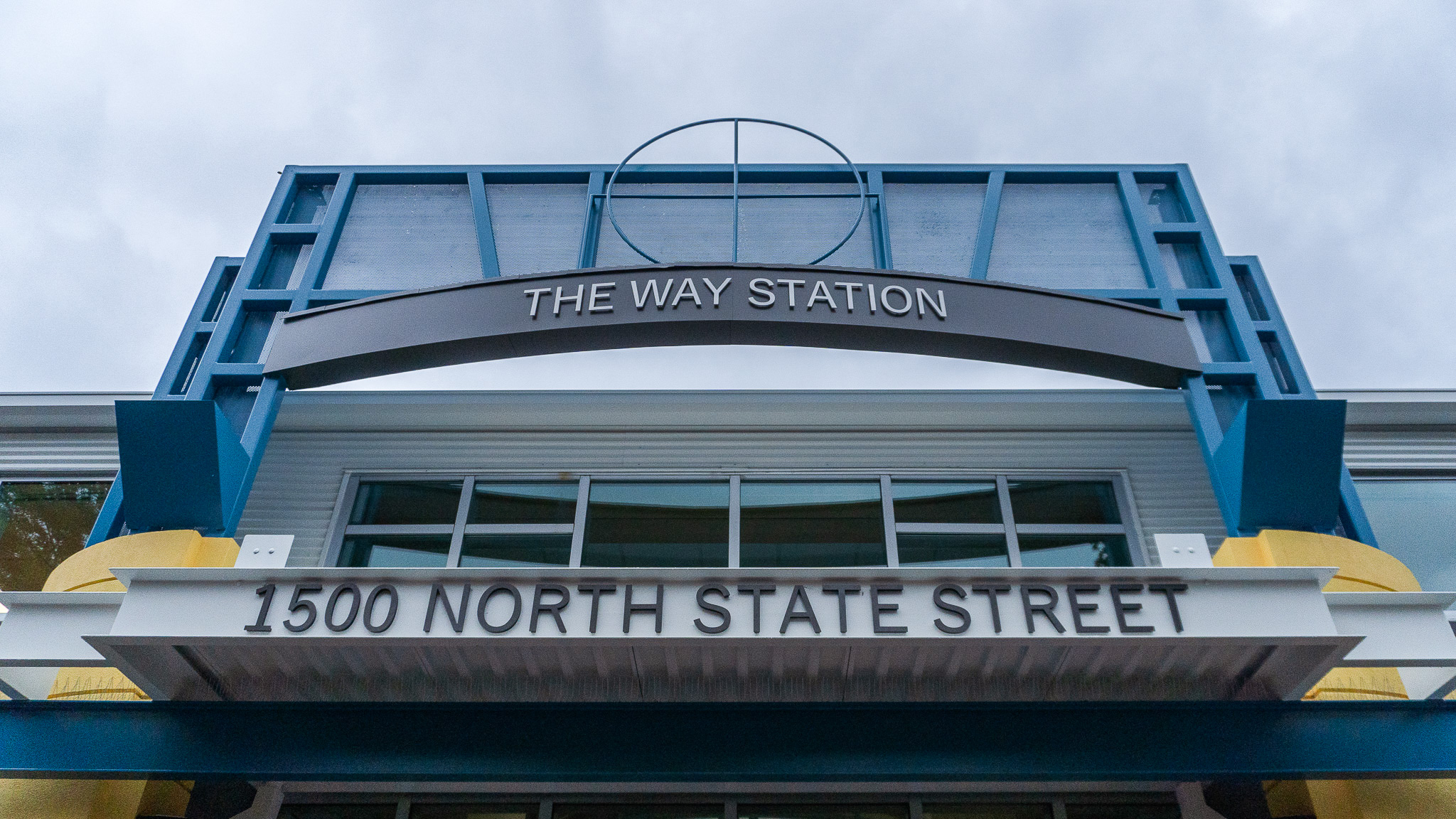
A downtown Bellingham facility designed to serve people experiencing homelessness has dramatically exceeded its first-year goals, according to an annual report released this week by Unity Care Northwest. The Way Station, which opened on North State Street in November 2024, served 1,395 people over its first twelve months, nearly double its original target of 750 and a number it reached within just the first six months of operation.
What the Way Station Offers
The Way Station opened as a low-barrier drop-in facility offering basic health care services, laundry, showers, and case management to individuals experiencing homelessness. The North State Street location is accessible from the city's core shelter and transitional housing network and sits within walking distance of much of downtown Bellingham's unsheltered population.
Within the first six months, demand so far exceeded initial projections that the facility expanded its services significantly. Staff added substance use disorder counseling and a respite center, the latter offering short-term care for people recently discharged from hospitals with no safe place to recover. Hospital discharge without a stable living situation is one of the most dangerous transitions a person can face, and the respite function addresses a gap that had long existed in Bellingham's service network.
The expansion of services within the first six months of operation, rather than after a multi-year ramp-up, reflects both the severity of unmet need in the community and the organizational capacity of Unity Care Northwest, which manages the Way Station alongside a broader network of primary care, dental, and behavioral health services in Whatcom County.
How the Facility Was Funded
The Way Station was financed using a combination of federal, state, and local funds from Whatcom County, along with community donations. The mixed funding model is typical for social service facilities of this kind but also reflects the complex and sometimes fragile nature of that funding. Federal grants can change with congressional priorities, state allocations shift with each legislative session, and local budget pressures in Whatcom County have been significant in recent years.
Unity Care NW stated in the annual report that it expects to serve even more people in year two as demand for housing and health services continues to rise. That projection is consistent with broader trends across the Pacific Northwest, where the number of people experiencing homelessness has grown faster than shelter and service capacity in most counties.
What the Numbers Mean for Bellingham
Serving 1,395 people in a single year is a significant figure for a city of roughly 92,000 residents. It represents roughly 1.5 percent of the total population accessing services at a single facility designed for people in acute need. The figure also reflects the Way Station's role as a regional resource, not just a city one. Whatcom County encompasses a large geographic area, and people experiencing homelessness in communities from Lynden to Blaine to the rural east county may make their way to Bellingham for services that do not exist closer to where they are.
The respite center function, in particular, addresses a well-documented gap that affects hospitals as much as it affects individuals. St. Joseph Medical Center and PeaceHealth facilities in Bellingham regularly discharge patients who have no stable housing to return to, and without a facility like the Way Station's respite beds, those patients often cycle back into emergency care within days. Short-term supervised recovery support is far less expensive than repeated emergency room visits, which is why hospital systems and health departments across the country have been pushing for exactly this kind of infrastructure.
What Comes Next
Unity Care NW has not released specific expansion plans for year two, but the organization's statement that it expects to serve more people suggests continued investment in staffing and capacity at the Way Station rather than any contraction. The key variables are funding stability and physical space. The North State Street location has finite capacity, and at 1,395 people per year the facility is clearly operating at high utilization.
For Bellingham residents who want to support the Way Station's work, Unity Care Northwest accepts donations through its website and periodically announces volunteer and in-kind donation needs. The Whatcom County Health and Community Services department provides additional context on the county's broader homeless services network, including shelter availability and the coordinated entry system that connects people experiencing homelessness to appropriate resources. The Way Station's first-year results make a strong case that the investment in the facility was well-placed, and that continued support will be essential as the organization heads into its second year.