Water use in Bellingham climbs steeply every summer, and this year the stakes are higher than usual. Washington State has been under a statewide drought declaration since April 2026, and the state Department of Ecology is actively discouraging excessive water use. In Bellingham, where water demand can nearly double during dry months compared to winter, the city's voluntary watering schedule is back in effect, and residents have several easy ways to conserve without sacrificing their gardens.
How Much Water Bellingham Uses in Summer
During winter months, Bellingham uses approximately 8 million gallons of water per day to serve its roughly 92,000 residents and businesses. By midsummer, that figure can climb to 14 million gallons per day, according to Torhil Ramsay, the communications and outreach coordinator at the City of Bellingham's public works department. The 6-million-gallon increase is driven almost entirely by outdoor watering: lawns, gardens, and landscaping account for the bulk of the summer spike.
Bellingham's water supply comes primarily from Lake Whatcom, the city's primary drinking water reservoir. The lake is recharged by precipitation rather than snowmelt, which distinguishes Bellingham from communities like Anacortes or Sedro-Woolley that draw on the Skagit River and depend more directly on mountain snowpack. This year's statewide drought, declared by the Washington State Department of Ecology on April 8, reflects a dismal snowpack season across the state. While Lake Whatcom itself is not yet at critically low levels, reduced precipitation across the region puts stress on the entire water system and makes conservation habits more important than in wet years.
Bellingham's Voluntary Watering Schedule
For more than 15 years, the City of Bellingham has run a voluntary summer watering schedule that assigns alternating watering days based on street address. Even-numbered addresses water on even calendar days; odd-numbered addresses water on odd days. The schedule runs through September 30. It is voluntary, not mandatory, but the city has found it reduces overwatering and overall consumption by spreading demand across days rather than concentrating it on hot weekend afternoons when everyone waters at once.
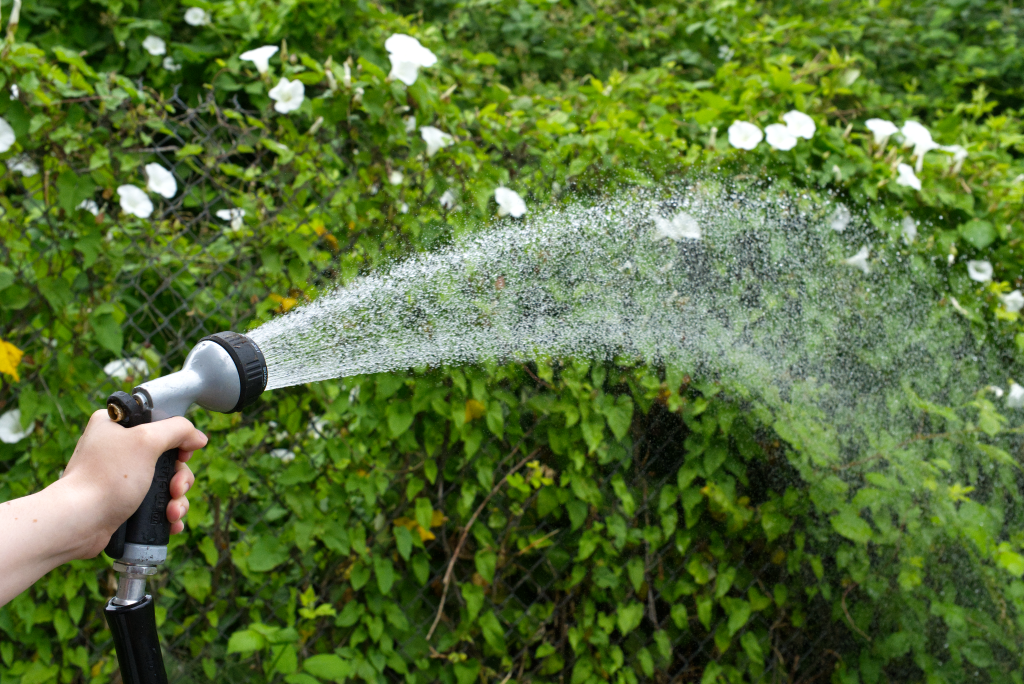
Ramsay noted that water consumption rates have been decreasing each year since the voluntary schedule was implemented, suggesting the program is having a real effect over time even without enforcement. "When residents complete our Outdoor Water Conservation Pledge, they can choose a free moisture meter, hose timer or water-efficient hose nozzle, as well as a rain gauge or hose repair kit," Ramsay said. Those items are mailed directly to households once the pledge is completed on the city's website. It is a tangible incentive for participating in something that costs nothing but a small shift in routine.
Linda Berg, a Bellingham homeowner of ten years who spoke to Salish Current for a report on regional water conservation, has let her grass go dormant each summer while maintaining her garden on the watering schedule. "We just let it go brown cause we discovered it turns green again when the rain starts," Berg said. "The plants are healthy, and I actually think it helps me be more reasonable about when I water. It's nice to feel like we're doing our part to conserve water."
The Science of Letting Grass Go Brown
The city's own guidance identifies lawn dormancy as the single most effective way to reduce outdoor water use during summer. Established lawn grass enters a natural dormancy cycle when water is withheld, turning brown but not dying. Once fall rains return, typically in September or October in Whatcom County, grass recovers and greens up without any intervention. A lawn that looks dead in August will look healthy again in November.
For residents who want to maintain some green during the summer, focused watering of garden beds and high-value plantings using drip irrigation or a hose timer is far more efficient than broadcasting water across an entire lawn with a sprinkler. Moisture meters, one of the free items available through the conservation pledge, help gardeners water only when plants actually need it rather than on a fixed schedule that can lead to overwatering even in wet weather.
How Other Whatcom County Communities Approach Water Conservation
Bellingham is the only city in the immediate area with a recurring voluntary watering schedule, but other communities take their own approaches. San Juan County residents, many of whom rely on wells and aquifers rather than a municipal system, are asked to limit irrigation during the summer months to avoid overpumping that can draw saltwater into freshwater aquifers. Summer tourism compounds the problem on the islands, where vacation visitors may not be aware of the local sensitivity around water use. San Juan County has worked with vacation rental owners to provide stewardship guides for guests.
Whatcom County residents on private wells face similar concerns: aquifers can be stressed by prolonged drought and heavy summer pumping. Once an aquifer is depleted, it cannot be refilled until the following rainy season. For households on well water in rural Whatcom County, reducing summer irrigation is not just a conservation courtesy but a practical measure to protect their own water supply.
To complete the City of Bellingham's Outdoor Water Conservation Pledge and receive free water-saving tools, or to find the city's current watering schedule, visit the City of Bellingham website. The drought declaration from the Washington State Department of Ecology includes guidance for households, businesses, and agricultural users across the state. Small changes to watering habits, made by enough people across Bellingham and Whatcom County, add up to millions of gallons saved over a long summer.