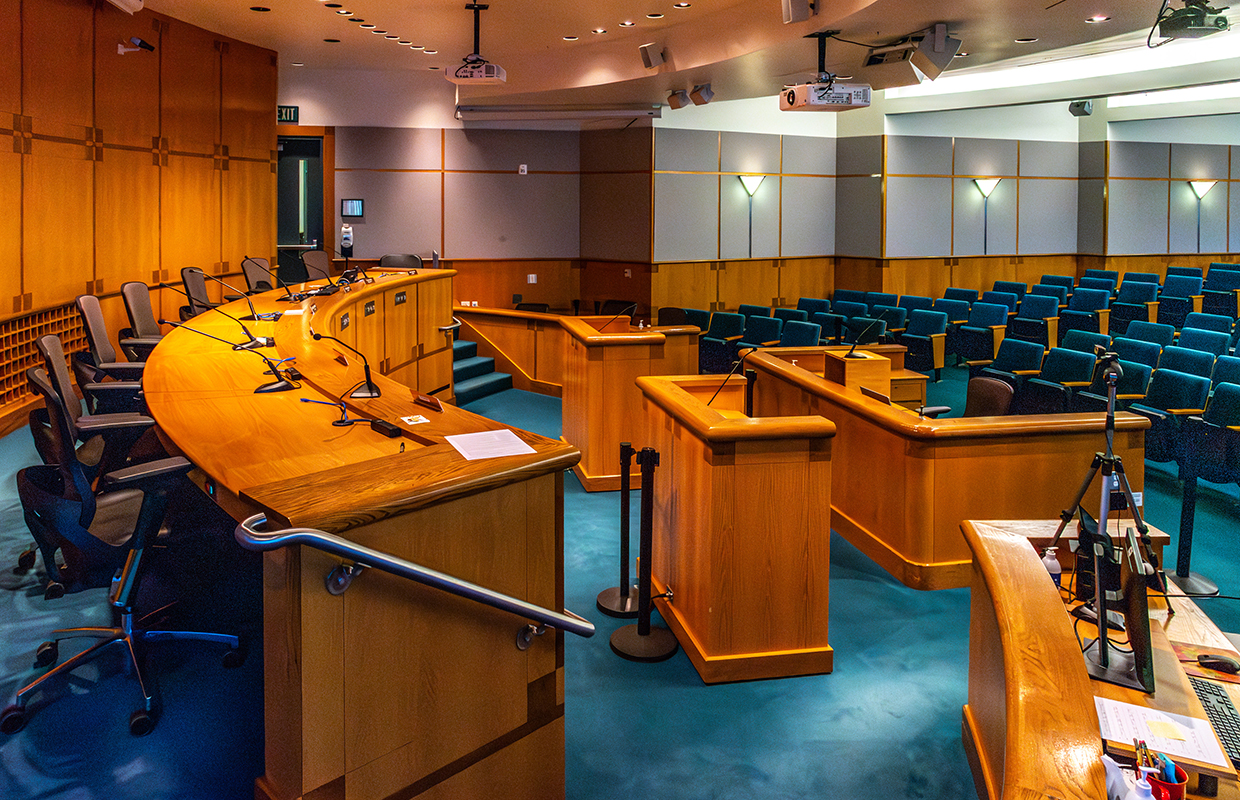
Whatcom County's biennial budget planning process reached a critical checkpoint this week, and the implications for public safety are generating significant concern. The Whatcom County Council heard department-by-department presentations Tuesday, September 22, on the executive's budget recommendations for the 2027-2028 cycle. The Sheriff's Office is facing the deepest proposed cuts, with nine positions slated for elimination, including six patrol deputies.
Sheriff Donnell Tanksley did not hold back in his address to the council. "The county has made a commitment to its residents that when they call 911, we will come. That commitment requires people, and those people are deputies," Tanksley told the council Tuesday. His remarks were a direct challenge to the budget recommendations from County Executive Satpal Sidhu's office, and they drew attention to the gap between what the sheriff believes his department needs and what the recommended budget would provide.
What the Cuts Would Mean on the Ground
Patrol deputies are the front line of law enforcement coverage in unincorporated Whatcom County. They respond to 911 calls in areas outside city limits, including rural communities in the eastern part of the county, agricultural areas near Lynden, Everson, and Sumas, and stretches of highway and back roads where no municipal police department has jurisdiction. Reducing patrol deputy staffing by six positions would reduce the number of deputies available for each shift, potentially lengthening response times and reducing the department's capacity to handle simultaneous incidents.
In rural and unincorporated areas, response time is not an abstract performance metric. It is the interval between when a family member is in danger and when a deputy arrives at the door. In areas where the nearest deputy may already be 15 or 20 minutes away under current staffing levels, further reductions compound that gap significantly. Mutual aid agreements with neighboring agencies and cities can partially offset reduced staffing during major incidents, but those agreements are not designed to cover routine daily patrol coverage, which is what gets reduced when deputy positions are eliminated.
The Whatcom County Sheriff's Office also handles specialty functions including search and rescue operations, the county jail, civil process, and school resource officers in some jurisdictions. The budget proposals as presented appear focused on patrol positions, though the full impact on ancillary functions was not detailed in the Tuesday presentations. Search and rescue operations, in particular, are a critical service in a county that includes the North Cascades, where hikers, climbers, and outdoor recreationists regularly need assistance in remote terrain. Any reduction in overall sheriff staffing creates indirect pressure on those specialty functions as well.
Whatcom County has faced budget pressures that have been building for several years, driven by rising personnel costs, inflation in materials and services, and a structural mismatch between revenue growth and expenditure growth. The 2027-2028 biennial budget is the first major budget cycle following the announcement that County Executive Sidhu will not seek reelection in 2027, adding a political dimension to decisions that will shape county services through the end of the decade. Departments and council members must balance the immediate financial constraints with the practical reality that positions eliminated in one budget cycle are often difficult and expensive to restore in subsequent cycles, particularly when it comes to sworn law enforcement positions that require specialized training and certification.
Other Departments: Mixed Picture
Not every department is facing cuts. The public defender's office would add an assistant chief deputy position and absorb five full-time equivalent employees transferring from the clerk's office under the recommended budget. That restructuring reflects a recognition that the public defender's caseload has grown in ways that require dedicated resources, and that some administrative functions currently housed in the clerk's office can be more efficiently managed within the public defender's structure.
Public works would gain an engineer dedicated to flood-related projects, and the county's flood fund would receive a $30 million allocation, a substantial commitment to infrastructure resilience in a county that has experienced repeated costly flooding along the Nooksack River watershed. The flood fund investment reflects the county's recognition that flood damage costs have outpaced the resources historically available for mitigation and response. With recent atmospheric river events causing hundreds of millions in regional damage, building dedicated financial reserves for flood projects has become a priority across multiple county government levels. The addition of a flood-dedicated engineer position signals an intention to move projects through design and permitting more quickly rather than relying solely on existing staff to absorb flood project work alongside other responsibilities.
Health and community services and the prosecutor's office have not yet presented to the council. The next round of department presentations is scheduled for Tuesday, September 29, when the council will hear from those departments as well as others that did not complete their presentations this week. Both departments are significant in terms of budget size and community impact, and their presentations may reveal additional reductions or additions that shift the overall picture of the budget's effect on county services.
What Comes Next
The budget recommendations from the executive's office are not final. They represent a starting point for council deliberation, and department heads like Sheriff Tanksley have the opportunity to make their case for modifications through direct presentations to the council, written submissions, and informal conversations with council members between now and the final vote. Historically, county councils in Washington state have made meaningful amendments to executive budget proposals, and the sheriff's forceful public statement this week appears designed to build the record that would support such an amendment in this case.
A public hearing will be held before the council takes its final vote, which is expected in November. Residents who want to weigh in on the proposed sheriff cuts or other budget decisions can attend that hearing and speak directly on the record. The Whatcom County Council meets regularly and accepts public comment at its regular meetings as well, meaning residents do not have to wait for the formal budget hearing to make their voices heard. Contact information for individual council members is available on the county website for residents who prefer to communicate directly with their elected representatives before the budget is finalized.
The budget process will continue through October and into November, with the public hearing expected to provide a formal record of community input before commissioners make final decisions. For Whatcom County residents who rely on sheriff's office services, particularly those in rural and unincorporated areas, the outcome of these deliberations will have direct consequences for the level of public safety service available to their communities in 2027 and beyond.
For more context on the county's broader financial picture, see earlier coverage of how the executive's decision not to seek reelection is shaping county government priorities heading into the next budget cycle.