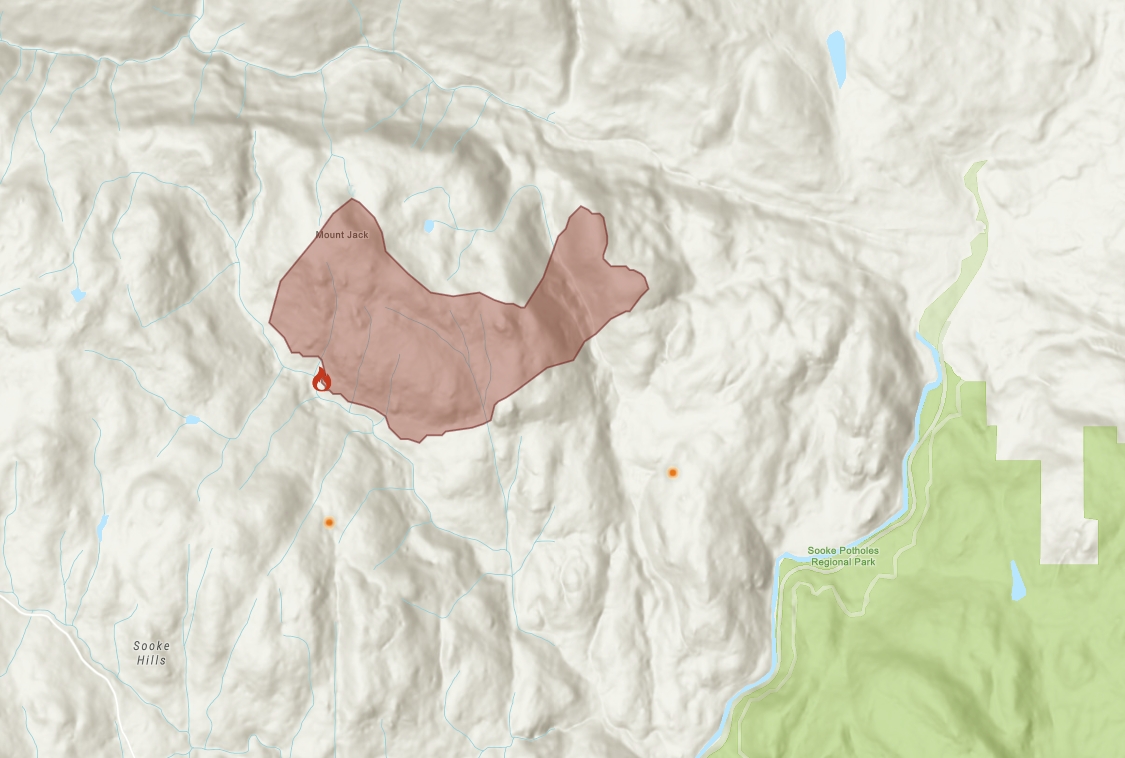
A wildfire on the southern tip of Vancouver Island sent smoke drifting into Whatcom County this week, affecting air quality across a broad swath of the region and reaching as far south as the San Juan Islands. The Northwest Clean Air Agency confirmed Wednesday that the fire, known as the Mount Jack fire, was discovered Monday, September 21, and has burned more than 500 acres in steep, remote terrain on the island's southern coast.
The fire is being managed by BC Wildfire Service, which is operating in challenging conditions given the remote and rugged terrain of the fire's location. Winds carrying smoke south and east pushed hazy conditions into Whatcom County throughout Wednesday, September 23, with residents in multiple communities reporting reduced visibility and the distinctive smell of wildfire smoke in the air.
Which Communities Were Affected
Air quality impacts were not uniform across the county. The Northwest Clean Air Agency, which monitors air quality across Whatcom and Skagit counties, reported that parts of Lynden and Maple Falls experienced air quality levels that were classified as unhealthy for sensitive groups on Wednesday. That designation applies to people with respiratory conditions like asthma, the elderly, and young children, who are advised to limit prolonged outdoor exertion when smoke reaches those concentrations. For people who fall into those sensitive categories, even moderate physical activity outdoors during periods of elevated smoke can trigger symptoms or worsen existing conditions.
Blaine, Ferndale, Glacier, and parts of the San Juan Islands saw air quality classified as moderate, a step below unhealthy for sensitive groups, meaning most healthy adults could conduct normal outdoor activities with minimal health concern. The geographic variation reflects wind patterns and the distance from the fire's smoke plume, with communities closer to the Strait of Georgia and the Canadian border generally seeing higher concentrations. Maple Falls, situated in the upper Nooksack valley to the east, likely saw elevated readings due to terrain effects that can channel and concentrate smoke plumes moving through valley corridors. Lynden, positioned in the northern lowlands close to the border, saw elevated readings consistent with its proximity to the smoke source across the Strait.
The Mount Jack fire is located on the southern portion of Vancouver Island, which sits directly west and slightly north of Whatcom County across the Strait of Juan de Fuca. When winds blow from the west or northwest, smoke from fires in that area travels directly toward the Whatcom County coastline and interior lowlands. The international border offers no barrier to air quality impacts, and fires in British Columbia have historically been among the most significant sources of smoke events affecting northwest Washington.
What to Expect in the Days Ahead
The forecast brings good news for air quality. Wet weather arriving Thursday and Friday is expected to accomplish two things: tamp down the fire's behavior on Vancouver Island and wash smoke particles out of the air over Whatcom County. Rain is consistently the most effective natural remedy for wildfire smoke events, and the timing of the incoming weather system aligns well with the community's need for relief. Even moderate rainfall is typically sufficient to bring particulate levels down from unhealthy ranges within a few hours of the precipitation beginning.
Residents should continue to check the Northwest Clean Air Agency's air quality monitoring data, which is updated regularly and available by location throughout Whatcom County. If conditions deteriorate unexpectedly before the rain arrives, the agency will issue updated advisories. The AirNow fire and smoke map, which tracks active fires and smoke plume movements across North America, provides a visual tool for understanding where smoke is coming from and where it is headed. Both resources are free to access and require no account or registration to use.
Late-Season Wildfire Risk
The Mount Jack fire is a reminder that wildfire season does not end with summer in the Pacific Northwest. September and even early October can bring dry, windy conditions that support fire spread, particularly in years when summer precipitation was below normal. Vancouver Island has seen wildfire activity in recent years that would have been unusual in prior decades, reflecting broader shifts in temperature and moisture patterns across the region. The combination of warmer summers, earlier snowmelt, and prolonged dry spells has extended the window during which fire conditions can develop across the Pacific Northwest, including on the typically moist and fog-prone coast of British Columbia.
For Whatcom County specifically, the fire threat this fall is not limited to fires starting locally. Smoke from fires in British Columbia, eastern Washington, and Oregon can affect air quality in the county regardless of whether any local fire is burning. The Mount Jack fire illustrates how quickly a fire discovered on a Sunday can affect air quality across an international border by mid-week, compressing the timeline between ignition and community impact in ways that underscore the value of real-time air quality monitoring networks like the one operated by the Northwest Clean Air Agency.
Whatcom County's own fire season preparations include coordination between the Whatcom County Fire Marshal's Office, individual fire districts, and state and federal agencies with jurisdiction in the county's forested eastern regions. The county's fire inspectors conduct regular inspections of commercial properties and schools while also responding to fire investigations on a 24-hour basis, providing a baseline of prevention and response capacity that complements the work of individual fire districts. Residents in the county's rural eastern communities, particularly those near the Mount Baker-Snoqualmie National Forest and North Cascades National Park, should maintain defensible space around their structures and stay current on local burn restrictions through the Washington Department of Natural Resources.
Residents in smoke-affected areas who have respiratory conditions are encouraged to stay indoors with windows closed during periods of elevated smoke concentration, run air purifiers with HEPA filtration if available, and avoid strenuous outdoor exercise until air quality returns to good levels. Creating a cleaner air space inside the home by running an air purifier in a frequently occupied room is particularly beneficial for children and older adults during multi-day smoke events. The AirNow website provides real-time air quality index readings for locations throughout Whatcom County and is the most reliable public source for current conditions.
As rain moves through the region Thursday and Friday, Whatcom County residents should see a significant improvement in air quality and visibility. The Mount Jack fire will likely continue to burn on Vancouver Island in some form, but wet conditions on both sides of the border should reduce its activity and limit additional smoke export into Washington state in the near term. Residents who experienced symptoms during Wednesday's elevated smoke period should consult a healthcare provider if those symptoms persist after air quality improves, as wildfire smoke exposure can sometimes trigger inflammatory responses that outlast the smoke event itself.