Fall is here, and Whatcom County farmers have a financial incentive to protect their pastures and waterways before the wet season sets in. The Whatcom Conservation District is reminding small farm operators that its Small Farm Improvement Rebate program offers up to $500 back on the purchase of temporary fencing or supporting infrastructure, a practical tool for rotating livestock off soggy ground during the rainy months ahead.
Why Temporary Fencing Matters This Time of Year
Western Washington's fall rains transform pasture fields quickly. When cattle, horses, goats, or other livestock are left on saturated ground, the damage compounds fast. Animals punch through wet soil with their hooves, compacting the earth in ways that take years to fully recover. Standing water mixes with manure, creating runoff that can carry pathogens and nutrients into nearby ditches, streams, and eventually into the waterways feeding into Bellingham Bay and the Nooksack River basin.
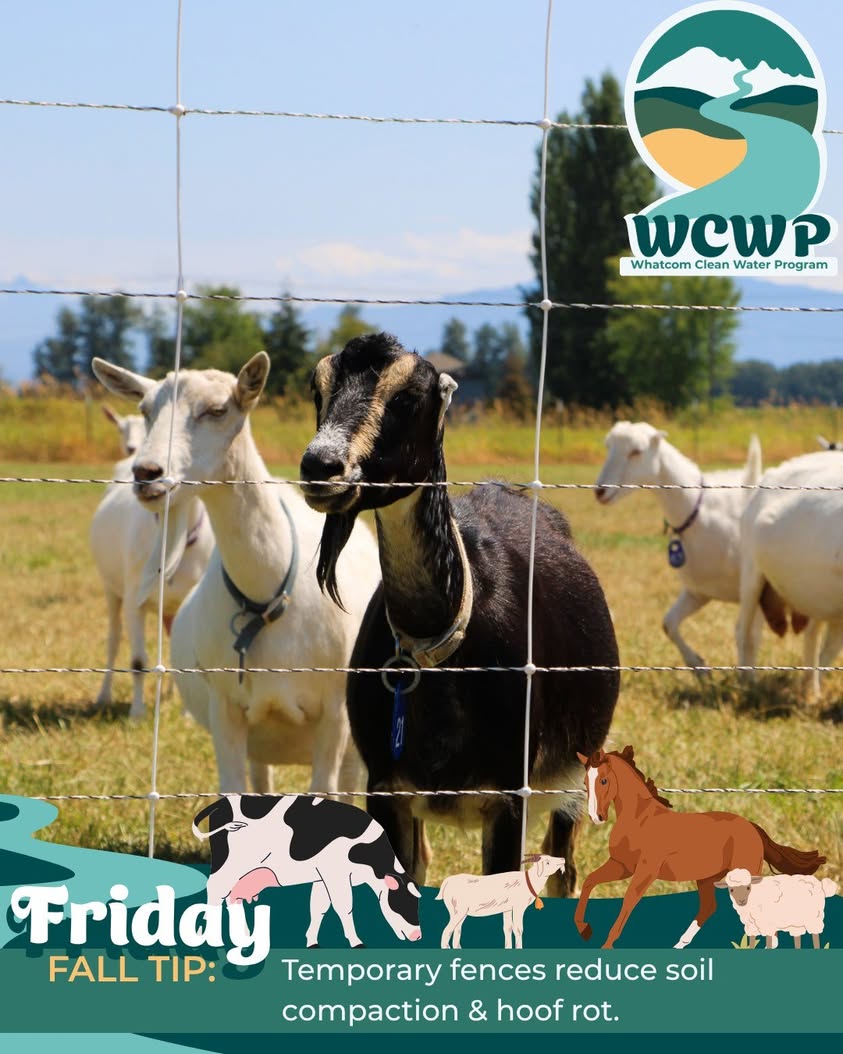
Temporary fencing gives farmers a low-cost, flexible way to subdivide pastures and rotate animals from section to section. By keeping livestock off the soggiest areas during the wettest months, farmers reduce three interrelated problems: soil compaction, hoof rot, and manure runoff. The fencing can be moved and reconfigured as conditions change, making it more versatile than permanent perimeter fencing for this kind of rotational grazing management.
Hoof rot, in particular, becomes a serious welfare and economic concern in fall. The condition thrives in wet, muddy environments, spreading between animals in a herd and causing painful lameness that reduces milk production in dairy animals and overall weight gain in beef cattle. Keeping animals on drier ground, or rotating them through managed paddocks, breaks the cycle.
What the Rebate Covers
The Small Farm Improvement Rebate program reimburses eligible Whatcom County farm operators up to $500 for the purchase of temporary fencing materials or the infrastructure that supports them. That can include electric fence posts, reels, polywire, energizers, and related components used to create rotational paddocks.
The program is part of a broader county effort to help small-scale agricultural operations implement conservation practices without bearing the full upfront cost. Temporary fencing tends to be significantly less expensive than permanent solutions, and the rebate can offset a meaningful portion of the initial outlay for a farm just getting started with rotational grazing.
Farms interested in applying should visit the Whatcom Conservation District rebate page to confirm current eligibility requirements, documentation needed for reimbursement, and any deadlines that may apply for the fall program window.
Broader Conservation Context in Whatcom County
The rebate program fits into Whatcom County's longstanding investment in agricultural best management practices. The county's farming economy, centered on the Nooksack River valley, includes dairy operations, berry farms, vegetable growers, and small livestock producers spread across communities from Lynden and Everson to Sumas and Nooksack. Many of those farms sit in the low-lying floodplain, where the relationship between farm management and water quality is direct and consequential.
County and conservation district programs targeting manure management, streamside buffers, and pasture rotation are all part of the same toolkit aimed at keeping farms productive while protecting downstream water quality for fish, shellfish growers, and drinking water sources like Lake Whatcom. The EPA offers additional guidance on managing agricultural waste and runoff that small farm operators may find useful alongside county resources.
The timing of this reminder aligns with the county-wide Stage 1 burn ban currently in effect and the seasonal transition into Whatcom County's wet season. With dry and stable weather forecast to give way to the first rains of fall, farm operators who act now on pasture rotation infrastructure will be better positioned before the ground becomes saturated.
How to Apply and Get More Information
Farm operators in Whatcom County who want to take advantage of the temporary fencing rebate should start by reviewing the full program details at the Small Farm Improvement Rebates page. The Whatcom Conservation District administers the program and can answer questions about what qualifies, how to document purchases, and when to expect reimbursement.
For those planning ahead, now is an ideal time to assess pasture conditions before the first significant rainfall and to identify which paddock areas have the poorest drainage, making them the highest priority for livestock rotation. Earlier coverage of agricultural land and green space in Whatcom County offers additional context on how farms and parks across the region manage land through the seasons.