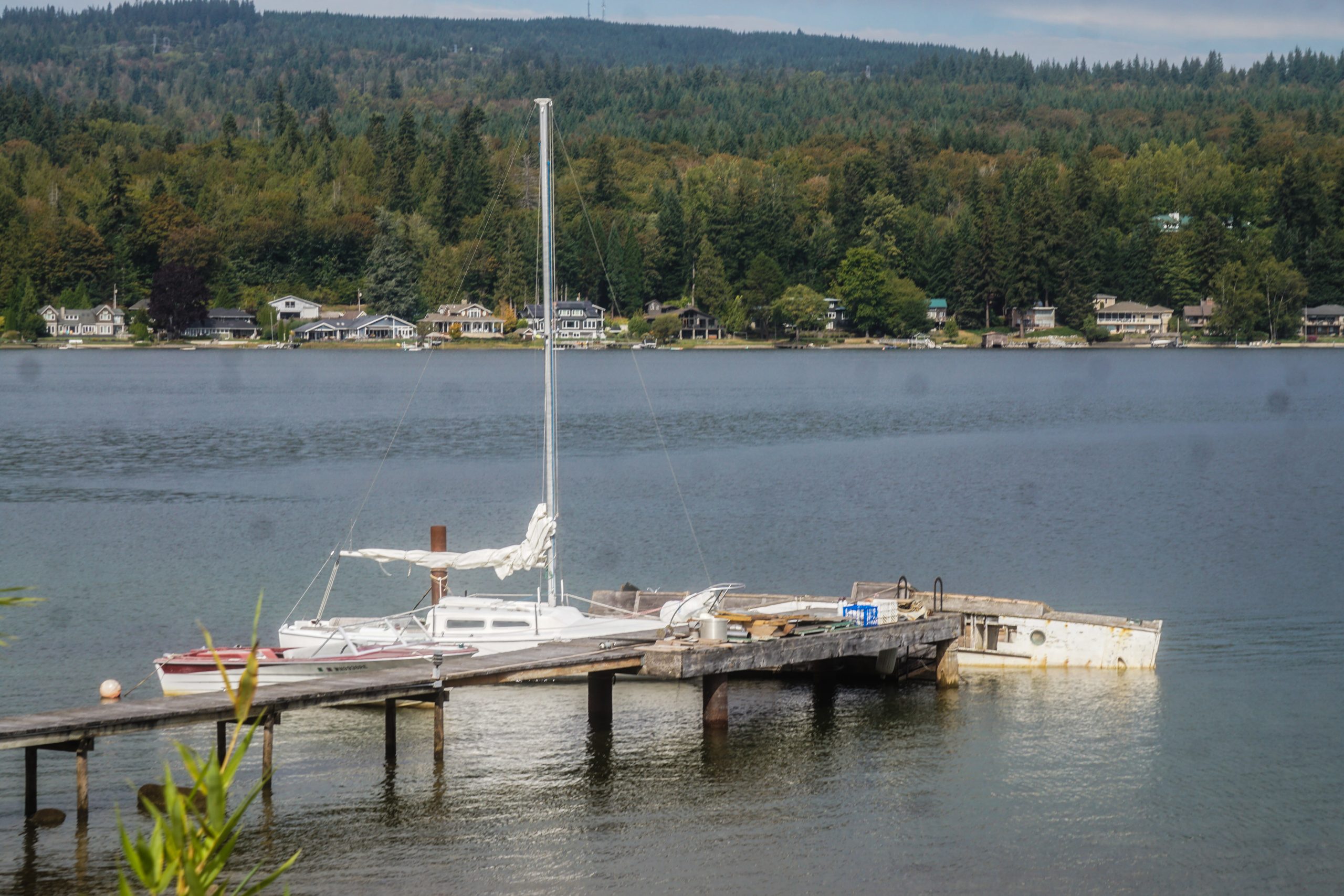
A 98-year-old wooden boat that sank in Lake Whatcom in late May has been partially removed after spending nearly four months below the waterline, raising concerns among residents about the health of Bellingham's primary drinking water source. The vessel, named Seaforth, is a 46-foot wooden boat owned by Chris Spens, who has been leading the removal effort largely on his own over the past several months.
The Seaforth sank on May 29 after a mild windstorm exposed structural damage from a boat collision four years earlier. It came to rest off Lake Whatcom Boulevard on the north side of the lake. Spens has owned the boat for 42 years and kept it docked at his lakeside residence for more than two decades, often decorating it during the holidays. He said the boat had no toxic materials remaining on board at the time of sinking, though an initial report from the Whatcom County Sheriff's Office mentioned a possible spill of less than five gallons of gas, lubricating liquid, and oil.
The Agencies Involved and the Environmental Response
When the Seaforth went down, multiple agencies were notified, including the Whatcom County Sheriff's Office, the Washington State Department of Ecology, and Whatcom County Public Works. Whatcom County Public Works provided a sorbent boom, a floating tube designed to contain and absorb oil and fuel in water, which was deployed around the wreck site as a precaution.
A spill responder from the Washington State Department of Ecology visited the scene and observed a sheen on the water's surface near the deployed boom. The cause and contents of the sheen were not confirmed. Ecology's publications and web coordinator Jasmin Adams stated that there is no further action planned from a spills response standpoint, suggesting the agency assessed the immediate contamination risk as low or already addressed by the boom.
The Washington State Department of Natural Resources is the lead agency on the case, handling it through its Derelict Vessel Removal Program, which is Washington's primary mechanism for removing abandoned or sunken vessels. However, DNR does not appear to be directly assisting Spens with the physical removal work. Instead, Spens has been doing it himself, with most of the vessel's superstructure removed and the majority of the hull cleared during Labor Day weekend.
Why Lake Whatcom Makes This Especially Sensitive
Lake Whatcom is not just a recreational lake. It is the primary drinking water source for the City of Bellingham and surrounding areas, serving hundreds of thousands of residents across the region. The lake sits in a forested watershed to the east of the city and has been on Washington State's 303(d) list of impaired water bodies since 1998, failing to meet state standards for dissolved oxygen levels.
That existing impairment means the lake's ecosystem is already under stress from historical development, stormwater runoff, and nutrient loading. Adding petroleum-based contaminants from a sunken vessel, even in small amounts, is a concern that water managers take seriously. Petroleum hydrocarbons can reduce dissolved oxygen levels further, harm aquatic organisms, and some compounds are known carcinogens. The presence of a sorbent boom at the Seaforth site reflects standard precautionary protocol for protecting a water supply from even minor hydrocarbon release.
Spens has been direct about the current state of the vessel. "There's nothing left on board whatsoever, and I have cut off and hauled away all of the superstructure," he said. "At this point in time there's no toxics." He noted that the boat sits well off the navigation channel and poses minimal hazard to boat traffic on the lake.
Derelict Vessel Removal in Washington State
The Washington State DNR Derelict Vessel Removal Program prioritizes vessels that pose the greatest immediate risks, including those in danger of sinking, obstructing navigation, or presenting significant environmental hazards. Vessels like the Seaforth, where the owner is actively engaged in removal and where the environmental risk has been assessed as minimal, may receive lower priority for state-assisted removal.
For boat owners with aging vessels at risk of sinking, DNR also operates a Vessel Turn-In Program that allows owners to surrender vessels for safe and more affordable disposal, avoiding the legal and financial complications that come with an unplanned sinking in a public waterway.
Spens says he plans to continue removing the remaining hull sections as his schedule and weather allow. He noted, with some dry humor, that the boat would not be decorated for the holidays this year. The removal is expected to continue through fall 2026, with the goal of clearing the site entirely before winter conditions make the work more difficult. Residents who live near Lake Whatcom or use the lake recreationally can report concerns about water quality or vessel-related hazards to the Whatcom County Sheriff's Office or the Washington State Department of Ecology. For more context on water quality issues in Bellingham's drinking water supply, earlier reporting has covered investments in Lake Whatcom reservoir safety and the ongoing challenges of managing the watershed. A related water quality story from this week, including an algae bloom at nearby Lake Padden, offers additional context on local freshwater health concerns in Whatcom County right now.