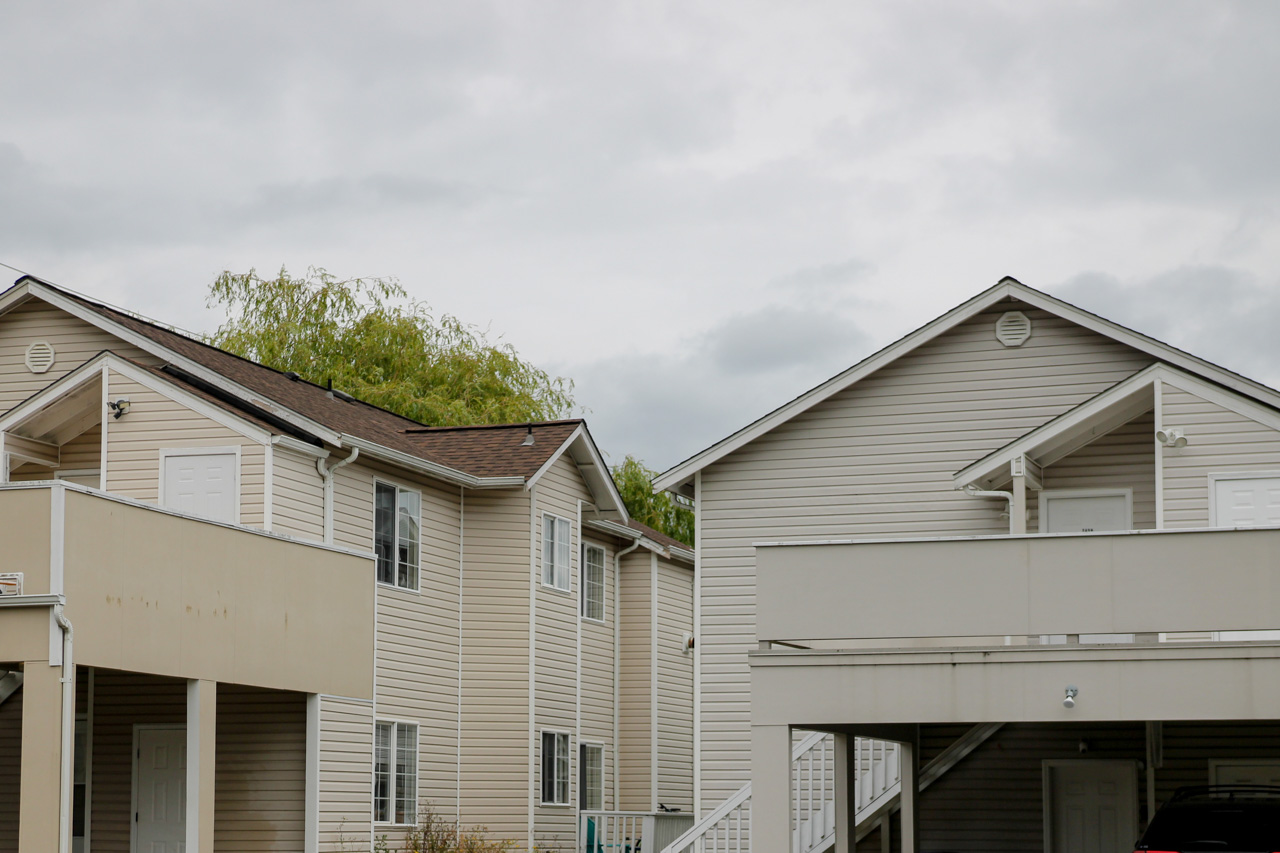
The Bellingham City Council voted unanimously on Monday, September 14, to give final approval to a new Low-Income Housing Development Incentive, an ordinance that exempts certain city-funded affordable housing projects from most of the city's zoning and land use regulations. The change is intended to make it easier and faster to build permanently affordable housing units in Bellingham, though at least one council member raised concerns about the policy's approach to income mixing.
What the Ordinance Does
The Low-Income Housing Development Incentive removes zoning and land use barriers for a specific category of housing project: developments that are funded by the city and consist entirely of permanently affordable units. To qualify for the exemption, a project must be 100 percent affordable, meaning all units in the development must be restricted to households earning less than 80 percent of the Area Median Income for Whatcom County.
Area Median Income, commonly abbreviated AMI, is a federal benchmark calculated annually by the U.S. Department of Housing and Urban Development. In Whatcom County, 80 percent AMI represents a moderate-income threshold. Households earning below that level often face significant difficulty competing in Bellingham's private rental market, where vacancy rates have historically been low and rents have increased substantially in recent years.
By exempting qualifying projects from most zoning and land use rules, the ordinance allows affordable housing developers to bypass processes that can add time, cost, and uncertainty to projects. Zoning restrictions on building height, setbacks, parking requirements, and density can all add complexity to affordable housing development, particularly on smaller or irregularly shaped lots. Removing those barriers means projects can be designed more flexibly and reviewed more quickly.
The Bellingham City Council had received a recommendation to approve the code changes from the city's planning commission in July, with the commission concluding that zoning flexibility would support increased affordable housing supply and make projects more feasible for developers working with limited budgets.
A Dissenting Voice on Mixed-Income Policy
While the vote was unanimous, Councilmember Michael Lilliquist used the occasion to register a substantive policy objection. Lilliquist called the ordinance "well-meaning and beneficial" but argued that requiring projects to be 100 percent affordable in order to receive the incentive creates a perverse outcome by discouraging mixed-income development.
"We have programs that create segregation of housing by income. And the solution to that, supported by city policy, should look for mixed-income development," Lilliquist said at the meeting. "Yet this ordinance, as written, actually penalizes having mixed-income development. It says you have to be 100% affordable, you can't mix market rate with affordable housing, you won't get any of these supports or benefits. That's a policy mistake."
Lilliquist's concern reflects a longstanding debate in affordable housing policy. Research on housing economics has generally found that mixed-income developments, which combine market-rate and affordable units in the same building or neighborhood, can produce better long-term outcomes for low-income residents than highly concentrated affordable-only projects. Mixed-income environments can reduce the stigma associated with subsidized housing, provide access to better-resourced schools and services, and create more economically integrated communities.
At the same time, mixed-income requirements can make individual projects more difficult to finance, because they blend subsidy structures with market-rate revenue in ways that complicate underwriting. Advocates for the 100-percent-affordable model argue that it allows for more predictable project financing and clearer regulatory frameworks.
What This Means for Bellingham Residents
For lower-income renters in Bellingham, the ordinance is a meaningful step toward expanding the supply of units they can afford. Housing advocates have long argued that Bellingham's production of deed-restricted affordable units has not kept pace with population growth and rising market rents. The new incentive is designed to remove at least some of the regulatory friction that has slowed affordable housing development.
For neighborhoods across Bellingham, the practical effect of the ordinance will depend on where city-funded affordable projects are proposed. Because the zoning exemption removes height, setback, and density restrictions, qualifying projects could be built at greater scale than current zoning would otherwise allow in a given location. That flexibility could be significant in higher-cost neighborhoods close to transit or employment centers, where small lot sizes and restrictive zoning have historically limited affordable housing production.
The City of Bellingham's housing programs page provides more detail on existing funding mechanisms and ongoing affordable housing initiatives. Residents interested in how the new ordinance will be applied in practice should watch for future city council discussions on specific development projects that seek to use the incentive.
For broader context on Bellingham's housing and development landscape, including related policy decisions from recent council sessions, earlier coverage of the city's new Urban Transformation Strategist role highlights how Mayor Lund's administration is approaching the intersection of economic development and community needs this fall. Details on other local housing and infrastructure decisions are available through past coverage of major Whatcom County capital projects that reflect the scale of public investment decisions shaping the region.