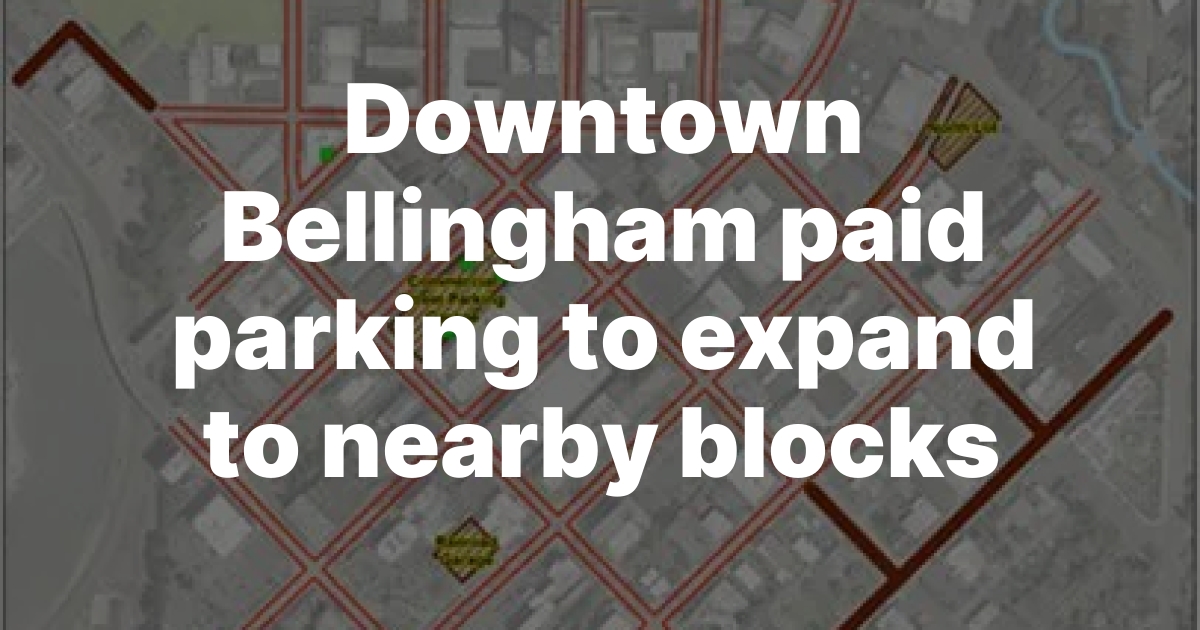
More blocks in downtown Bellingham will transition to metered parking beginning the week of September 14, 2026, the City of Bellingham announced. The change affects time-limited parking zones in several parts of the core downtown area, converting stalls that already had posted time limits into paid metered spaces. Marked stalls and parking meters will be installed over the next several weeks as the rollout proceeds block by block.
Which Streets Are Affected
The expansion covers several specific stretches of downtown streets. According to information from the City of Bellingham and reported by local news outlets, the following locations are included in the transition:
W Holly Street from Champion to Central; Central Street from W Holly to the end of the road; Prospect Street between Central and Lottie; Grand Avenue from Lottie to Girard; E Chestnut Street between N State and N Forest; N Forest Street from E Holly to York; Magnolia Street from N Forest to N State; and E Champion Street from N Forest to N State.
These areas sit primarily in the blocks surrounding downtown's commercial core, extending toward the edges of the central business district where time-limited free parking currently exists. Many of these blocks have been popular with commuters who work downtown and prefer to park for free in a timed zone rather than pay for a garage, then move their car at the posted time limit. Once meters are installed, that strategy disappears and drivers will need to pay for the time they actually use or find a garage or lot with different pricing structures.
The transition is expected to affect commuters who park in these areas for work, shoppers visiting downtown businesses, and residents of nearby neighborhoods who use street parking regularly. Because the rollout occurs over several weeks rather than all at once, individual blocks may shift to metered status at different times during September and into October. Drivers should watch for new signage and meter equipment as it appears on their regular routes.
Where the Revenue Goes
City officials have emphasized that revenue generated by the new meters will be reinvested into downtown businesses and the programs that support them. A portion of the proceeds is directed to the Downtown Bellingham Partnership, the nonprofit organization that manages downtown improvement and promotion programs. The partnership funds streetscape maintenance, business development assistance, events, and marketing efforts that benefit the commercial district as a whole. In practical terms, this means some of the money paid at a meter on N Forest Street could end up funding a downtown event, a clean-up crew, or a facade improvement grant for a nearby business.
The model of using parking revenue to fund downtown improvement programs is common in mid-sized cities and is generally supported by business improvement districts. The argument is that managed parking, even when it charges drivers, improves turnover and availability, making it easier for customers to find spots near businesses rather than circling blocks looking for the one free space that has not been claimed since 7 a.m. by a downtown employee. Advocates say it also funds the kind of visible improvements and programming that make downtowns more attractive destinations, which can offset any friction created by the shift from free to paid parking.
Critics of parking meter expansions typically argue that any added cost to visiting downtown will discourage some shoppers, particularly those with modest incomes or those who are accustomed to free parking and may choose to patronize suburban shopping areas instead. Whether paid parking helps or hurts foot traffic in the short term tends to depend on how well the transition is managed, how the new payment systems work in practice, and whether drivers adapt quickly to the new normal. Downtown Bellingham has seen significant investment and change in recent years, with new mixed-use development along the waterfront and on the north end of the commercial core. It has also faced challenges, including a number of restaurant and bar closures announced earlier this fall, making the timing of additional parking costs a sensitive issue for some business owners.
What to Expect During Installation
The City of Bellingham says meter installation and stall marking will occur over several weeks rather than all at once, so individual blocks may convert at different times during September and into October. During the installation period, drivers may encounter some blocks that are metered and others nearby that have not yet transitioned. Reading posted signage carefully on each block is essential during this interim phase to avoid citations for misunderstanding which rules apply where. The city typically posts updated parking maps and meter information on its website as the rollout progresses.
For anyone who currently relies on extended free parking in the affected zones, now is a good time to identify alternative options. The city operates several parking garages in the downtown core that may offer better rates for all-day parking than street meters, particularly for workers who need to park for six or more hours. Garages on Lottie Street and near the downtown transit center are worth evaluating. The city's parking page has information on garage locations, rates, and any monthly permit programs available. Monthly permits, when available, typically offer a significantly lower per-day cost than paying by the hour at a street meter.
Questions about the specific timeline for individual blocks or the meter program generally can be directed to the City of Bellingham's Public Works department. For a related look at how downtown Bellingham's business environment is evolving this fall, recent reporting on downtown closures provides useful context for residents tracking changes in the neighborhood.