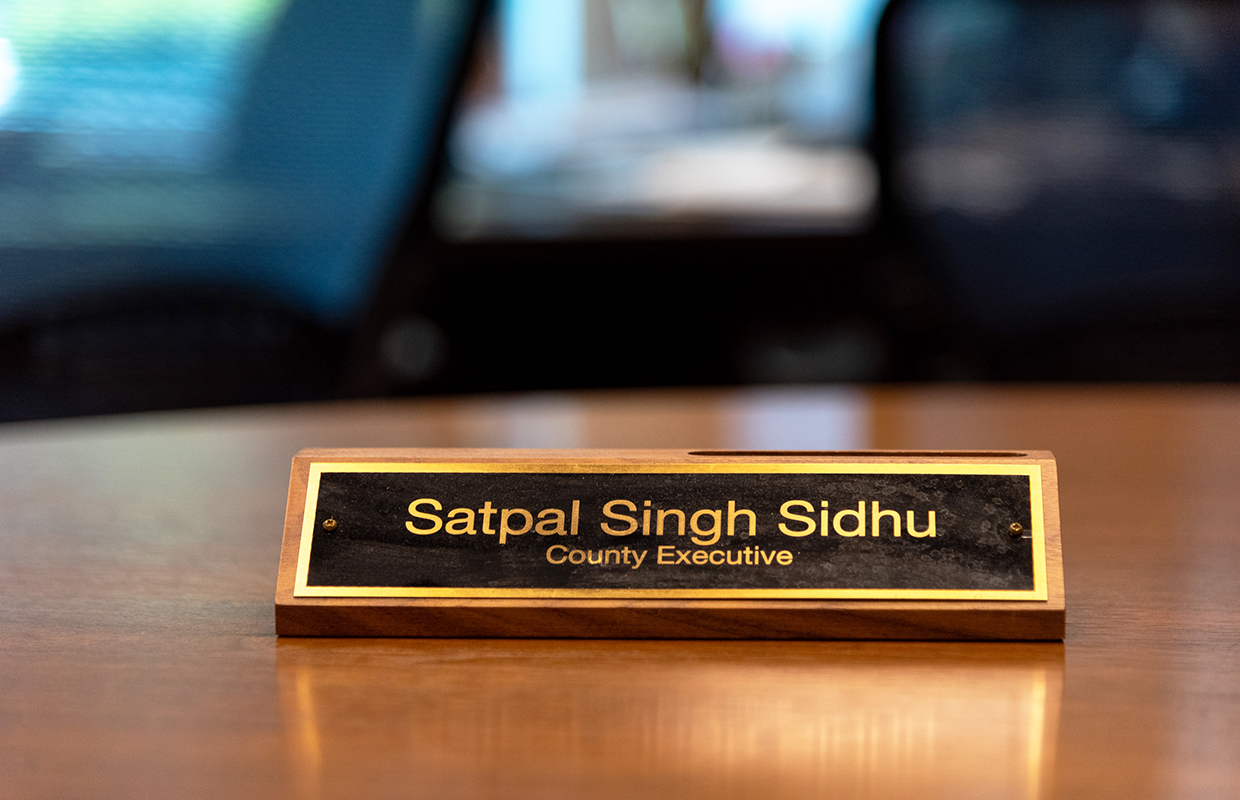
Whatcom County Executive Satpal Sidhu presented his budget recommendations for the 2027-28 biennium to the Whatcom County Council on Tuesday, September 1, proposing to eliminate 35 full-time positions, reduce department budgets, and restructure county operations to close a projected $14 million shortfall by 2028. The plan would generate roughly $10 million in savings over the biennium through restructuring, with $5 million coming from the position cuts and contract reductions alone.
What Gets Cut and What Gets Protected
The proposed cuts would reach across all county departments with four exceptions: public works, the public defender's office, the superior court clerk, and the Washington State University Extension Service. In a notable departure from across-the-board reductions, Sidhu's plan actually adds one new position to the public defender's office, which he said needs additional staffing to meet the demands placed on it by the local court system.
The court clerk's office is also being recommended for maintained or increased support, with Sidhu arguing that the office needs to provide more resources to the local court system based on demonstrated need. The WSU Extension Service, which provides agricultural education, nutrition programs, and 4-H activities across Whatcom County, similarly escapes cuts, a signal that the county values its rural outreach functions even as other services shrink.
Health department funding faces a specific reduction of $1.3 million tied to the loss of federal dollars that have been withdrawn from state and local health programs. That cut is framed as an unavoidable consequence of federal funding decisions rather than a local policy choice. Sidhu's plan would maintain the full budget for the Whatcom County Jail Behavioral Care Center, which provides mental health and substance use services to people in custody and has been a priority investment for the county in recent years.
The Revenue Side: A Ferry Levy and More
Sidhu's budget is not purely a cuts document. The executive is also exploring paths to new revenue, the most concrete of which is the implementation of a ferry district levy approved by the Whatcom County Council in July. That levy takes financial pressure off the county road fund by creating a dedicated revenue stream for the Lummi Island ferry operation, and it also generates funds toward a new ferry vessel to replace the aging Whatcom Chief.
The Lummi Island ferry is one of the county's most visible and politically sensitive public services. The island community of roughly 900 permanent residents depends on the ferry as their only year-round vehicle connection to the mainland. Funding the ferry through a district levy rather than the general road fund is a structural change that insulates the service from the same budget pressures affecting other county departments.
Additional revenue options are being explored, though Sidhu's office did not provide specifics on all of them in this initial presentation. The council will receive more detail on the revenue side of the equation as budget discussions continue through the fall.
Context: How the County Got Here
The $14 million shortfall projection has been building for more than a year. Whatcom County departments were warned earlier in 2026 that layoffs and budget reductions were likely as the county faced a combination of rising personnel costs, reduced state and federal funding streams, and a property tax base that has grown in nominal terms but not kept pace with the cost of delivering services.
The county's situation mirrors what many Washington counties are navigating as pandemic-era federal relief funding has dried up and permanent structural imbalances between revenue and expenditure have become harder to paper over. Counties that built ongoing programs on temporary federal dollars are now making difficult decisions about which services to maintain and which to reduce.
Whatcom County employs roughly 1,400 full-time equivalent workers across its departments, making it one of the county's largest employers. The proposed elimination of 35 positions represents a reduction of approximately 2.5 percent of that workforce. Exactly which positions would be eliminated is not yet public; that detail will emerge as the council works through the budget in the coming weeks.
What Happens Next
The Whatcom County Council will return from a more than month-long recess on Tuesday, September 15 and will take up the proposed budget at that meeting. Additional community meetings are also scheduled, including an open house at the Whatcom County Courthouse on September 30 and neighborhood conversations in Point Roberts and Bellingham in late September and early October.
The council must adopt a final biennium budget before the end of 2026 for it to take effect on January 1, 2027. Between now and then, councilmembers will hold hearings, receive public comment, and propose amendments to Sidhu's recommendations. For residents who want to weigh in, the September 15 council meeting at the Whatcom County Courthouse at 311 Grand Avenue in Bellingham is the first public opportunity to comment on the proposed plan. More information on the budget process is available at the Whatcom County website. For context on a related budget pressure facing a county-supported program, recent coverage of Parent to Parent funding cuts shows how state reductions ripple into local services.