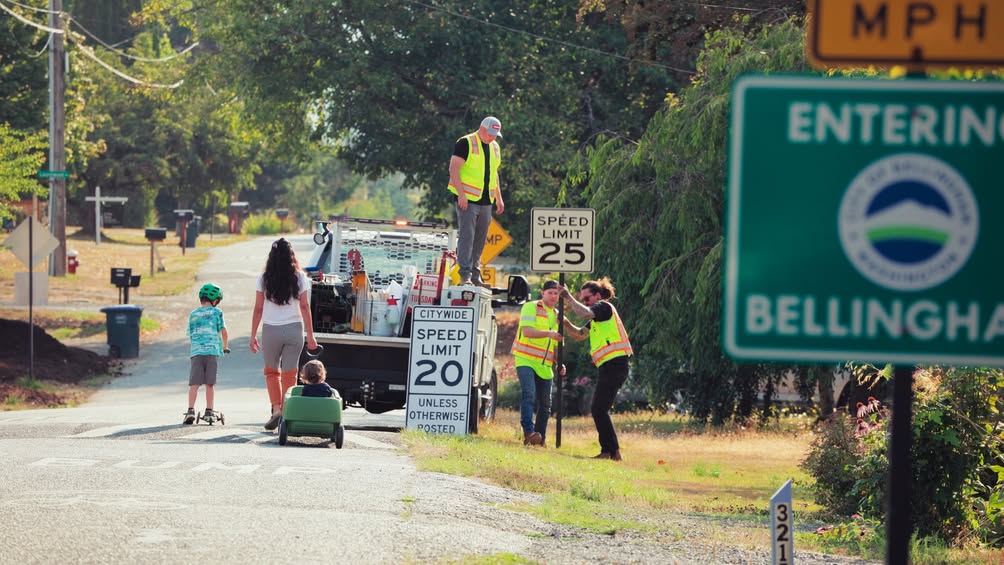
If you have walked the Nooksack River trails in Bellingham recently and noticed small devices on poles, some with solar panels attached to gray power boxes, you are not imagining things. Those poles are part of an active wildlife research project, and the subjects are bumblebees. The Washington State Department of Agriculture and the Washington Department of Fish and Wildlife are testing miniature solar-powered radio tags on bumblebees moving through the Nooksack area and around the Western Washington University campus, using technology so new that it has never before been applied to insects at this scale.
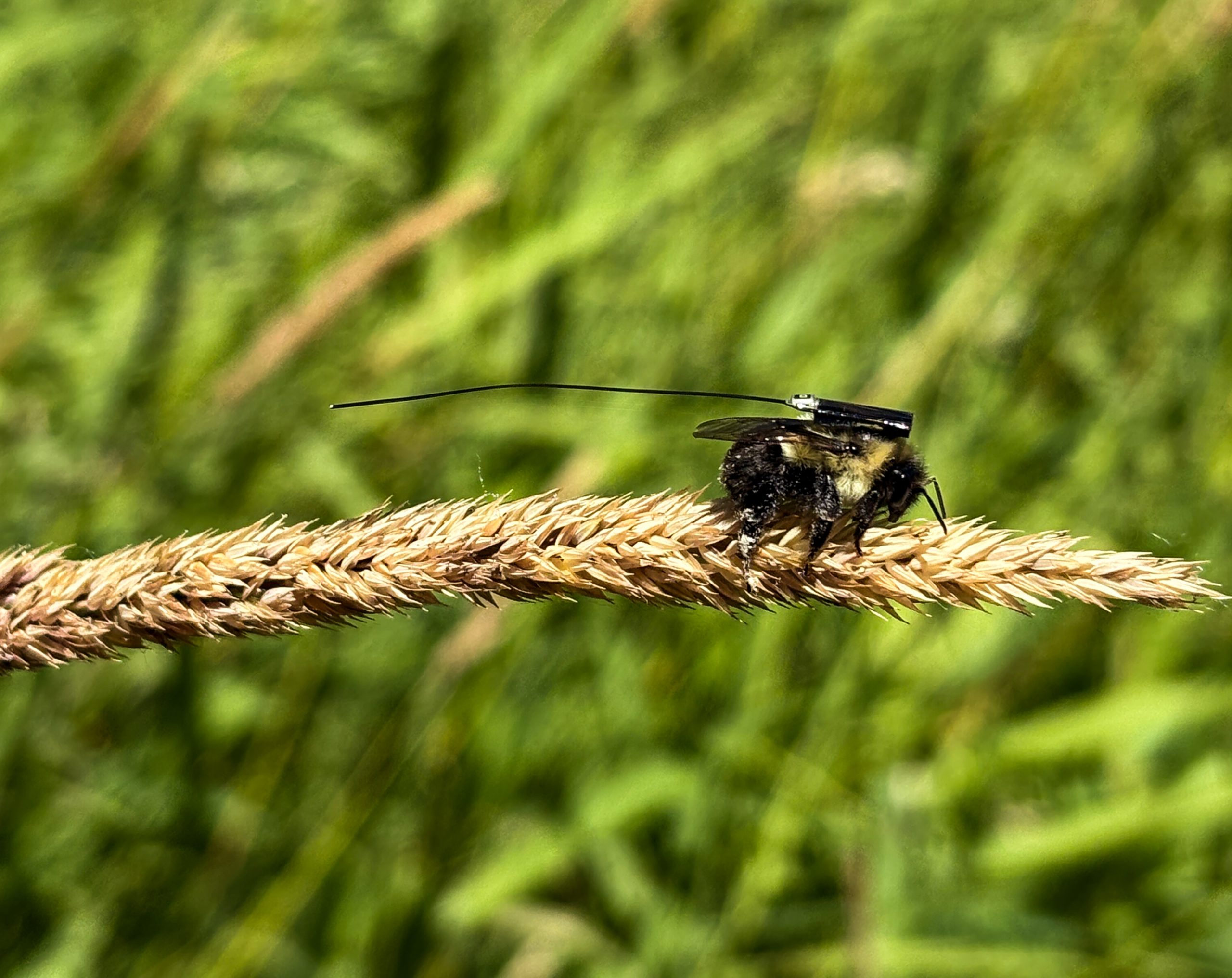
The project uses tags developed by a company called Cellular Tracking Technologies. Called BlūMorpho tags, they weigh just 0.06 grams, making them the lightest transmitters available anywhere on the market. That weight matters enormously for bumblebees, which are large as insects go but cannot carry equipment that impairs their flight or foraging behavior. The tags are small enough to allow bees to behave normally while transmitting location data back to researchers over the internet.
How the System Works
The project uses two different approaches depending on the site. Along the Nooksack River corridor in Bellingham, researchers have installed a grid of radio node receivers on poles. Each node picks up signals from tagged bees within its range and relays that data to a solar-powered base station mounted in the trees, which sends the detections back to researchers over an internet connection in real time. Those poles and boxes are what trail walkers have been noticing.
On the more urban site near the Western Washington University campus on South Hill, the system takes a different approach. Instead of a dedicated receiver grid, researchers are using the Internet of Things: the vast, passive network of Bluetooth-connected smart devices that people carry with them every day. Tagged bees flying through the area ping any device with location services and Bluetooth enabled within a 30- to 150-meter radius. That means your phone, your fitness tracker, or your smart watch may have already logged a data point for a tagged bumblebee without you knowing it. According to David La Puma, vice president of global market development at Cellular Tracking Technologies, this crowdsourced approach generates more data points and more accurate movement records than any previous tracking system for insects.
Agriculture started work on the Bellingham grid in June 2026. Researchers plan to tag approximately 50 bees of different species with the BlūMorpho tags and observe them until at least next June. Chris Looney, the project's entomologist, described the project as "very exploratory," focused on understanding what the technology can reveal rather than testing a specific hypothesis about bee behavior.
Why the Western Campus and Why Now
The species being tracked on the Western Washington University campus is Bombus occidentalis, the western bumblebee. It is a native of western North America that experienced a catastrophic population crash in the late 1990s. The cause of that crash is not fully understood, but disease, pesticide exposure, and habitat loss have all been identified as contributing factors. A well-established population of western bumblebees appears to live on the WWU campus and on the South Hill neighborhood surrounding it, making the area an unusual concentration of a species that has become rare elsewhere in its range.
Researchers hope the BlūMorpho tags can reveal what environmental conditions support that South Hill population. Movement data showing where bees forage, how far they range, and which areas they avoid could point toward the habitat features that help western bumblebees survive and reproduce. "Maybe this technology will let you understand that a little bit better than just trying to walk around and catch them with a net all the time," Looney said.
Applying the tags requires a careful process. Researchers catch bees in vials, then cool them on ice to reduce their metabolic rate until they become sluggish enough to handle safely. Each bee is weighed, given a small shave on its back, and fitted with a dab of UV-activated glue on its abdomen. The tag is placed on the glue and cured with UV light. Once the bee warms back up, it returns to normal behavior, carrying its tiny transmitter without apparent distress.
What It Means for Residents and Pollinators
Bellingham resident Elizabeth Vaughn noticed the numbered nodes on the Nooksack trail while walking her dog and said she was curious about how the technology would eventually be used. "I am curious to how they will use it in the future, what action that they can take to benefit our pollinators," she said.
That question gets at the practical stakes of the project. Bumblebees are among the most effective pollinators of native plants and agricultural crops in the Pacific Northwest. Their population declines have documented consequences for ecosystems and for farmers who rely on pollination services. Understanding what makes certain urban and semi-wild areas hospitable to western bumblebees could inform land management decisions, park design, and garden practices across Whatcom County and beyond.
Wildlife telemetry, the practice of remotely tracking animals using radio frequencies, has been standard in wildlife research since the 1960s. For large animals, the technology is well developed. Extending it to insects has been the challenge: the transmitters needed to be small enough not to affect behavior, and the receiver network needed to be dense enough to capture meaningful data. The BlūMorpho system, modified in 2025 to communicate over Bluetooth networks in addition to dedicated receivers, represents the first real solution to both problems simultaneously.
The Washington State Department of Agriculture leads the project in partnership with the Washington Department of Fish and Wildlife. Residents who notice the trail equipment and want to learn more about the research can contact WSDA through its website. For those interested in how Western Washington University contributes to environmental research in Whatcom County, WWU's recent Columbia River Basin research is another example of the university's regional scientific work.