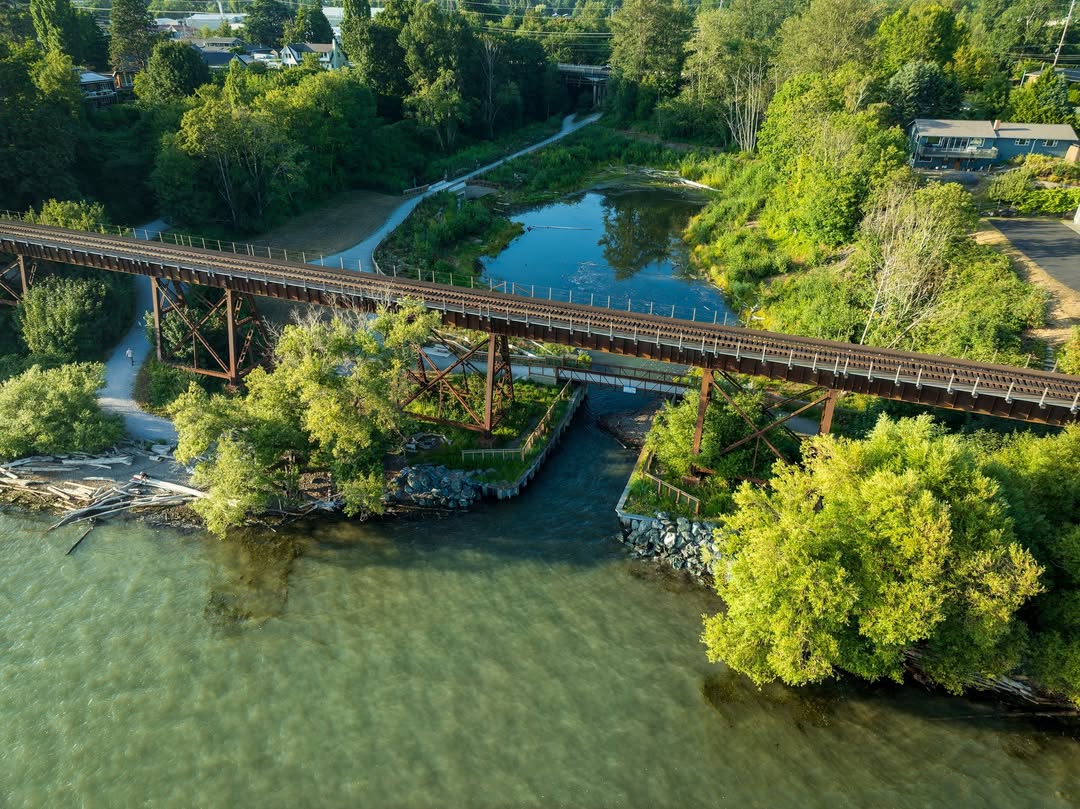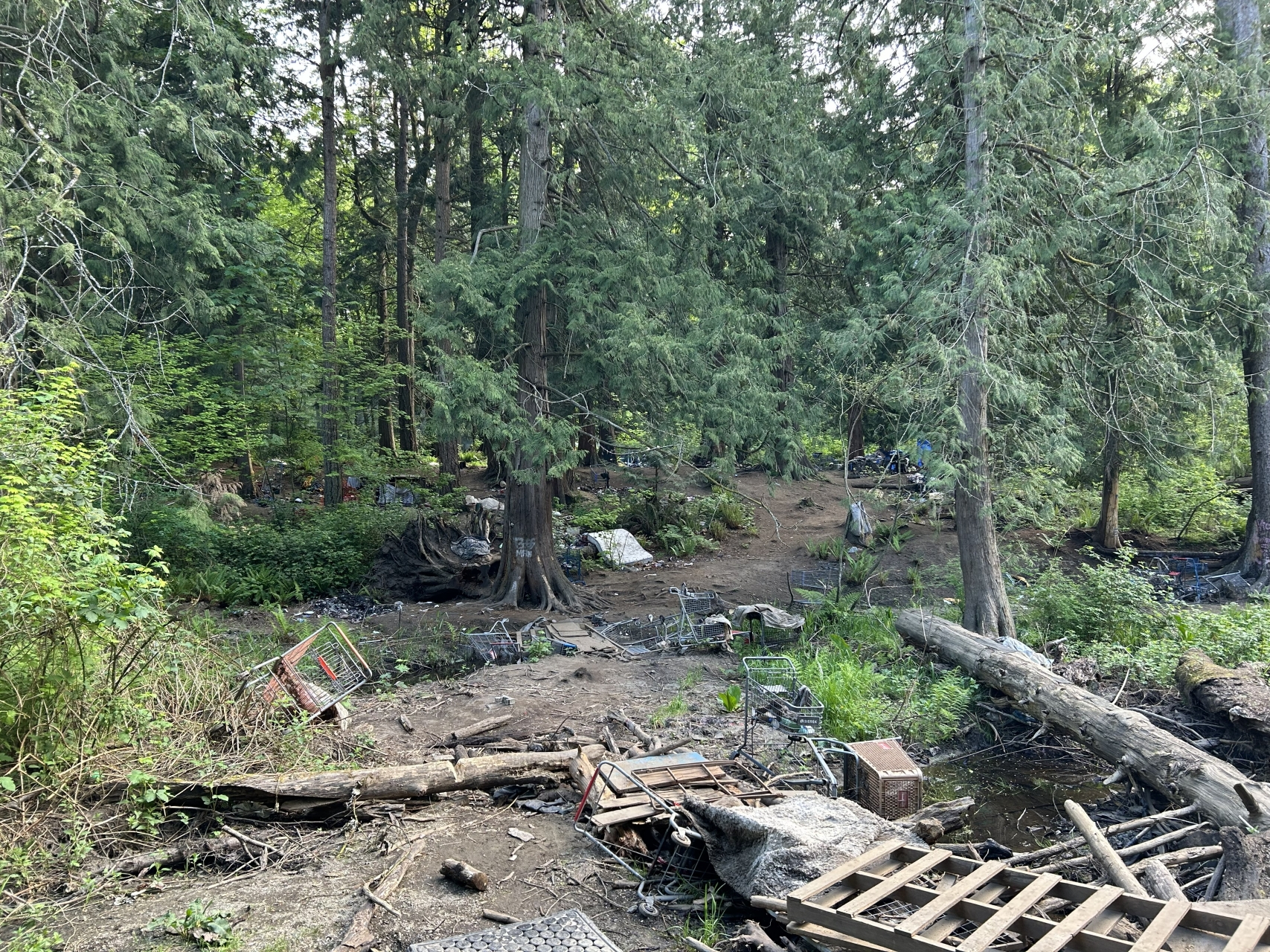
Less than a month after the City of Bellingham cleared its largest homeless encampment in the King Mountain neighborhood, new encampments are being reported at multiple locations in the surrounding area, according to the Bellingham Police Department.
BPD's activity log shows seven reports involving encampments since the King Mountain clearance earlier this month. All seven reports have come from different locations within the general vicinity of the former encampment. BPD Lieutenant Claudia Murphy says officers cannot confirm whether the people living in the new encampments had previously been at the King Mountain site.
A Pattern Seen in Other Cities
What is unfolding in north Bellingham reflects a pattern that has played out in cities across the country after large encampment clearances. When a concentrated camp is removed, the individuals who were living there typically do not disappear from the community. Some enter shelter programs. Some stay with family or friends. Others move to new outdoor locations, sometimes in smaller, more dispersed groups that are harder for outreach workers to find and serve.
The dispersal of residents from a large, known encampment into smaller, scattered camps can actually complicate outreach efforts. Outreach teams that had established relationships with people at King Mountain now need to locate where those individuals went, which takes time and resources. Locating someone who has moved from a known location to an unknown one can mean days or weeks of lost contact, during which time that person is not receiving services, medication follow-up, or housing referrals. In some cases, newly formed camps on private property receive trespassing notices before outreach workers have even made contact with the people living there, creating a cycle of displacement that makes sustained service delivery difficult.
BPD says officers have issued notices to vacate in some of the new encampments because they are on private property. Murphy noted that smaller encampments on private land can be addressed with trespassing notices relatively quickly, but larger encampments require coordination across multiple city departments before any clearance can happen, a process that takes considerably more time. That distinction matters for property owners who are dealing with unauthorized encampments and trying to understand what the city can and cannot do on their behalf on a given timeline.
Outreach Efforts After King Mountain
Teams from Lighthouse Mission Ministries and the Opportunity Council extended outreach efforts specifically to individuals from the King Mountain encampment following its clearance. Both organizations work with people experiencing homelessness in Whatcom County, connecting them to services including emergency shelter, transitional housing, behavioral health resources, and employment assistance. Outreach workers from both organizations were present at King Mountain before and during the clearance, working to make contact with residents and offer referrals to services ahead of the removal.
Mayor Kim Lund's office maintains a dedicated webpage that details the city's ongoing encampment response and outreach activities. That page tracks clearance activity and service connections across Bellingham and is updated as new developments occur. The city's approach emphasizes coordinated outreach alongside enforcement, though advocates and service providers have consistently noted that Bellingham's shelter system does not have sufficient capacity to accommodate everyone who might be willing to move indoors. On any given night, the number of people experiencing unsheltered homelessness in Whatcom County exceeds the number of available emergency shelter beds, a gap that clearance activity alone cannot close.
The City of Bellingham has been navigating encampment policy amid competing pressures: legal constraints around how and when people can be removed from public and private land, the capacity limitations of local shelter and service organizations, and community concerns about safety and neighborhood conditions. The King Mountain clearance earlier this month was one of the city's most significant actions on that front in recent memory, but the emergence of new camps so quickly afterward illustrates the limits of clearance-focused strategies without a corresponding increase in available housing and shelter options.
What Property Owners Should Know
BPD is encouraging property owners, particularly those with wooded lots, vacant parcels, or outbuildings in north Bellingham, to regularly check their properties to prevent unauthorized encampments from becoming established. Murphy said that early detection makes it easier for officers to issue trespassing notices before a new encampment grows to a size that requires a more complex multi-department response. Once an encampment reaches a certain scale, the city's own protocols require a longer timeline that includes outreach, notice periods, and coordination between the police department, public works, and the mayor's office.
For property owners who have already found an encampment on their land and are unsure how to proceed, documenting the situation with photographs and noting the date of discovery can be useful if the matter requires further follow-up. Property owners who find an encampment on their land can contact the Bellingham Police Department non-emergency line for guidance on the appropriate steps. In cases involving immediate safety concerns, calling 911 is appropriate. For ongoing coverage of encampment policy in Bellingham and the broader housing challenges in Whatcom County, see details on the upcoming county Open House where housing and the new jail facility will be among the topics residents can raise directly with officials.