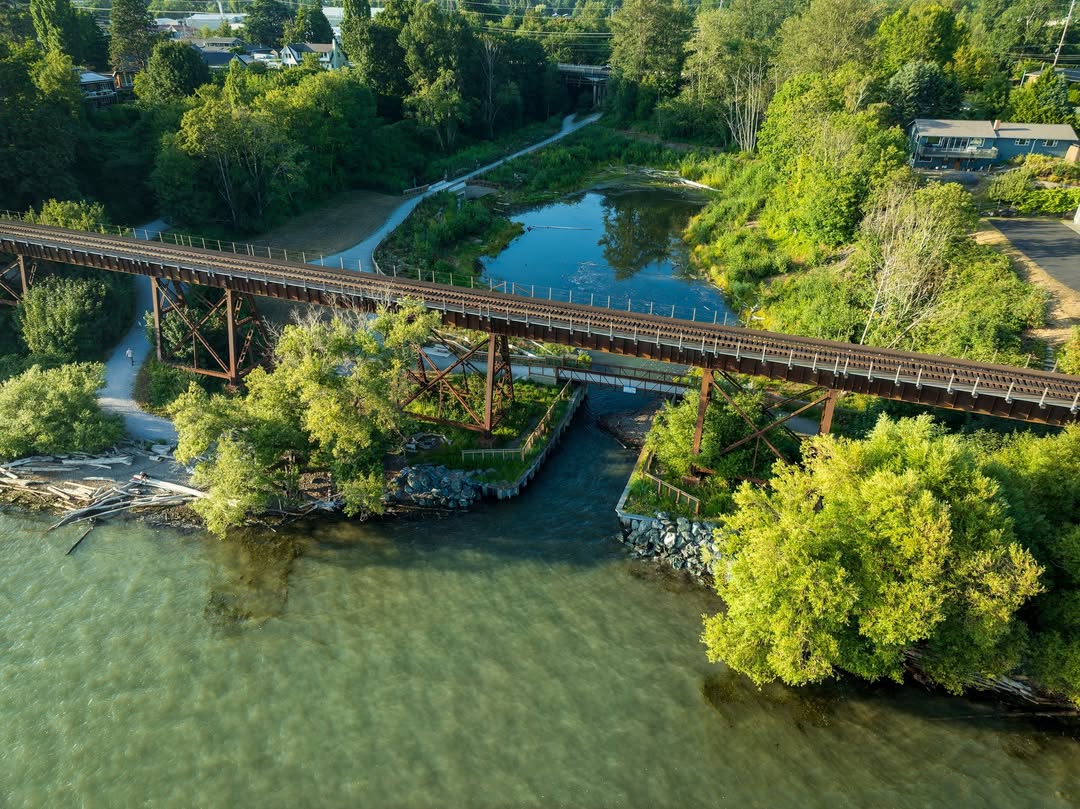
Residents visiting the Little Squalicum off-leash dog area or the Little Squalicum Pier in north Bellingham may notice crews working in the creek nearby this summer. The work is part of ongoing habitat restoration follow-up at the Little Squalicum Estuary, a project the city completed in 2024.
According to Bellingham Parks and Recreation, crews are repositioning boulders and large woody debris in the creek channel to help stabilize streambanks and reduce erosion. That kind of post-construction maintenance is described by the city as a standard and important part of habitat restoration work, not a sign that the original project fell short.
What the Little Squalicum Estuary Project Did
The Little Squalicum Estuary restoration project, completed in 2024, was designed to reconnect the creek to its estuary and improve conditions for salmon and other aquatic species. Estuaries, where freshwater streams meet saltwater, serve as critical transition zones for juvenile salmon moving between freshwater rearing habitat and the open waters of Bellingham Bay. Degraded estuaries reduce survival rates for young fish, which is why restoring them has been a priority for both the city and regional conservation efforts.
Little Squalicum Creek flows through north Bellingham before reaching the bay near the Squalicum Harbor area. The surrounding park includes an off-leash dog area that draws heavy use year-round, as well as a pier that gives visitors a view of the bay and the city waterfront. The creek corridor is a modest but ecologically significant piece of green infrastructure in a neighborhood that is otherwise largely developed.
The City of Bellingham has invested significantly in creek and estuary restoration across the city over the past decade, with work at Whatcom Creek, Padden Creek, and other stream corridors aimed at improving water quality and fish passage as part of broader environmental commitments.
Why Follow-Up Work Matters
Large-scale restoration projects rarely end the moment construction equipment leaves a site. Streambanks and creek channels continue to shift in response to seasonal flows, storm events, and biological changes. Boulders and large wood placed in a creek during construction can migrate or settle in ways that reduce their effectiveness over time. Monitoring and adjustment work in the months and years after a project is completed helps ensure the long-term success of the restoration.
The repositioning of boulders and large wood that crews are doing now serves a specific purpose: keeping streambanks stable so that the restored channel does not erode back to its pre-restoration condition. Streambank erosion can increase sediment loads in the water, which harms aquatic life and can undo the fish habitat improvements that restoration projects are designed to achieve.
This type of adaptive management is increasingly built into restoration project budgets and plans across Washington state, as agencies and municipalities recognize that the initial construction phase is not the end of the investment. The work at Little Squalicum is consistent with that approach.
What to Expect if You Visit
Crews working in and around the creek may be visible from the off-leash area and the path leading to the pier. The work is not expected to close the off-leash area or the pier, though conditions near the creek may vary. Dog owners should keep pets away from active work zones and construction equipment.
The Little Squalicum off-leash area is one of several designated off-leash spaces managed by Bellingham Parks and Recreation. Other city parks with off-leash areas include Bloedel Donovan Park and Civic Field. For updates on park conditions and any temporary closures, residents can check the city's Parks and Recreation page or sign up for the Inside Bellingham newsletter, which covers city projects and department updates weekly. The latest edition, covering the week of August 20, includes details about the creek work and other city projects and is available through the city's news page. For more on Bellingham's ongoing parks investments, including the new Bakerview Meadows Park taking shape in north Bellingham, see coverage of that project here.