Long before the city of Sedro-Woolley became a familiar stop along the Skagit River corridor, it carried one of the most unusual place names in Washington State history: Bug. The story of how a mosquito-plagued logging settlement became the town we know today involves a California millionaire, a carpenter with a paintbrush, and a community that drew the line at being called "Humbug."
The Man Who Named a Town After Mosquitoes
Mortimer Cook arrived on the banks of the Skagit River in the early 1880s under decidedly reduced circumstances. A man who had previously founded Cook's Ferry on the Thompson River in British Columbia and served as mayor of Santa Barbara, California, Cook had lost much of his fortune before turning his sights to the timber country of the Pacific Northwest. He purchased 10 years of timber rights for 2,200 acres of forest north of the Skagit River and set about building a community from scratch.
According to the Skagit River Journal, Cook hired a carpenter named David Batey to construct a general store and a home for his family. Then came the naming decision. Cook chose the word "Bug" to honor, in an ironic way, the mosquitoes that plagued the loggers working in the swampy lowlands north of the river. These insects were, by some accounts, so enormous that workers joked they approached the size of bats. Batey painted the name directly on the general store, and for a brief time, Bug, Washington, was a real place on the map.
The name did not last long. Settler families in the surrounding area were unhappy with it almost immediately. The Skagit River Journal notes that their objections stemmed partly from a fear that critics would simply prefix the name with "hum-," leaving the town forever saddled with one of the least flattering place names imaginable. The pressure to rename was swift and effective.
How "Cedro" Became "Sedro"
Faced with community opposition, Cook went searching for something more respectable. He settled on the Spanish word for cedar, cedro, a nod to the towering western red cedars that defined the landscape of the Skagit Valley. With one letter changed, the name became "Sedro," giving the settlement a slight air of refinement while still connecting it to the natural environment that made the logging industry possible in the first place. In 1885, Cook formally established a post office under that name, cementing the change in the official record.
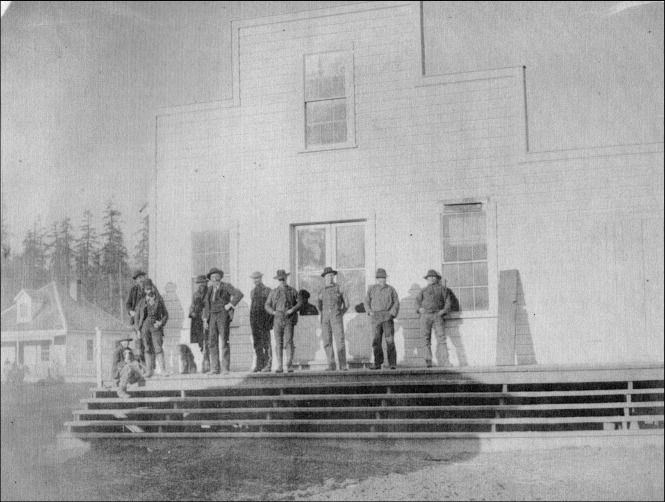
The Sedro-Woolley Museum preserves photographs from this era, including an image of Mortimer Cook's general store and post office in old Sedro taken around 1888, just a few years after the Bug name was abandoned. The building, modest by any standard, stands as a quiet reminder that the foundations of the region were built by ambitious, sometimes eccentric individuals making decisions on the fly in a frontier environment.
The Skagit Valley in the 1880s was a place of rapid change. The timber industry was drawing workers from across the country and beyond, and small settlements were appearing along the river with regularity. A reliable post office was a mark of legitimacy, signaling that a community intended to stay. Cook's decision to push for the Sedro post office was as much a business calculation as a civic one.
Enter Phillip Woolley and the Rival Town
Meanwhile, a separate settlement was taking shape nearby. The town of Woolley grew up as a company town named after Phillip A. Woolley, and for years the two communities existed in a state of competitive tension. They were close enough to share economic interests, yet distinct enough to maintain separate identities and separate civic ambitions.
The rivalry played out through the ups and downs of the logging economy. Fires, economic downturns, and the relentless pressures of a boom-and-bust industry eventually wore down the walls between the two towns. In 1898, Sedro and Woolley merged into a single incorporated city, combining both names in an arrangement that acknowledged neither community had fully bested the other. The hyphenated name we use today, Sedro-Woolley, has been in place for more than 125 years.
The city today sits in Skagit County, roughly 25 miles south of Bellingham along the SR 20 corridor. It serves as a gateway to the North Cascades, with North Cascades National Park headquarters located there. The agricultural fields and foothills surrounding the city bear little resemblance to the mosquito-laden swamps that gave Bug its name, though anyone who has spent a summer evening near the river bottom knows the insects have not entirely given up the territory.
Why Local History Like This Matters
Stories like the Bug-to-Sedro transformation are more than curiosities. They reveal how the place names we take for granted were often the result of personal quirks, community politics, and outright accidents of history. The founders of these towns were making permanent decisions under temporary circumstances, and the names they chose, or were talked out of, stuck around long after the individuals involved were forgotten.
The broader Whatcom and Skagit County region is rich with this kind of layered history. Place names here reflect Indigenous languages, the ambitions of early settlers, practical descriptions of geography, and occasionally, someone's sense of humor. Bug would have fit right into that tradition, even if the residents of the time did not appreciate the joke.
For anyone curious about the deeper history of the region, the Sedro-Woolley Museum maintains records and photographs from the settlement era, and the Skagit River Journal has compiled extensive research on the towns, people, and events that shaped the valley. Closer to home, Whatcom County's own settlement history includes similarly strange detours, a thread explored in earlier coverage of Bellingham's industrial past and ongoing transformation.
The name Bug lasted only a few years. The mosquitoes, judging by anyone who has visited in July, appear to be permanent.