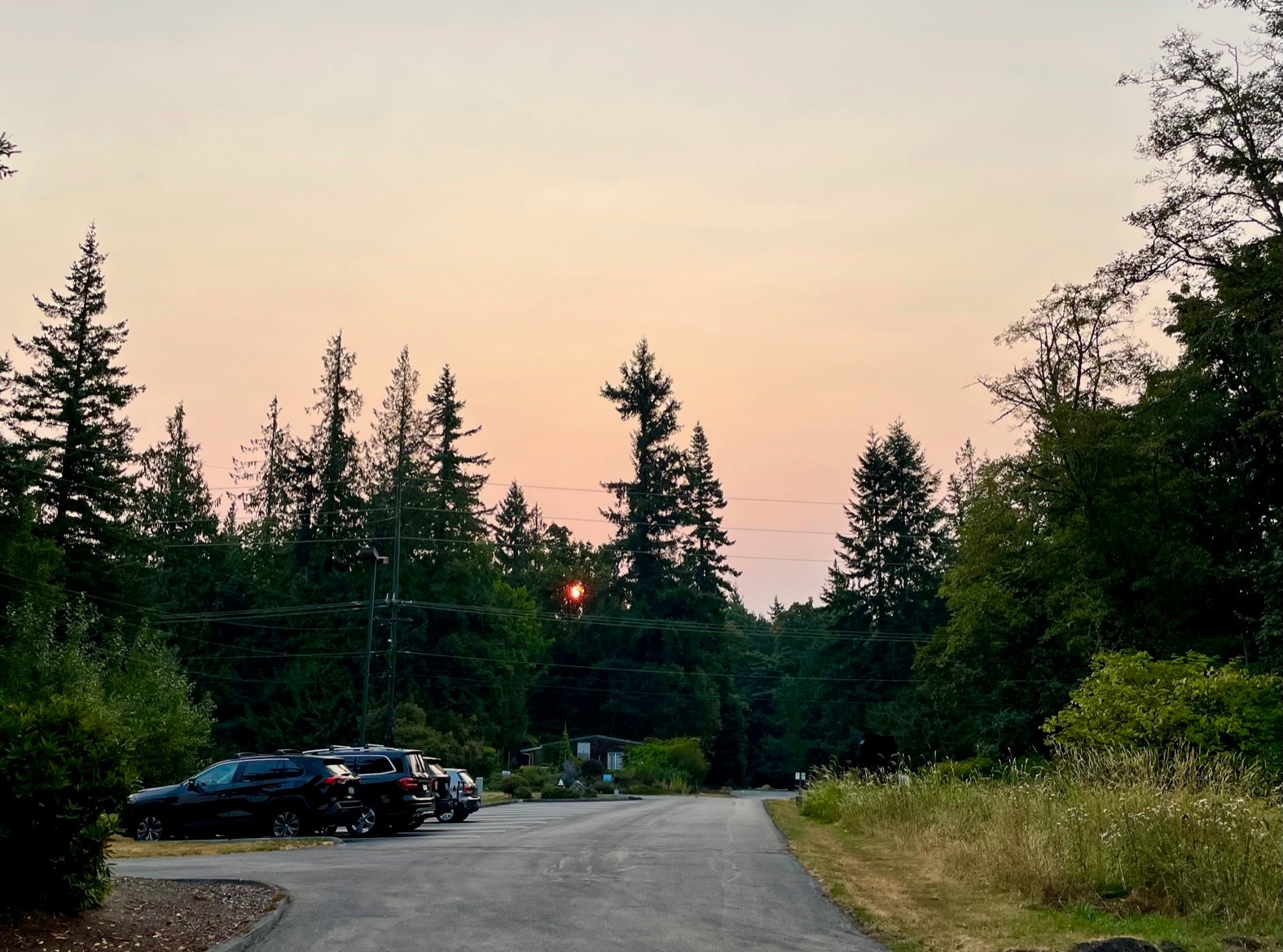
Smoke drifting south from British Columbia wildfires pushed air quality to unhealthy levels in portions of Whatcom County on Friday, with the worst conditions concentrated in the county's eastern and northern communities. Monitoring data from IQ Air showed that winds coming from the east brought smoke particles through the Fraser River outflow corridor and into the Whatcom County lowlands, creating a split picture across the region with some communities significantly more affected than others.
Where Conditions Are Worst
As of Friday afternoon, the communities with the highest particulate readings were Everson, Kendall, Sumas, and Maple Falls. Those areas registered at the "unhealthy" level on the air quality index, a threshold at which anyone, not just sensitive groups, can begin to experience symptoms from prolonged outdoor exposure. At the unhealthy level, healthy adults engaging in strenuous outdoor activity, such as running, cycling, or physical labor, are at meaningful risk of respiratory irritation. For people with underlying conditions, the risk begins at lower exertion levels.
Ferndale and Lynden were sitting at "moderate" levels, meaning the air was acceptable for most people but sensitive individuals should consider limiting extended outdoor activity. That middle category includes people with asthma, COPD, heart disease, the elderly, and young children whose lungs are still developing. Bellingham, Blaine, and Birch Bay were faring significantly better, with readings that did not rise to the level of concern as of midday Friday. The difference across the county reflects the direction the smoke was traveling: winds from the east pushed heavier concentrations into the inland valleys of eastern Whatcom County while the coast and western portions of the county saw less impact.
Conditions like these can shift quickly as wind patterns change, particularly heading into a weekend where the National Weather Service had forecast increasing clouds, showers, and potential thunderstorms through Saturday and into Sunday. Residents in all parts of the county should monitor air quality readings through the day and into the weekend rather than assuming that Friday's local conditions will persist unchanged.
What Residents Should Do
Anyone with respiratory conditions, including asthma, COPD, or heart disease, should stay indoors with windows and doors closed when air quality reaches unhealthy levels. Running an HVAC system on recirculate mode rather than pulling in outside air can help maintain indoor air quality without bringing smoky outdoor air into the building. If you do not have air conditioning and your home is getting warm, a portable air purifier with a HEPA filter is effective at reducing indoor particulate levels and can make a meaningful difference in comfort and health during multi-day smoke events.
Avoid strenuous outdoor activity when air quality is poor, even if you feel fine at first. Smoke-related symptoms can be delayed, and people who push through discomfort during poor air quality episodes sometimes experience more significant effects hours later. If you must be outdoors in smoky conditions, an N95 mask provides meaningful filtration of fine particulate matter, though standard cloth or surgical masks do not filter particles at the size that poses the greatest health risk.
Whatcom Fire District 14 issued a reminder Friday asking residents not to call 911 simply because they notice smoke in the air. Smoke from distant wildfires, while unpleasant and potentially unhealthy for sensitive individuals, does not constitute an emergency that requires a fire department response. Reserving 911 for actual emergencies helps keep emergency lines available for real incidents and prevents dispatchers from being overwhelmed during periods when many residents notice the same atmospheric conditions simultaneously.
The Northwest Clean Air Agency, which monitors air quality across Whatcom and Skagit counties, publishes real-time and forecast air quality data on its website. For current conditions in your specific area, IQ Air also provides a community-level map that can show whether your neighborhood is in a worse or better air pocket than the general regional average.
The Broader Fire Context
The smoke reaching Whatcom County is connected to an active wildfire season in British Columbia. BC wildfires generate enormous volumes of smoke that can travel hundreds of miles under the right wind and atmospheric conditions. The Fraser River valley, which runs roughly east-to-west before meeting the Salish Sea near White Rock and Blaine, acts as a natural channel for smoke transport into northwest Washington when winds blow from the northeast or east. That geography makes communities in the eastern Whatcom County lowlands, particularly those along the foothills and valley corridors, more vulnerable to smoke intrusion than coastal communities during BC fire events.
Within Whatcom County itself, the Luna and Ptarmigan fires are burning in the far eastern part of the county near Ross Lake. The Whatcom County Division of Emergency Management noted Friday that it is in contact with incident management teams on both fires. The county's Emergency Operations Center is not currently activated for those fires, but the situation in the Cascades remains dynamic, particularly with a fire weather watch in effect for eastern Whatcom County through Saturday evening that raises the possibility of new lightning-caused ignitions.
The county has maintained a Stage 2 burn ban since July 17, prohibiting all open burning countywide, including campfires, burn piles, and recreational fires of any kind. That ban remains in effect until further notice. DNR fire danger ratings for both the lowlands and the Cascades are at Very High, a classification that underscores why the burn ban is in place and why any spark in the landscape carries elevated risk right now. Violations of the burn ban can result in fines and potential liability for suppression costs if a burn escapes and contributes to a wildfire.
For ongoing updates on air quality, fire conditions, and burn restrictions in Whatcom County, the Whatcom County Health and Community Services page carries current wildfire smoke advisories and health guidance. Residents who are unsure whether their area is under an air quality advisory can sign up for county emergency alerts through WhatcomReady.org to receive notifications directly rather than having to check multiple websites. For related fire and air quality coverage this season, the latest on wildfires near Ross Lake provides more detail on what is burning in the eastern county.