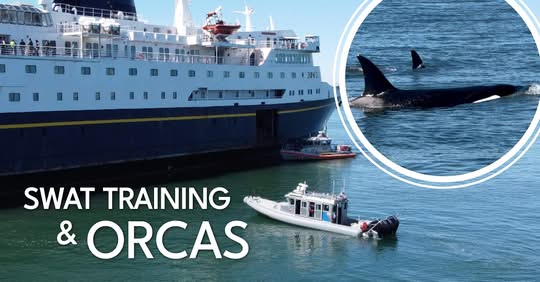
The Bellingham Police Department's SWAT team took their drills to the water this week, teaming up with members of the U.S. Coast Guard for a joint training exercise focused on maritime emergencies in and around Bellingham Bay. The session covered boarding procedures and active shooter response protocols specific to local ferries and other watercraft, a scenario that reflects the unique geography of a city surrounded by water on three sides.
What the Training Covered
Officers worked alongside Coast Guard personnel to practice the kind of coordinated response that would be needed if an emergency unfolded aboard a vessel in Bellingham Bay. That means knowing how to approach and board a boat safely, how to communicate across agencies under pressure, and how to apply active shooter tactics in a confined, floating environment very different from a building or open street.
Bellingham Bay sees regular ferry traffic, recreational boating, and commercial watercraft throughout the year. The Whatcom County ferry connecting the mainland to Lummi Island is one local example, and the bay also draws seasonal tour vessels and kayak outfitters. Preparing for worst-case scenarios on or near that water is a practical necessity for a department that patrols a waterfront city.
The Bellingham Police Department has maintained a SWAT team for years, regularly training for high-risk situations across the city. This week's exercise extended that readiness into a domain that demands a different skill set: water access, vessel dynamics, and interagency coordination with federal partners.
The Coast Guard Partnership
The U.S. Coast Guard operates out of a station in Bellingham, making it a natural partner for local law enforcement when maritime preparedness is the goal. Coast Guard personnel are trained in vessel boardings as a core part of their mission, from safety inspections to law enforcement operations at sea. Pairing that institutional knowledge with BPD's tactical expertise gave both agencies a chance to stress-test a joint response playbook.
Interagency training of this kind has become increasingly common in communities near navigable waterways. After high-profile incidents at ports and on ferries in other parts of the country over the past two decades, departments nationwide have added maritime scenarios to their SWAT curricula. Bellingham's waterfront location and active bay traffic make the training directly applicable, not theoretical.
The U.S. Coast Guard coordinates closely with state and local agencies across Washington's inland waterways, including in the Salish Sea region that covers much of Whatcom County's coastline.
An Unexpected Bonus: Orcas in the Bay
The training session ended with a rare and welcome surprise. While officers were heading back to the Coast Guard station after their drills, a pod of orcas made an appearance in Bellingham Bay. Several officers captured video of the whales, which the department shared publicly.
Orca sightings in Bellingham Bay are not unheard of, but they remain a genuine event worth noticing. The Southern Resident killer whales, listed as endangered under the federal Endangered Species Act, are the most frequently discussed population in local conservation conversations, though transient orcas also move through the Salish Sea in search of marine mammal prey. Either way, a pod surfacing close enough to a Coast Guard station for video to be captured is the kind of moment that tends to stick with you.
The Orca Network, a Puget Sound-based organization, tracks sightings across the region and welcomes reports from anyone who spots whales in local waters. If you see orcas near Bellingham Bay or along the Whatcom County coastline, their sighting hotline is a good resource.
Why This Matters for Bellingham
Bellingham is first and foremost a waterfront community. The bay defines the city's western edge, supports its economy, and draws residents and visitors alike. Any emergency response plan that does not account for the water is incomplete, and training like this helps close that gap.
BPD's SWAT team handles the county's most serious tactical situations, from barricaded suspects to high-risk warrant service. Extending that training to vessel boarding and active shooter scenarios aboard watercraft keeps the team ready for contingencies that, while rare, could unfold in a place with this much maritime activity.
For updates on Bellingham Police Department training, community events, and public safety news, local outreach efforts like the Fun With the Fuzz 5K show the department's broader commitment to staying connected with the community it serves. For questions or more information about BPD programs, visit the department's official page at cob.org.