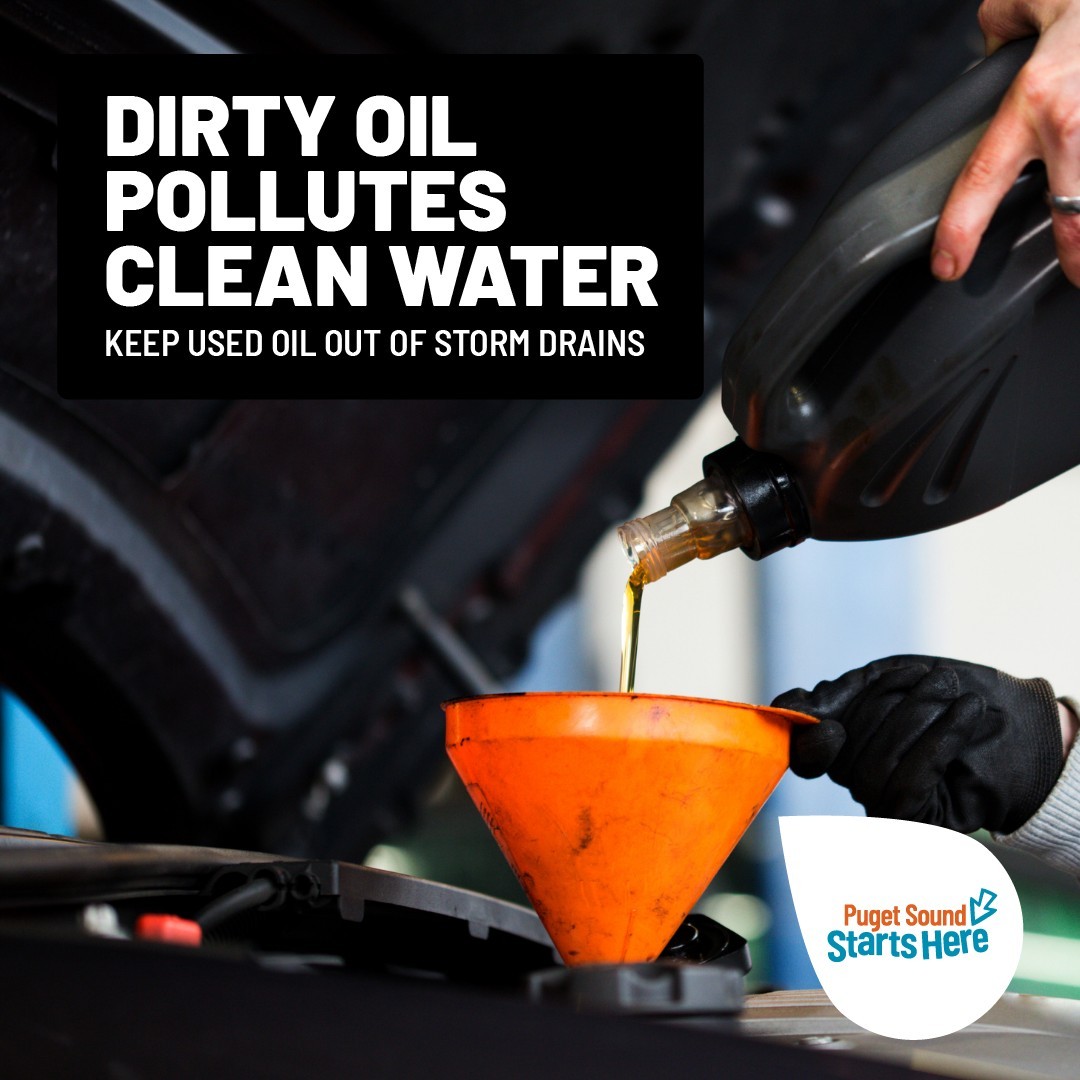
Used motor oil and other petroleum products are among the most common pollutants that end up in local waterways, and Whatcom County Public Works is reminding residents that proper disposal is easier than many people think. The county's Disposal of Toxics Facility accepts used motor oil, antifreeze, and other auto waste at no charge, and most local auto shops will take used oil as well.
The reminder comes as late summer brings a surge in vehicle maintenance, with many residents changing oil before a road trip or winterizing equipment after a busy outdoor season. Even a small amount of motor oil can contaminate a large volume of water and harm fish, wildlife, and plant life along Whatcom County's creeks, wetlands, and the shores of Bellingham Bay and the Salish Sea.
Why Petroleum Products Are a Serious Environmental Threat
Motor oil that is poured down a drain, dumped on the ground, or tossed in a trash bin does not simply disappear. It can seep into stormwater systems that drain directly into local waterways, including the Nooksack River, Lake Whatcom, and the dozens of smaller creeks and wetlands that run through Bellingham neighborhoods and rural Whatcom County.
A single gallon of used motor oil can contaminate up to one million gallons of drinking water, according to environmental health agencies. Lake Whatcom is the primary drinking water source for more than 80,000 people in Bellingham and surrounding communities, making contamination prevention especially important here. The lake has been on Washington State's list of impaired water bodies for years, and local agencies have invested millions of dollars in watershed protection programs to reduce the flow of pollutants into it.
Petroleum products are toxic not just to aquatic life but also to birds and terrestrial wildlife that come into contact with contaminated water or soil. Whatcom County's varied ecosystems, from the coastal tideflats of Birch Bay to the wetlands along the Nooksack delta near Ferndale, support a wide range of sensitive species that can be harmed by even small spills.
Where to Drop Off Used Oil and Auto Fluids
The most reliable drop-off point for Whatcom County residents is the Whatcom County Disposal of Toxics (DOT) Facility, which accepts household hazardous waste including used motor oil, antifreeze, transmission fluid, brake fluid, and other auto fluids. The facility is free to use for Whatcom County residents and does not require an appointment for most standard drop-offs. Full details including hours, location, and accepted materials are available on the Whatcom County Household Hazardous Waste page.
In addition to the county facility, many auto parts stores and service shops across Bellingham, Ferndale, Lynden, and other Whatcom County communities accept used motor oil for recycling. Retailers like AutoZone and O'Reilly Auto Parts typically have collection tanks near the entrance. If you are unsure whether a shop near you accepts used oil, a quick phone call before you go can save a trip.
Used oil that is not contaminated with other chemicals can actually be re-refined and turned into new lubricating oil, or burned as fuel in industrial heaters. Recycling a single quart of used oil instead of disposing of it improperly can produce enough re-refined oil to run a car for several miles, making proper disposal both environmentally and economically sensible.
Other Items the County Facility Accepts
The Whatcom County DOT Facility handles a wide range of household hazardous materials beyond just motor oil. Paint, pesticides, fertilizers, cleaning solvents, batteries, fluorescent bulbs, and pool chemicals are among the items residents can drop off rather than trash. The facility runs on a regular schedule and is designed to make responsible disposal convenient.
Whatcom County also participates in periodic community collection events that bring hazardous waste drop-off to different parts of the county throughout the year, which can be helpful for residents in more rural areas who do not live close to the main facility. Checking the Whatcom County website for upcoming event dates is a good first step if you have accumulated materials you need to dispose of.
For residents who want a broader overview of keeping local waterways clean, the Northwest Clean Air Agency also publishes guidance on reducing pollution from household and vehicle sources across the region. Taking a few extra minutes to drop off used oil at a proper facility is one of the most direct ways Whatcom County residents can protect the water and wildlife that make this corner of Washington worth living in.