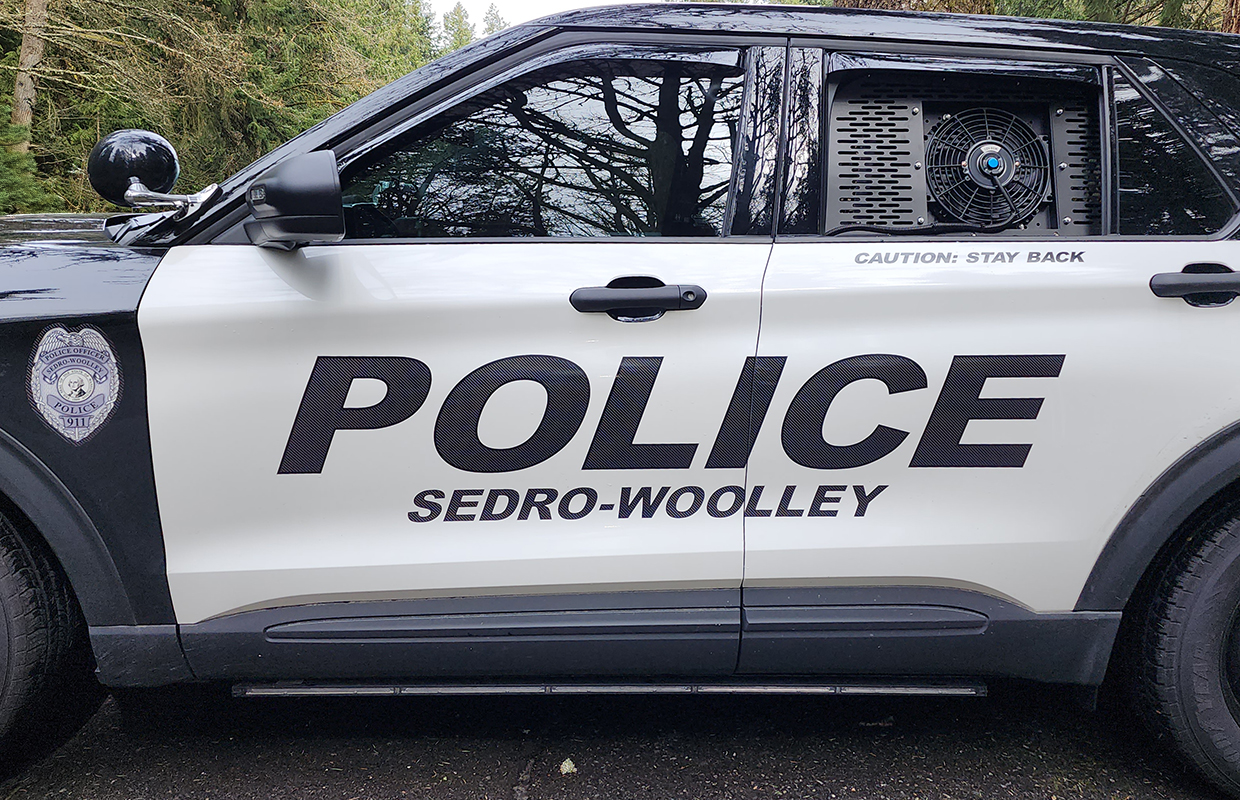
Three people, including an active-duty police detective from Florida, have been arrested in connection with a fraud scheme that investigators say drained more than one million dollars from an elderly Sedro-Woolley resident's bank account. The Sedro-Woolley Police Department announced the arrests this week after a months-long investigation that spanned multiple states and ultimately drew in the FBI and U.S. Postal Service.
The case began when the elderly Skagit County resident reported to police earlier this year that over a million dollars had been taken from their account. That initial report set off what became a sprawling financial investigation, with detectives serving more than 50 search warrants to track the money as it moved through a web of companies and bank accounts across the country. The sheer number of warrants required to trace the funds tells a story of its own: sophisticated fraud operations rarely move stolen money in a single transaction, instead routing it through layered financial structures designed to obscure the origin and destination of the funds.
A Multi-State Investigation With Federal Help
The scale of the scheme quickly outpaced what local police could pursue alone. Sedro-Woolley detectives reached out to federal partners, and through coordination with the FBI and the U.S. Postal Service Inspection Service, investigators learned that the Davie Police Department in Broward County, Florida, was independently investigating the same group of suspects in connection with a much larger number of victims nationwide.
The U.S. Postal Inspection Service is one of the oldest federal law enforcement agencies in the country and maintains a dedicated focus on mail and wire fraud schemes, which frequently intersect with elder financial abuse cases. Its involvement in a case originating from a small Washington city underscores how interconnected modern financial fraud operations can be, drawing resources from local departments, federal agencies, and law enforcement in multiple states simultaneously.
That overlap with the Davie Police Department's investigation revealed what appears to be an organized, multi-state fraud operation that targeted multiple victims beyond the Sedro-Woolley case. The discovery that two independent law enforcement bodies on opposite sides of the country were tracking the same suspects suggests the network may have been operating for a considerable period and across a broad geographic range before investigators connected the dots. Nationwide arrest warrants were issued for three suspects. All three were taken into custody on Thursday, August 13.
The suspects include a detective with the Miami Shores Police Department in Florida, a second individual also from Florida, and a third person from New York state. The presence of a working law enforcement officer among the accused is particularly unusual and adds a layer of complexity to the case. Law enforcement credentials, knowledge of investigative procedures, or professional contacts could theoretically play a role in fraud schemes targeting vulnerable individuals, though Sedro-Woolley Police have not released details about how the Miami Shores detective is alleged to have been involved. Sedro-Woolley Police have not released the names of the three suspects, citing the ongoing and active nature of the investigation. All three remain in custody and are pending extradition to Washington state.
Elder Fraud: A Growing Problem
Elder financial fraud is one of the fastest-growing categories of financial crime in the United States. The FBI's Elder Fraud division estimates that older Americans lose billions of dollars annually to scams ranging from phone and email fraud to more sophisticated schemes involving fake investments and impersonation of government officials. In 2023 alone, the FBI's Internet Crime Complaint Center received more than 100,000 complaints from victims over the age of 60, with reported losses exceeding $3.4 billion.
Cases involving more than a million dollars taken from a single victim are on the more extreme end of the spectrum but are not unheard of. Sophisticated fraud operations often spend weeks or months building trust with a target before executing the financial transfer, using techniques like posing as bank security departments, government agencies, or even law enforcement officers to convince victims that moving their money is necessary to protect it. This last tactic, sometimes called an impersonation or government-official scam, is especially insidious because it weaponizes a victim's trust in institutions they have relied on for decades.
Older adults are frequently targeted not because they are less intelligent, but because they are more likely to have accumulated significant savings over a lifetime, may be more isolated socially, and in many cases grew up in an era when institutions were more uniformly trustworthy than the modern landscape of digital communication. Fraudsters exploit exactly those characteristics, crafting scenarios that feel both urgent and legitimate.
Sedro-Woolley, a city of about 4,500 people in Skagit County roughly 20 miles south of Bellingham, has seen its police department handle several high-profile investigations in recent years despite its relatively small size. The department's willingness to pursue this investigation across state lines, serve more than 50 search warrants, and secure partnerships with both federal agencies and out-of-state police departments reflects the level of commitment and resources that a million-dollar fraud case demands. Smaller departments do not always have the capacity to sustain investigations of this complexity, and the outcome here reflects well on the department's investigative team.
What Happens Next
With all three suspects in custody, the next step is extradition to Washington state to face charges here. The extradition process can take weeks to months depending on jurisdiction, the specific charges, and whether suspects choose to contest the transfer in court. Interstate extradition is governed by the Uniform Criminal Extradition Act, which Washington state has adopted, and generally requires the governor of the state holding the suspects to honor the warrant issued by Washington authorities. Once in Washington, the three will face formal charges in Skagit County, where the case originated.
Sedro-Woolley Police have declined to release additional details about the specific methods used in the fraud scheme or whether the Miami Shores detective's professional position played any role in the alleged crimes. The active investigation status means more details will likely emerge as the case moves through the court system, through arraignments, preliminary hearings, and eventual trial or plea proceedings. Given the number of search warrants served and the apparent involvement of victims in multiple states, the case could ultimately involve federal charges as well, which would bring it into the jurisdiction of the U.S. Department of Justice.
Residents across Whatcom and Skagit counties who have elderly family members are encouraged to review common fraud warning signs and talk to older relatives about protecting their finances. Key warning signs include unexpected contact from someone claiming to be from a bank or government agency, requests to move money quickly, instructions to keep the communication secret, and pressure to use wire transfers, gift cards, or cryptocurrency. The federal consumer protection resources and the Washington State Attorney General's consumer protection office both offer guidance on recognizing and reporting elder financial abuse. For news on other area crime developments, see earlier coverage on regional drug enforcement operations in Whatcom County.