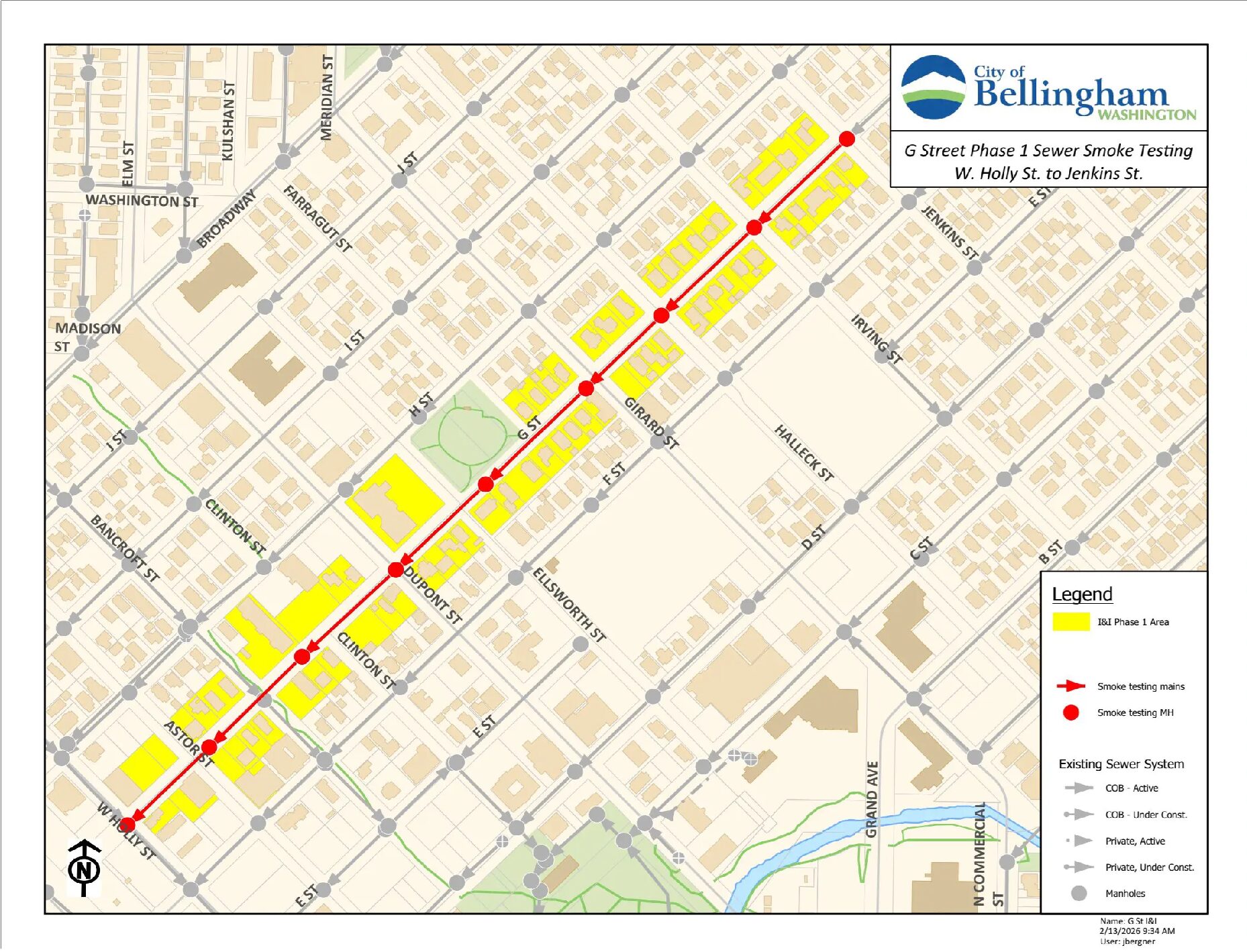
Residents in the Lettered Streets and Cornwall Park neighborhoods of Bellingham may notice smoke rising from unexpected places next week. The city's Public Works department will begin non-toxic smoke testing of the sewer system starting Monday, August 17, continuing through Thursday, August 20. The testing is designed to identify areas where the wastewater system may be taking in water it should not be receiving.
The specific streets involved include G Street between West Holly Street and West North Street, and East North Street between Cornwall Avenue and Ellis Street. Residents in those areas will receive written notification before testing begins in their immediate vicinity. Anyone with heart or respiratory conditions who lives within the affected area is asked to contact the city's Public Works department before testing starts so crews can take appropriate precautions.
Why Cities Use Smoke Testing on Sewer Systems
Smoke testing is one of the most reliable and cost-effective tools available to municipal utilities when inspecting underground sewer infrastructure. The process works by pumping non-toxic, odorless smoke into the wastewater system under slight pressure. The smoke then finds its way out of the pipes wherever there are cracks, broken connections, open cleanouts, or improper connections between storm drains and the sanitary sewer system.
The problem the city is looking for is called inflow and infiltration, often shortened to I&I. This is what happens when water that should not be entering the sanitary sewer system gets in anyway, either through cracked pipe joints, improperly connected downspouts and yard drains, or stormwater inputs that were never properly separated from the wastewater network. When groundwater or stormwater infiltrates the sewer system in large quantities, it can overwhelm the wastewater treatment plant and, in severe cases, cause sewage to back up into homes or overflow into nearby waterways.
Bellingham's wastewater system handles flow from across the city before it reaches the Post Point Wastewater Treatment Facility on Bellingham Bay. The city has been investing in upgrades to that facility, including a major incinerator improvement project that secured a contractor earlier this summer, and keeping the collection system feeding the plant in good shape is part of the same long-term infrastructure management strategy.
What Residents Should Expect to See
The smoke used in the testing process is white or light gray in color and will be visible rising from manhole covers, cleanouts, roof vents, and in some cases from cracks in pavement or soil where the sewer pipes below have deteriorated. The smoke itself is completely non-toxic and is the same type used in theatrical settings and fire training exercises. It does not present a health hazard to healthy adults or children who encounter it outdoors.
However, the smoke can enter buildings if there are improper connections, cracked drain pipes inside a structure, or dry P-traps on floor drains that are rarely used. If smoke enters your home during testing, it indicates a potential issue with your building's connection to the sewer system, and residents should note the location and contact the city. The smoke dissipates quickly and does not leave residue.
Residents who are outdoors and encounter the smoke during testing do not need to take any action. Crews will be working in the area and can answer questions on-site. The City of Bellingham Public Works department manages the city's water, wastewater, and stormwater systems and is the point of contact for residents with concerns before or during the testing period.
The Lettered Streets and Cornwall Park Neighborhoods
The Lettered Streets neighborhood, named for the alphabetically arranged streets running through it from G Street northward, is one of Bellingham's established older residential areas, with a mix of single-family homes, duplexes, and small apartment buildings. Cornwall Park, located nearby, is a well-used city park that sits adjacent to the residential streets in the testing zone.
Both neighborhoods are centrally located, close to downtown Bellingham and the Western Washington University area, and are home to a mix of longtime residents and renters. The sewer infrastructure in these areas is older than in newer parts of the city, which is often why utilities prioritize them for diagnostic work like smoke testing. Aging pipe joints and connections are more likely to have developed cracks or gaps that allow groundwater or stormwater to enter the system over decades of use.
The testing is expected to be completed by Thursday, August 20. Any issues discovered through the smoke testing will be evaluated by Public Works staff and prioritized for repair based on severity. Residents who spot smoke coming from an unexpected location, such as a yard drain, a basement floor drain, or a seam in their driveway, should document it and contact the city so the location can be logged and assessed.
For residents who have questions ahead of the testing, the City of Bellingham provides contact information for Public Works on its website and encourages residents to reach out before testing begins if they have health concerns or want to understand what to expect. This type of proactive sewer maintenance is part of the city's ongoing effort to keep aging infrastructure functioning reliably, and the weeks of notice sent to residents reflect the city's commitment to transparency when utility work affects neighborhoods directly. For more on Bellingham's infrastructure investments this summer, including the Post Point incinerator upgrade, check out coverage of that project for context on how the city is managing its wastewater treatment capacity.