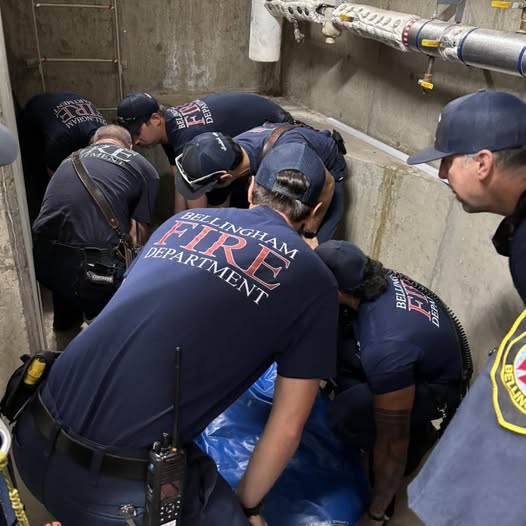
Over the past several weeks, crews from the Bellingham Fire Department have been conducting training exercises at Western Washington University, taking advantage of the campus's unique layout to prepare for emergencies in environments that differ significantly from typical residential or commercial structures. The department shared details of the training opportunity on social media Thursday, August 14, expressing appreciation to the university for opening its facilities to local firefighters.
The training sessions gave crews firsthand experience navigating the kinds of challenges that a large, multi-building academic campus can present, including complex floor plans, high-occupancy spaces, underground utility corridors, and structures that were not designed with emergency response as a primary concern. That kind of varied practice is exactly what fire departments need to maintain readiness across the full range of calls they might receive.
Why Campus Training Matters for Fire Crews
Colleges and universities present firefighters with a specific set of challenges that differ from single-family homes, commercial warehouses, or office buildings. Residence halls hold dozens or hundreds of occupants, many of them sleeping during late-night hours when fire risk is elevated. Laboratories contain chemicals and equipment that require specialized handling. Historic campus buildings may have unusual construction features, limited access points, or materials that burn differently than modern construction.
Western Washington University, which sits on a hillside campus in Bellingham's northern residential area near Sehome Hill, encompasses dozens of buildings across a footprint that spans multiple city blocks. The campus includes everything from modern academic facilities to older brick structures, residence halls, underground steam tunnels, and outdoor gathering spaces that can be crowded during events. For firefighters, learning to move through those spaces under controlled conditions is far more effective than encountering them for the first time during an emergency call.
The Bellingham Fire Department serves the city of Bellingham and works alongside other Whatcom County agencies to respond to emergencies across a service area that includes neighborhoods, waterfront facilities, industrial zones, and large institutional campuses like WWU and Bellingham Technical College.
Western Washington University as a Community Partner
Western Washington University, home to roughly 15,000 students and more than 2,000 faculty and staff, is one of the largest institutions in Bellingham and a significant presence in the broader Whatcom County community. The university has historically maintained close relationships with city agencies, including the fire department, police, and public works departments that all interact with campus operations on a regular basis.
Partnering with the fire department for multi-week training exercises reflects the kind of cooperative arrangement that benefits both sides. The university gets firefighters who are better prepared to respond to campus-specific emergencies, and the fire department gets access to training environments it could not otherwise replicate on its own. According to the department's social media post, the training included scenarios that present "unique challenges" for firefighters, a phrase that likely refers to the combination of complex buildings, occupancy patterns, and access considerations that make a large university campus different from other training sites.
Western Washington University maintains its own campus safety office and coordinates regularly with city emergency services, but the presence of highly trained Bellingham firefighters who know the campus layout adds an additional layer of preparedness for students, faculty, and staff who spend time on campus each day.
A Commitment to Preparedness Across Whatcom County
The Bellingham Fire Department has emphasized ongoing training as a cornerstone of its operational readiness. Multi-company training exercises, technical rescue drills, and specialized scenario practice are all part of how the department maintains its skills between emergency responses. Training in diverse locations, rather than only at designated fire training facilities, reflects a broader philosophy: prepare for the environment you will actually face, not just the ideal training ground.
Whatcom County presents a wide variety of emergency scenarios, from wildland fire interfaces in the eastern foothills to marine emergencies along Bellingham Bay, industrial incidents at the port and refinery corridor, and now, complex multi-story campus emergencies at large institutions. The department's willingness to seek out nontraditional training sites speaks to its understanding that readiness requires exposure to real-world complexity.
The fire department thanked Western Washington University for hosting the exercises and for supporting the crews throughout the training period. That kind of institutional partnership is easier to sustain in a community where universities, city agencies, and residents share a genuine investment in local safety. For more on how Bellingham's public safety agencies serve the community, including recent department milestones and emergency preparedness resources, you can explore coverage of the department's recent paramedic certification program, which added five new advanced life support providers to Bellingham's emergency response roster.
Bellingham Fire Department crews will continue routine training operations throughout the late summer and fall season. Residents with questions about fire safety, smoke detectors, or emergency preparedness resources can contact the department directly or visit the WhatcomReady emergency preparedness portal for information on how to prepare your household for a range of local hazards.