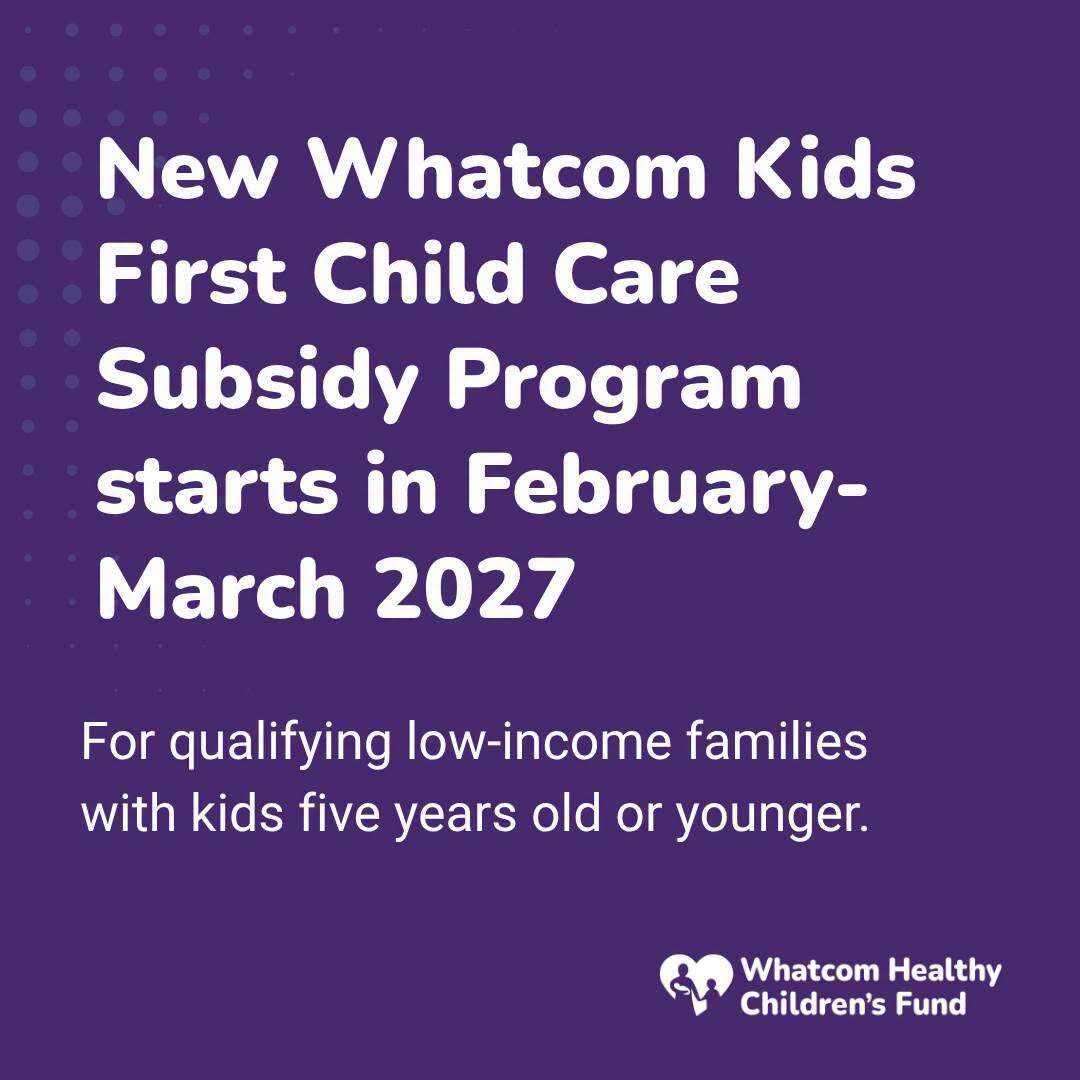
Whatcom County families struggling with the cost of child care could see direct financial relief starting in early 2027, after the County Council voted Tuesday night to approve a $7.05 million contract launching the Whatcom Kids First Child Care Subsidy Program. The contract runs through 2028 and is funded by the voter-approved Healthy Children's Fund, a dedicated funding stream Whatcom voters established to improve children's health and early learning outcomes.
The program is the largest single commitment to child care affordability in Whatcom County's history. County officials estimate it will help pay child care costs for at least 1,400 children in its first full year of operation.
Who Qualifies and How the Money Flows
To be eligible for the Whatcom Kids First subsidy, families must have children age five or younger and earn up to 75 percent of the State Median Income. For a family of four, that threshold currently sits at approximately $104,484 per year, or just over $105,543 depending on the measure used. That income ceiling is designed to capture working families who earn too much for most traditional safety-net programs but still face child care costs that consume a significant share of their monthly budget.
Funding will be paid directly to the child's licensed care provider rather than as a cash payment to families. That structure reduces paperwork for parents, ensures money reaches the provider immediately, and gives providers more financial predictability. According to county officials, the state's Working Connections Child Care Subsidy does not cover the true cost of care for many low-income children, leaving providers with a gap between what they receive and their actual operating costs. The new Whatcom Kids First program will provide bridge payments to providers serving those families, intended to keep high-quality care financially viable in the county.
"Child care is one of the largest expenses many parents face. Families will directly feel the benefits in their monthly budget," said Sarah Simpson, Child and Family Programs Supervisor with Whatcom County Health and Community Services.
The Company Behind the Program
The county selected AidKit to administer the program through a competitive bidding process. AidKit is a national firm with a track record of building large-scale direct assistance programs for governments and nonprofits, including complex public benefit systems that require strong fraud controls and broad outreach capacity. The company will handle application forms, online tools, eligibility verification, payment distribution, and coordination with local partners.
One of AidKit's first tasks will be outreach. According to Simpson, nearly 3,000 Whatcom County children under age five already qualify for the existing state Working Connections program but are not currently enrolled. AidKit will develop a comprehensive outreach and enrollment plan with local partners to connect those families with both the new county subsidy and existing state resources they may be leaving on the table.
"Our goal is to make getting financial help as simple and stress-free as possible for Whatcom County's families and the child care providers they depend on," said Brittany Christenson, CEO at AidKit.
What Happens Next and When to Expect Payments
With the contract now signed, AidKit will begin building the program infrastructure immediately. The county does not yet have a specific start date for subsidy payments, but officials expect payments to begin in February or March 2027. Detailed application information for both families and child care providers will be released in late 2026.
The Healthy Children's Fund, which is providing the $7.05 million, was created by Whatcom voters specifically to make quality child care more affordable and accessible. County Executive Satpal Sidhu called the contract approval "an exciting milestone" for the fund and said the program would achieve its central purpose of helping more than a thousand families each year.
For families who want to stay informed about the application process, the county has indicated that updates will be shared through Whatcom County Health and Community Services channels as the program takes shape. Providers who currently accept children through the state Working Connections program should also watch for outreach from AidKit about how the bridge payments will work.
Coverage of Whatcom County's ongoing efforts to address child care access and affordable housing reflects a broader push by county leadership to use dedicated fund streams for direct family support. Readers following the county's child care investments can find additional context on related budget decisions in recent local reporting. For background on how Whatcom County's budget priorities are evolving, earlier coverage of the county's capital spending decisions offers useful framing on how large public contracts move through the council process.