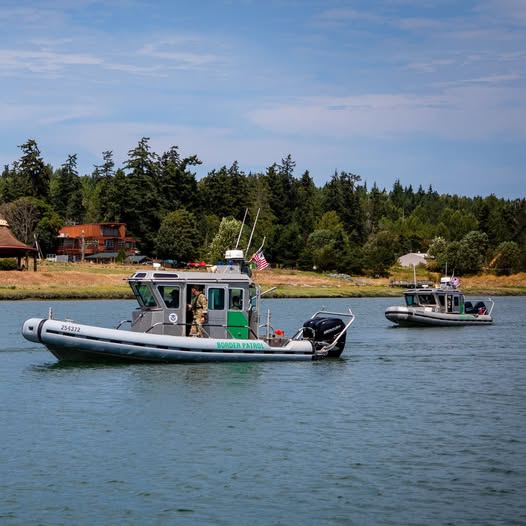
Federal law enforcement agencies from both sides of the 49th parallel gathered in Blaine last week for the annual US Border Patrol Marine Program Conference, bringing together 19 marine program representatives along with partners from the Royal Canadian Mounted Police and the United States Coast Guard to strengthen coordination on shared waterways.
What the Conference Covered
The gathering, hosted by US Border Patrol Blaine Sector, focused on three core areas: reviewing active maritime initiatives, assessing platform and equipment needs across the marine program, and reinforcing cross-border partnerships. Representatives from 19 marine program stations participated alongside the RCMP and the US Coast Guard, two agencies whose cooperation is essential for monitoring the Salish Sea and the waters separating Whatcom County from British Columbia.
The Blaine Sector patrols one of the most complex border environments in the country. Its area of responsibility includes Birch Bay, Drayton Harbor, Semiahmoo Bay, and the broader Strait of Georgia, where vessel traffic ranges from recreational boaters and commercial fishing fleets to cargo ships moving through the region. The international maritime boundary runs through these same waters, making coordination between American and Canadian agencies a practical necessity rather than a diplomatic formality.
Why the Marine Program Matters for Whatcom County
The marine component of Blaine Sector operations directly affects residents along the northern edge of Whatcom County. Blaine, Birch Bay, and Semiahmoo are home to marinas, fishing operations, and a robust recreational boating community. The Border Patrol marine program provides surveillance and interdiction capability across those waters, working alongside the US Coast Guard on enforcement and rescue operations.
Cross-border maritime enforcement in this region has grown more complex in recent years. The broader immigration enforcement climate in Whatcom County has kept federal operations in the public eye, with attention focused on processing facilities in Ferndale, detentions in Lynden, and the Blaine Border Patrol Station. The marine program represents a distinct but connected piece of that enforcement picture, one that operates largely out of public view on open water.
RCMP participation in the conference reflects the longstanding information-sharing relationship between American and Canadian border agencies. The two countries cooperate under frameworks including the Integrated Border Enforcement Teams, known as IBET, which have operated along the BC-Washington border for more than two decades. Those teams include marine units specifically designed to monitor water crossings that land-based patrols cannot easily cover.
Platform Needs and Future Direction
One of the stated agenda items for the conference was discussing platform needs across the marine program. In border enforcement terminology, "platforms" typically refers to vessels, aircraft, and the technology systems that support them. Federal marine programs across the country have been navigating equipment aging and funding questions, with the Border Patrol marine fleet ranging from rigid-hull inflatable boats used for shallow-water work to larger patrol craft capable of extended offshore operations.
The Blaine Sector has not publicly detailed what specific platforms are under review, but the conference format, bringing together representatives from all 19 marine program stations, suggests the discussion was national in scope while still grounded in local operational realities. Hosting the event in Blaine gives the sector an opportunity to demonstrate conditions specific to the Pacific Northwest, including the challenges of operating in tidal waters, heavy fog, and the dense recreational vessel traffic that peaks every summer.
The USCG presence at the conference underscores the layered nature of maritime border security. While the Border Patrol has primary responsibility for detecting and apprehending individuals crossing between ports of entry, the Coast Guard handles maritime law enforcement on the water and coordinates search and rescue. In the Salish Sea, those roles frequently overlap, and joint exercises and shared situational awareness are critical for both agencies.
What Happens Next
Blaine Sector described the conference as a successful event for the marine program, though no specific outcomes, policy changes, or procurement decisions were announced publicly. Follow-up actions from these annual gatherings typically include updated memoranda of understanding between partner agencies, shared training exercises, and refined communication protocols for incidents that cross jurisdictional lines.
For Whatcom County residents who live, fish, or recreate along the northern waterfront, the practical effect of a well-coordinated marine program is faster response to incidents at sea and more consistent monitoring of water crossings that bypass land ports of entry. The Blaine, Lynden, and Sumas crossings handle the majority of documented border traffic in the county, but the marine frontier represents a quieter, and harder to monitor, alternative route that the program is specifically designed to address.
Residents with questions about Border Patrol marine operations or who want to report suspicious activity on local waterways can contact CBP's tip line or reach the Blaine Sector directly. More background on how the program fits into broader Whatcom County enforcement activity is available in recent coverage of the Ferndale ICE facility and detention operations in Lynden, including earlier reporting on federal operations in the area.