The Trump administration finalized a rule change to the Endangered Species Act on July 14 that federal wildlife biologists and local conservation experts say will accelerate the decline of some of the Pacific Northwest's most iconic species. The change is narrow in wording but sweeping in implication: it removes the legal definition of "harm" that previously included habitat destruction and degradation, replacing it with a standard that only counts direct killing or physical injury of an individual animal.
For communities along the Salish Sea, including Bellingham and greater Whatcom County, the practical consequences could be severe. Southern Resident killer whales, Chinook salmon, marbled murrelets, northern spotted owls, and several butterfly species found in the region are among those whose survival depends most directly on habitat protection, now newly weakened.
What the Rule Change Actually Does
The Endangered Species Act, passed in 1973, was built around a broad interpretation of "harm." Under decades of legal precedent including a 1995 Supreme Court decision, harm included any action that "significantly modifies or degrades" a species' habitat in ways that impair essential behaviors like feeding, breeding, or seeking shelter. That standard gave the law teeth against logging, development, and resource extraction in sensitive areas even when no individual animals were directly killed.
The Trump administration's July 14 rule removes that regulatory definition entirely. Under the new standard, harm only applies when an animal is directly killed or physically injured. Destroying a nesting forest, draining a wetland, or eliminating a salmon run's spawning gravel would no longer qualify as harm under federal law.
John McLaughlin, an environmental science professor at Western Washington University, called the change a backdoor gutting of the entire statute.
"It's essentially a backhanded way of gutting the Endangered Species Act," McLaughlin said. "You're essentially consigning them to extinction."
Gregory Green, a wildlife ecologist also at WWU, said the change will hit hardest for species whose populations are concentrated on private lands, where the ESA's habitat protections had previously constrained development and resource extraction. He raised specific concern about marbled murrelet and northern spotted owl habitat under the Northwest Forest Plan, a Clinton-era land management framework that governs federal forests in the Pacific Northwest.
What It Means for Orcas, Salmon, and Local Wildlife
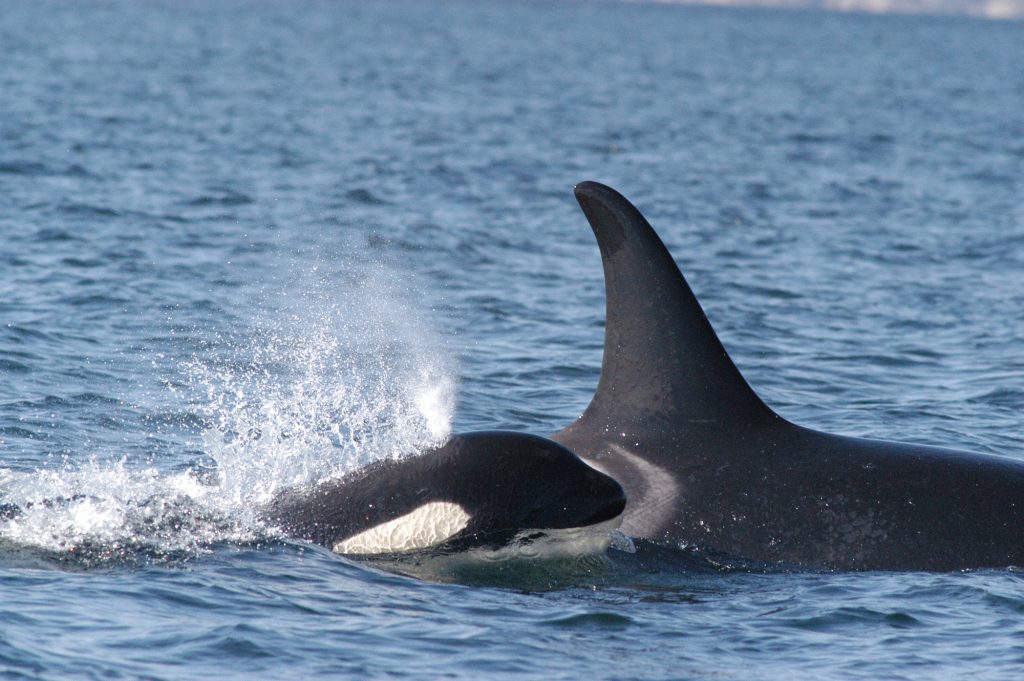
Southern Resident killer whales are among the most studied and most at-risk populations in the Salish Sea. The group currently numbers fewer than 75 individuals, and its survival is tightly coupled to the availability of Chinook salmon, its primary prey. Southern Residents face a documented combination of stressors: noise from vessel traffic, contaminants from urban runoff, and chronic prey shortage driven by decades of salmon population decline.
Jessica Farrer, research director at The Whale Museum on San Juan Island, said the new ESA standard transforms the law from a protection statute into something closer to an anti-harassment rule.
"It's going to allow animals to go extinct in peace, I guess, is how I see it," Farrer said. "If we're not going to protect their habitat and we're only going to react when injury or death occurs, then we're just managing their extinction."
Coho salmon, which spend nearly two and a half years rearing in freshwater wetlands before migrating to the ocean, will also be significantly affected. Their freshwater habitats are precisely the kind of environment that the old ESA standard protected against drainage and development. Under the new rule, those habitats can be eliminated without triggering federal review as long as no salmon are physically present and killed at the moment of the destruction.
McLaughlin also highlighted the marbled murrelet, a small seabird that nests in old-growth forests close to saltwater, as a likely casualty. The bird is notoriously difficult to observe in its nesting habitat, making the forest itself the only practically measurable proxy for its presence.
"You could basically remove that forest habitat in keeping with this new interpretation, and you will eliminate the marbled murrelet, but it won't be considered a harm," he said.
Tribes and Conservationists Are Already in Court
The Swinomish Indian Tribal Community is among the tribal nations that have joined legal challenges against the rule change. Swinomish Chairman Steve Edwards described the new rule as anti-science and warned about its effects on tribal cultural practices and public health.
"I fear for the health of our people and our cultural lifeways," Edwards said in a press release from the tribe.
Multiple environmental organizations have also filed or joined legal challenges. The administration's position is that the change "restores common sense" and respects private property rights, framing the old standard as federal overreach into how landowners can use their own property.
The U.S. Fish and Wildlife Service maintains the full federal list of endangered and threatened species broken down by county, which allows residents to look up which species in Whatcom County carry federal protection status. The outcome of litigation challenging the July 14 rule change will determine whether those protections retain their historical force or operate under the narrowed standard going forward.
For Whatcom County residents who want to engage on the issue, regional conservation organizations including the Washington Environmental Council and local Lummi and Nooksack tribal environmental departments are tracking the litigation and its local implications. The future of the orcas, the salmon, and the old forests that make the Salish Sea region distinctive may depend significantly on what the courts decide in the months ahead.