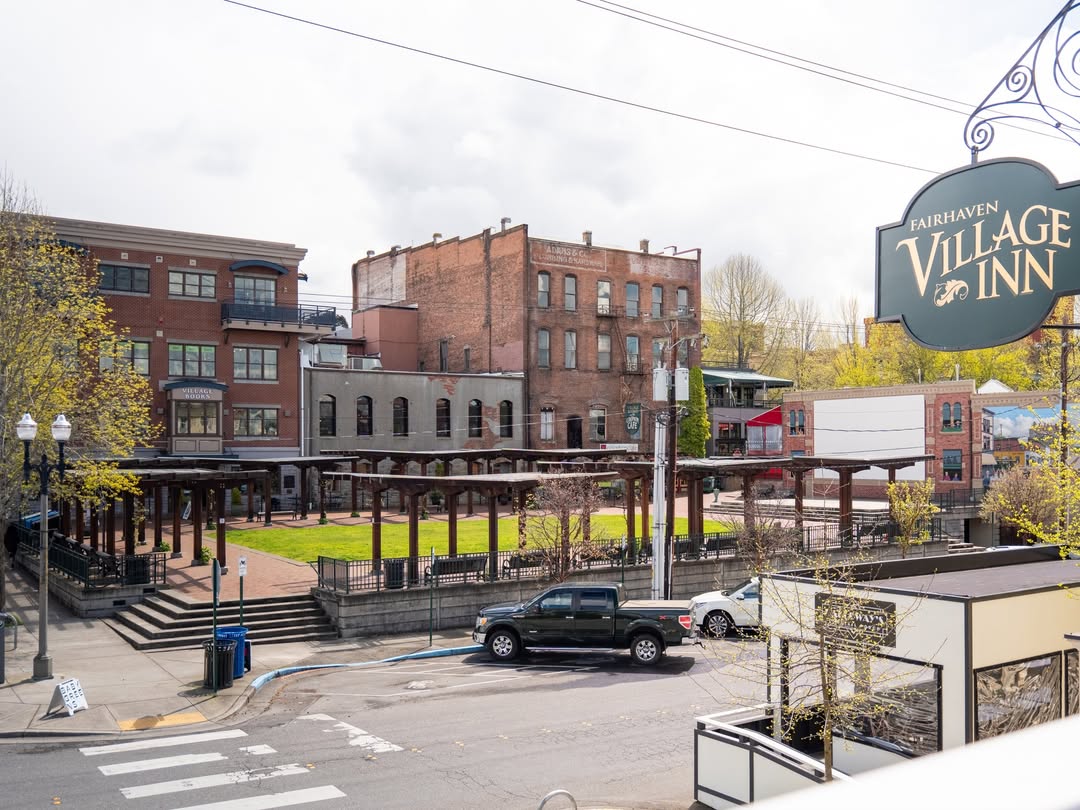
Voters in a newly created district stretching from the foothills near Everson and Sumas down to the Skagit County border will choose a representative on the Port of Bellingham commission for the first time this August, after Whatcom County voters approved expanding the commission from three members to five last year.
District 5 mirrors Whatcom County Council District 3 in its boundaries, covering a large rural and semi-rural swath of eastern and southern Whatcom County that includes farming communities, river valley towns, and foothill neighborhoods far removed from the saltwater shoreline. Despite the district's geographic distance from the downtown Bellingham waterfront, all three candidates in the race are focused intensely on what happens at the Port's marine and aviation facilities, which generate the revenue that funds the agency's wider operations across the county.
The Candidates and Their Priorities
Shawn Ensley, a 48-year-old resident of Deming, spent years in the Air Force Reserve before his current work as an instrument and electrical foreman at the BP refinery in Cherry Point. He frames the Port's mission of sustainable economic development as the "lifeblood of Whatcom County" and centers his campaign on creating living-wage jobs at the Bellingham Shipping Terminal on the waterfront. Those are the kinds of jobs, Ensley argues, that support families throughout the county regardless of whether those families live near the water. Ensley also sees potential in the Fairhaven area to attract small- and medium-sized cruise ships that could in turn generate more air travel business at Bellingham International Airport, creating a reinforcing loop between marine and aviation revenue for the Port.
Jerry Burns, 66, lives in Kendall and is enthusiastically focused on cruise ships as well, specifically at the Fairhaven Cruise Terminal. He believes the transportation network near the terminal makes it a "perfect fit" for attracting vessel traffic, pointing to highway access and proximity to the Canadian border as competitive advantages that other potential terminal locations lack. Burns is firmly opposed to any development at the Bellingham waterfront that is not marine trades-related, a position that puts him in alignment with a segment of the local business community that has long argued the waterfront's industrial heritage and deep-water access should be preserved for working maritime uses rather than converted to retail, residential, or mixed-use development. "My mission is to turn the port, both at the airport and the marine industries, into an economic dynamo for prosperity for this county in this century," he said.
A third candidate, Chris Elder, is also in the race, with a focus on the shipping terminal's strategic location between Seattle and Vancouver, B.C. as a competitive advantage worth protecting and building on. That geographic positioning, Elder argues, makes Bellingham a natural waypoint in Pacific Northwest supply chains and an underutilized asset for freight movement. All three candidates share a conviction that the Port's economic performance has direct implications for communities throughout the county, not just those closest to the water.
Why the Waterfront Matters to Rural District Voters
The apparent mismatch between a rural eastern Whatcom County district and waterfront policy in downtown Bellingham reflects how the Port of Bellingham operates as a public development authority. Unlike city councils or school boards, whose budgets are tied to property taxes and service delivery within a specific jurisdiction, the Port Commission makes decisions that affect economic activity and employment across the entire county. Shipping terminal jobs, airport-related employment, marine industrial tenants, and waterfront development all generate tax revenue and wages that ripple into communities far from the dock.
The Bellingham Shipping Terminal, situated on the central waterfront, handles bulk cargo including grain and other agricultural products -- goods that flow from farms in Whatcom and Skagit counties and the broader Pacific Northwest toward export markets in Asia and elsewhere. The farmers, equipment operators, and transport workers involved in moving that cargo have a direct stake in whether the terminal remains competitive and well-maintained. Candidates who want to protect those jobs and attract new marine industry tenants are making an argument that resonates with rural and agricultural communities even if those voters live nowhere near salt water.
The Fairhaven Cruise Terminal has been a recurring topic of discussion for the Port for years. Fairhaven's deep-water access and proximity to the Canadian border make it attractive in principle for cruise traffic, and the Alaska state ferry system has historically used Bellingham as its southern terminus, demonstrating that the infrastructure can support large vessels and the passenger logistics that come with them. Whether a sustained cruise business could develop at Fairhaven depends on factors including passenger demand, vessel routing decisions by cruise lines, investment in terminal facilities, and competition from other Pacific Northwest ports that have made significant infrastructure investments in recent years.
What Comes Next
The August 4 primary will narrow the District 5 field. In Washington State's top-two primary system, the two candidates who receive the most votes advance to the November general election regardless of party affiliation. Ballots have already been mailed to registered voters in Whatcom County, and the return deadline falls on election day. Voters who have not yet returned their ballots can drop them at official ballot drop boxes located throughout the county to avoid any concern about mail transit time.
The newly expanded Port Commission will have more representation from communities that previously had little direct voice in Port governance. For most of the Port's history, the three-member commission meant that a small group of elected officials made consequential decisions about hundreds of millions of dollars in public assets with relatively limited geographic accountability to rural areas of the county. The expansion to five members was designed to address that gap. District 5's seat is one of two new positions created by last year's expansion vote, alongside District 4, whose candidates were profiled earlier this week in coverage of that race.
For voters who want to learn more about the candidates' detailed positions, the Whatcom County Auditor's office maintains voter guides and candidate filing information. The Port Commission holds public meetings in Bellingham that are open to all county residents regardless of which district they live in, and meeting agendas are posted in advance on the Port's website.
For more on the August primary races shaping Whatcom County's future, see earlier coverage of the District 4 commission race.