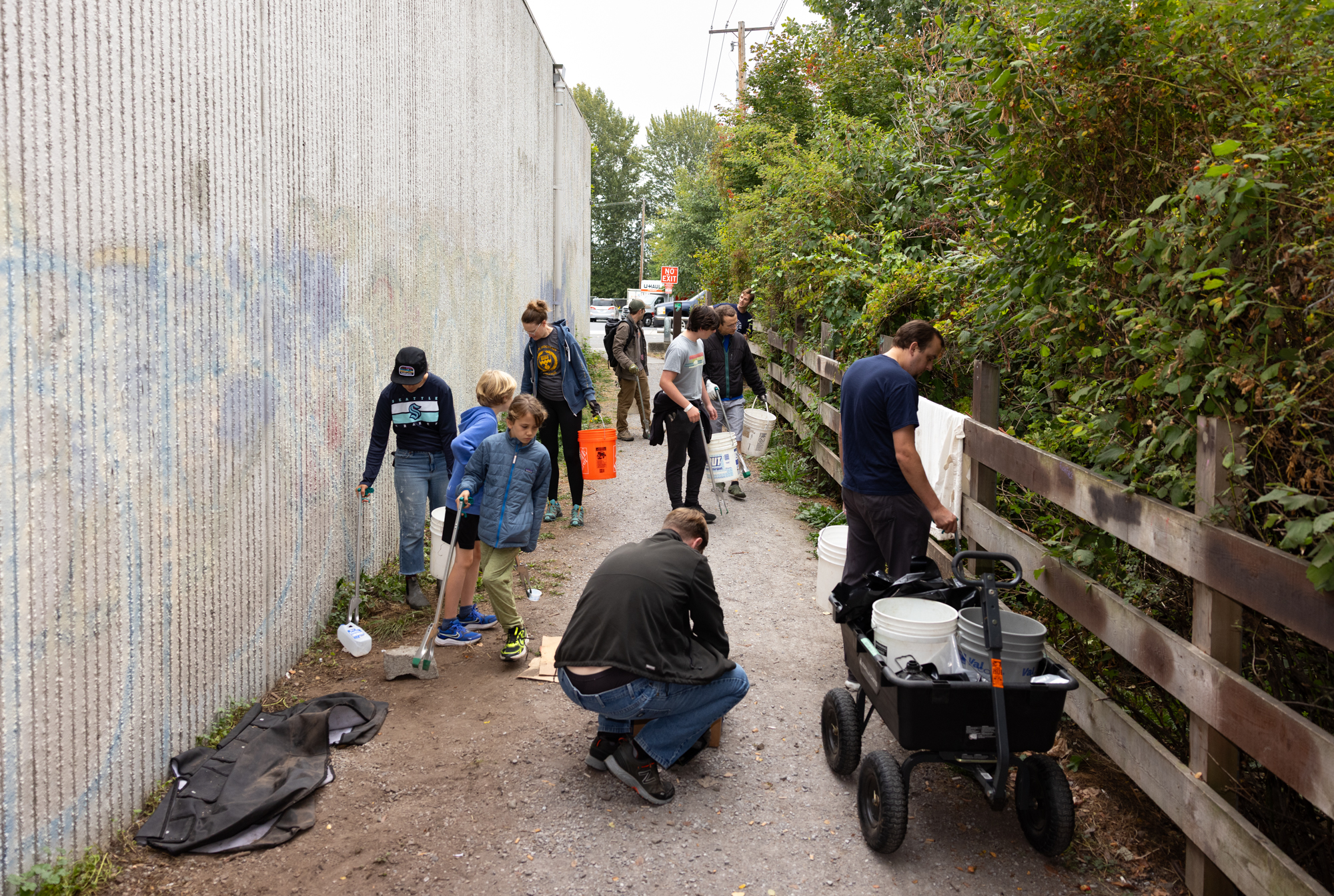
Over the past five years, a volunteer group called Trash Club has removed more than 80 tons of waste from the Whatcom Creek corridor in downtown Bellingham. That number, documented by coordinator Matt Bryant in a guest column this week, is striking. What it reveals about the state of unsanctioned camping along one of Bellingham's most ecologically sensitive waterways is more striking still.
At any given time, Bryant writes, dozens of small encampments are active in the Whatcom Creek corridor, generating a steady stream of waste including biohazards, weapons, needles, and industrial chemicals. The creek runs through the heart of Bellingham, passing under downtown streets and through Whatcom Falls Park before reaching Bellingham Bay. Its health affects salmon habitat, water quality, and the experience of thousands of residents and visitors who use the parks and trails along its banks each year.
Trash Club's Expanding Role
What began as a volunteer cleanup effort has become something closer to a municipal service. In January, Trash Club began partnering with the Bellingham Parks Department to install six 55-gallon trash cans along a four-block stretch of the downtown corridor where waste regularly accumulates and city services have historically been absent. Those cans are filling completely every two to three days. The intervention is collecting roughly 1.5 tons of trash each month, waste that would otherwise end up on the ground or in the creek.
The scale of that ongoing effort has overwhelmed Trash Club's volunteers. Bryant describes the situation plainly: the work of Trash Club has become the de facto management of a municipal problem, with volunteers completing work that the city has not. The volume of waste has grown since the group started in 2021, not shrunk.
That trajectory points to a fundamental mismatch between the scope of the problem and the resources currently being applied to it. Trash Club can remove waste. It cannot address the underlying conditions that generate the waste in the first place.
The Structural Argument
Bryant's central argument is that the problem is not a failure of individual campers. People camping unsanctioned in the Whatcom Creek corridor are, in his framing, structurally locked out of alternatives. Without sanctioned, serviced outdoor spaces that meet the needs of people experiencing homelessness, the ongoing contamination and degradation of the creek corridor is, he writes, an inevitable certainty.
This argument has significant policy implications for the City of Bellingham, which has grappled for years with how to address both unsanctioned camping and the humanitarian needs of its unhoused population. A 2018 federal court ruling in a case originating in Boise, Idaho established that jurisdictions cannot enforce anti-camping ordinances unless they can offer adequate shelter alternatives. That ruling, and subsequent legal developments, have constrained how cities across the West, including Bellingham, can respond to encampments.
The city has pursued several strategies over the years, including navigation centers, outreach programs through agencies like the Opportunity Council, and periodic site cleanups. But Bryant's account suggests those efforts have not kept pace with the problem along Whatcom Creek, where the trash volume is rising even as volunteer cleanup efforts intensify.
Sanctioned camping sites, sometimes called managed encampments or safe parking programs depending on their form, have been tried in other Pacific Northwest cities with mixed results. They provide a legal location where individuals can camp with access to sanitation services, reducing the waste and ecological impact of dispersed unsanctioned camping. Whether Bellingham has the political will and available land to pursue such an approach is an open question, and one that advocates like Bryant are pushing the city to answer.
What Comes Next
Bryant's column functions as a public call to action directed at the City of Bellingham. His ask is specific: create sanctioned, serviced outdoor spaces that provide a legal alternative to the Whatcom Creek corridor. Without that alternative, he argues, Trash Club will continue cleaning waste that the city should be preventing, and the creek's ecological health will continue to suffer.
Bellingham's city government has several relevant pressure points coming up. The city council regularly takes up issues related to homelessness, land use, and parks management, and the Parks Department's existing partnership with Trash Club suggests there is at least some institutional willingness to engage with the problem. Residents who want to follow or influence city policy on this issue can attend Bellingham City Council meetings, which include public comment periods.
Trash Club itself continues its work regardless of policy outcomes. The group's volunteers show up regularly to maintain the trash can stations and conduct broader cleanups along the corridor, doing work that the city has not filled in. For information on the group's activities or to get involved, following their social media channels is the most direct route.
The City of Bellingham manages parks and public spaces along Whatcom Creek and oversees the policy environment in which Trash Club operates. The Opportunity Council provides housing and social services to unhoused individuals in Whatcom County and is a key partner in the city's homelessness response. For background on the waterway at the center of this story, the Whatcom County government maintains information on watershed health and environmental programs affecting Whatcom Creek and its downstream connection to Bellingham Bay. For previous coverage of local environmental and civic issues in the creek corridor, see this earlier look at Bellingham waterfront environmental remediation.