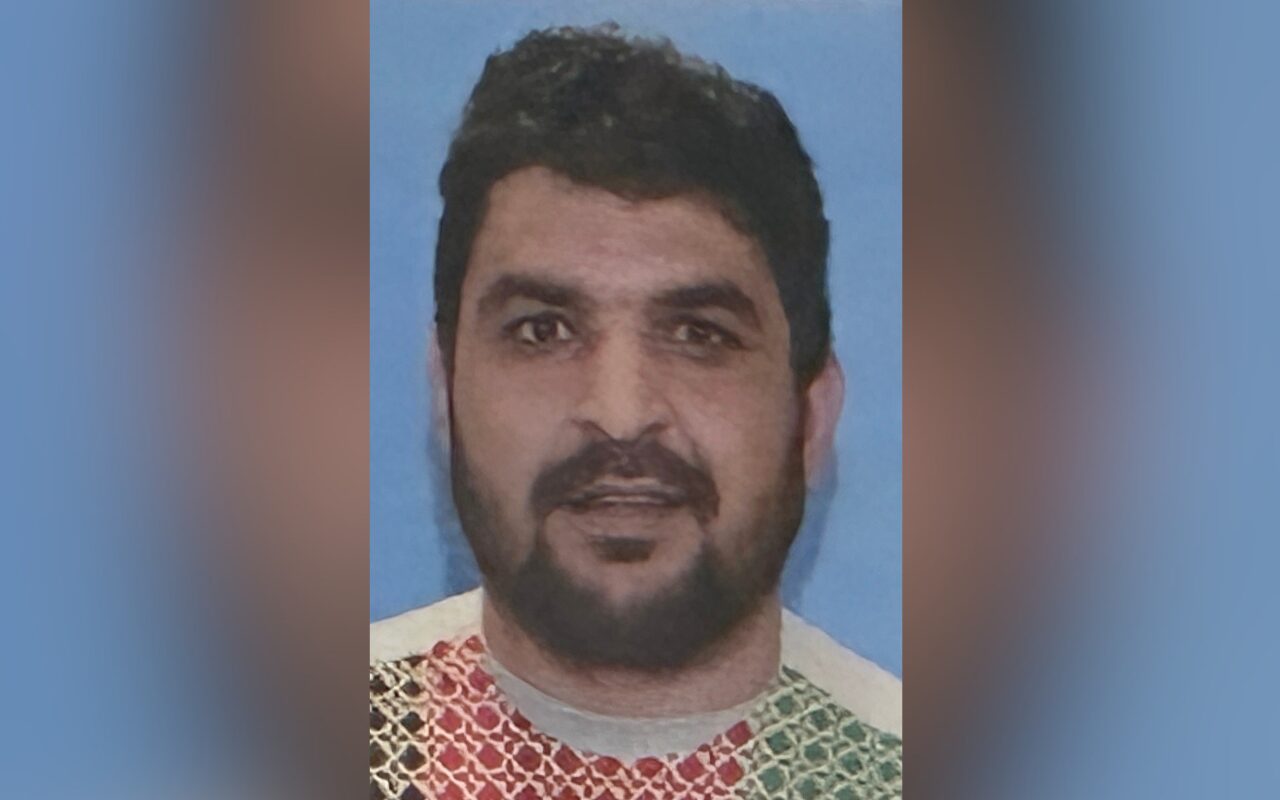
Rahmanullah Lakanwal, the Afghan national from Bellingham charged with killing a National Guard soldier in a daylight ambush near the White House last November, was admitted to George Washington University Hospital this week after refusing to eat for an extended period while held in federal pretrial detention, according to court filings made Thursday by Justice Department prosecutors.
U.S. Marshals Service officials notified prosecutors last month that they were concerned Lakanwal was at risk of "long-term health consequences, including death" because of his refusal to consume adequate nutrition. As of Thursday morning, prosecutors learned that Lakanwal had been rushed to the hospital overnight for treatment that was, in the words of their court filing, "necessary to preserve his life." An emergency hearing was convened Thursday before U.S. District Judge Amit Mehta, who described Lakanwal's health as having "deteriorated quite substantially." At the close of the hearing, Judge Mehta ordered prosecutors to submit a proposed order granting them access to Lakanwal's recent medical records.
Defense attorney Shelli Peterson declined to comment after the hearing. A spokesperson for U.S. Attorney Jeanine Pirro's office also declined to comment on the situation.
The November 2025 Attack Near the White House
Lakanwal, 30, is accused of driving cross-country from Bellingham in a Toyota Prius while carrying a stolen firearm, arriving in Washington, D.C., and opening fire on two West Virginia National Guard soldiers on November 26, 2025, at approximately 2:13 p.m. The attack occurred at the intersection of 17th and I Streets NW, near the Farragut West Metro Station and three blocks from the White House.
The shooting killed Specialist Sarah Beckstrom, 20, of the West Virginia National Guard, and critically wounded Staff Sgt. Andrew Wolfe, 24. Both soldiers were serving as part of a surge of federal law-enforcement patrols that President Donald Trump ordered in Washington, D.C. According to a police report cited by prosecutors, Lakanwal screamed "Allahu Akbar!" while firing. A third Guard member who heard the shots helped subdue him; Lakanwal was shot and wounded in the confrontation.
His first court appearance, in December 2025, took place via video from a hospital bed as he recovered from his injuries. He has since pleaded not guilty to charges including first-degree murder. In June 2026, federal prosecutors filed a 17-count superseding indictment expanding the original charges. No trial date has yet been scheduled.
From Afghanistan to Bellingham
Lakanwal entered the United States in September 2021 under Operation Allies Welcome, the Biden administration program that resettled tens of thousands of Afghans following the fall of Kabul. He was subsequently granted asylum and settled in Bellingham, where he was living before allegedly driving to Washington, D.C.
Court documents describe him as a father of five who served in Afghan security forces and worked with a CIA-backed paramilitary unit before leaving Afghanistan. He had no significant criminal record in the United States prior to the shooting.
Bellingham and Whatcom County have become home to a growing Afghan refugee community since 2021. Local resettlement organizations and faith-based groups helped place Afghan evacuees throughout the region as part of the federal program. Authorities have not publicly disclosed what, if any, investigation took place at Lakanwal's Bellingham residence, or whether anyone in the local community had prior knowledge of his plans.
The case drew national attention both because of the proximity of the attack to the White House and because of Lakanwal's immigration background. Full details on the charges are available through the U.S. Attorney's Office for the District of Columbia.
The Legal Question of Force-Feeding
In Thursday's court filing, prosecutors noted that courts have held that prison officials can involuntarily feed "hunger-striking prisoners" when necessary to preserve life. This legal doctrine allows institutions to compel nutrition under carefully defined circumstances involving medical oversight and judicial review. Whether Lakanwal is formally hunger-striking or his refusal reflects a different medical or psychological condition was not clarified in publicly available filings. Prosecutors described his behavior as a "refusal to consume adequate nutrition for an extended period."
What Comes Next
Lakanwal's medical condition introduces new complexity into a case that was already moving slowly through pretrial proceedings. Until Lakanwal is medically stable and a judge can confirm he is competent to participate in proceedings, the timeline for a trial remains uncertain. Federal courts in cases involving medically compromised defendants must navigate difficult terrain around the government's duty of care and the defendant's right to a fair trial.
For the family of Spc. Sarah Beckstrom and for the broader National Guard community, the case continues to carry deep significance. Beckstrom, who grew up in West Virginia, was 20 years old and one of the youngest soldiers deployed to the capital under the federal security surge. Staff Sgt. Andrew Wolfe, who survived his critical wounds, has not made public statements about his recovery or the current legal proceedings.
Updates on the case are published by the U.S. Attorney's Office for the District of Columbia. Whatcom County residents seeking information about local Afghan community support organizations can reach out to Whatcom County health and human services resources. For other local news, see our coverage of flood aid available for Whatcom County families.