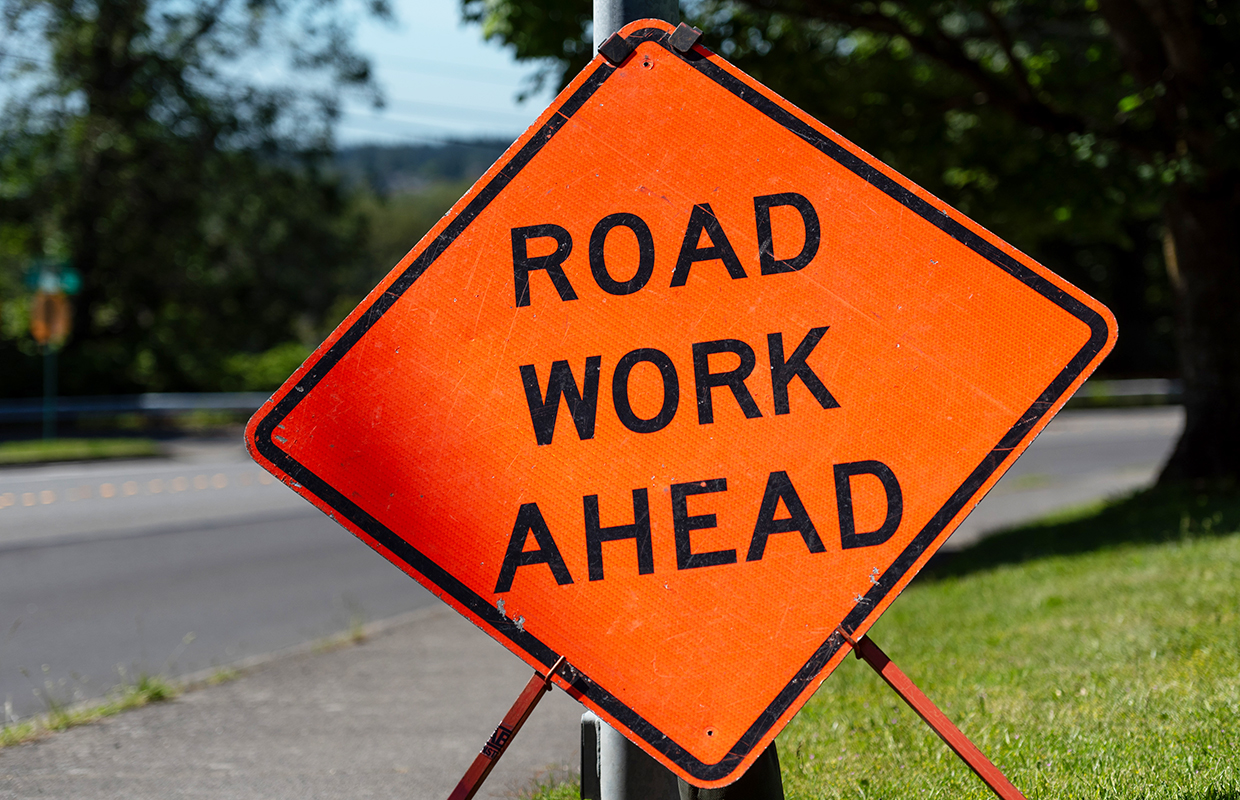
Drivers traveling I-5 between Bellingham and Burlington are facing significant delays in the days ahead. The Washington State Department of Transportation is reducing both directions of the freeway to a single lane starting Thursday evening, July 9, as part of a fish passage replacement project near Lake Samish. The restriction runs through Saturday, July 25.
The work is part of the WSDOT I-5 Tributaries to Friday, Lake and Chuckanut Creeks fish passage project -- an effort to replace outdated culverts that have blocked salmon and steelhead migration under the freeway for decades. The Lake Samish construction site sits near milepost 241, roughly between the Alger and Nulle Road interchanges south of Bellingham.
What Is Closing and When
The southbound off-ramp to Alger/Lake Samish Road already closed at noon on Monday, July 6, and is expected to remain closed until August 3 while crews replace a fish passage barrier near Lake Samish. A signed detour routes drivers via Nulle Road to access Lake Samish Road from the north.
Starting at 8 p.m. on Thursday, July 9, both northbound and southbound I-5 near Lake Samish will be reduced to one lane each. Under the construction configuration, traffic in both directions will share the existing northbound lanes in a crossover arrangement while crews work in the southbound lanes. Speed limits through the work zone will drop to 60 mph. The restriction is scheduled to lift on Saturday, July 25.
Drivers should also note that Old Samish Road -- which parallels I-5 south of Bellingham -- remains closed to through traffic and is expected to stay that way through December 2026 as part of related Chuckanut Creek fish passage work at a nearby site.
Alternate Routes and Detour Options
WSDOT is encouraging passenger vehicle drivers to consider State Route 9 or Chuckanut Drive (SR 11) as alternatives during the restriction period. SR 9 runs parallel to I-5 through the Nooksack Valley, connecting Bellingham to Burlington via Sedro-Woolley. It adds distance and time but avoids the construction zone entirely.
Chuckanut Drive, the scenic two-lane route along Bellingham Bay through Fairhaven and Bow, is viable for light passenger vehicles but is not designed for high commuter traffic volumes. During peak hours, expect backups if many drivers divert simultaneously. Commercial vehicles and trucks should use SR 9 only -- Chuckanut Drive's narrow lanes and coastal curves make it unsuitable for freight traffic.
For real-time conditions, WSDOT's traveler information page includes live camera feeds and incident alerts for the construction zone. Drivers heading south from Bellingham toward Burlington, Mount Vernon, or the Seattle metro area should check conditions before departing during the two-week window. For the latest project schedule, check the WSDOT fish passage project page at engage.wsdot.wa.gov.
Why Fish Passage Matters
The I-5 Lake Samish project is part of a broader statewide push to restore salmon habitat across western Washington. Many culverts built beneath highways and roads in the mid-20th century were installed without regard for fish passage -- too steep, too narrow, or positioned too high above stream bottom to allow salmon and steelhead to migrate upstream to spawn.
Washington's 2013 settlement with tribal governments under the U.S. v. Washington treaty rights case required the state to fix hundreds of such barriers on state-owned roads. The I-5 corridor through the Chuckanut and Lake Samish area was identified as high priority because the unnamed tributaries to Friday Creek and Lake Chuckanut Creek support coho salmon, steelhead, and cutthroat trout spawning habitat that was cut off or degraded by the original highway construction in the 1950s and 1960s.
Replacing the culverts with properly sized fish passage structures is expected to open multiple miles of additional spawning and rearing habitat in the drainages behind the current barriers. The project is funded in part through the same tribal settlement framework driving fish passage work on roads across the state, from small county roads in eastern Washington to this stretch of the busiest highway in the Pacific Northwest.
What Travelers and Commuters Should Expect
During the single-lane restriction from July 9 to July 25, WSDOT advises drivers to allow extra travel time, particularly during morning and evening commute hours. The Lake Samish corridor between exit 240 and exit 246 typically sees heavy freight and commuter traffic throughout the day -- a single lane in each direction will significantly reduce throughput, especially for commercial vehicles that cannot use alternate routes.
Travelers heading to the Bellingham International Airport, the Amtrak station, or southbound destinations through Skagit County should build additional time into their schedules through at least late July. Work at the Lake Samish site is part of a sequence of construction phases already underway at the Chuckanut Creek site roughly three miles north, meaning the I-5 corridor south of Bellingham will see active construction at multiple points through the end of summer.
Whatcom County commuters who travel this stretch regularly may want to explore whether SR 9 can become a practical daily route for the duration. The highway is slower on a normal day but avoids the bottleneck entirely, and during peak construction delays on I-5 it may prove faster in practice. Real-time traffic comparison tools like Google Maps and Waze will reflect construction delays and can help drivers choose dynamically each morning during the restriction period.