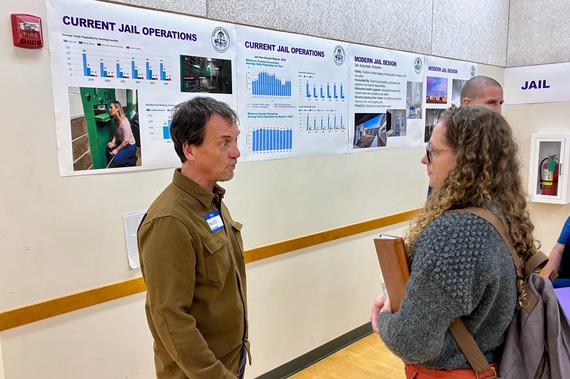
The Whatcom County Justice Project has reached a significant milestone: a $225 million budget cap has been set, and the design-build team is now working through the specific features that will define the new county jail and behavioral health facility. With the financial guardrails established, the project enters what may be its most consequential phase, translating years of community planning and debate into actual construction blueprints.
The Justice Project has been years in the making. Voters approved a sales tax levy in 2022 to fund a sweeping overhaul of Whatcom County's criminal justice and behavioral health infrastructure. The current jail on Grand Avenue in Bellingham is aging, overcrowded, and not designed for the volume or complexity of the county's current jail population. The new facility is intended to address those deficiencies while adding dedicated space for behavioral health treatment and crisis stabilization.
The County Council's Criminal Justice and Public Safety Committee voted 5-2 on May 12, 2026 to approve a revised substitute resolution establishing the preliminary planning budget cap. The $225 million figure gives the design-build team the ceiling they need to make binding decisions about what the facilities will include and how large they will be. Without a number, designers were essentially working in a vacuum on scope.
The Behavioral Health Analysis, delivered in late March 2026, is one of the key documents shaping the behavioral care center component. That analysis examines how many beds are needed, what clinical programs should be co-located, and how the facility integrates with existing county mental health and substance use disorder services. The results of that analysis are now being worked into the design specifications.
For the jail component, the design-build team is consulting with county correctional staff, health professionals, and facility construction experts to finalize the feature list. Factors like bed count, programming space, medical capacity, and technology infrastructure all need to be resolved before detailed architectural drawings can begin. These are decisions that, once locked in, are difficult and expensive to reverse.
The project also includes court expansion capacity, a less-discussed but critical element. Whatcom County's current court facilities face scheduling bottlenecks, and the Justice Project newsletter notes progress on expanding capacity to reduce case backlogs that have ripple effects throughout the entire criminal justice system, from pretrial detention times to public defender caseloads.
Residents who want to follow the project can read the full newsletter at Whatcom County's GovDelivery page. The Justice Project team also maintains public meetings and community updates through the county website. With the budget established and design work now active, the next major milestone will be a finalized design package, after which construction timelines and a site plan will be more clearly defined.
Given the scale of the investment and its implications for policing, mental health care, and criminal justice outcomes across all of Whatcom County, this is a project worth watching closely in the months ahead.