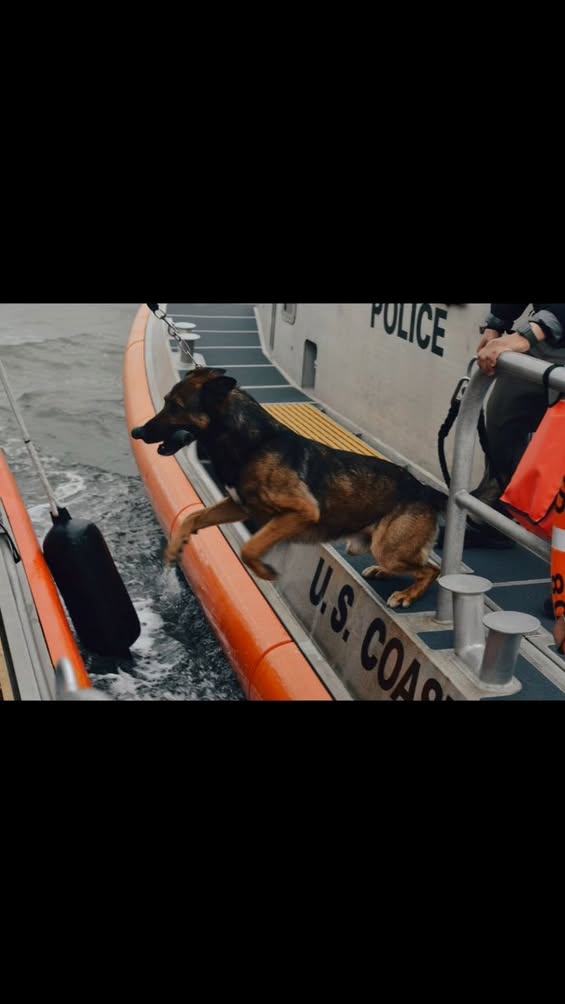
U.S. Coast Guard crews at Station Bellingham recently conducted joint vessel boarding and substance identification training with U.S. Customs and Border Protection and Border Patrol K9 teams, using their 45-foot Response Boat Mediums as the training platform. The exercise was part of a push to strengthen coordination among federal maritime and border agencies operating in the Salish Sea and surrounding waters.
Station Bellingham sits at the mouth of Bellingham Bay, making it a key node in federal maritime enforcement along the northern Washington coast. The station's 45-foot Response Boat Mediums, the workhorses of Coast Guard small-boat operations, are capable of operating in the open Strait of Juan de Fuca as well as the calmer inland waters of Bellingham Bay and Samish Bay. Using these platforms for the training exercise gave all three agencies realistic practice in conditions they'd actually face on an operational callout.
Vessel boarding training focuses on the precise, coordinated process of approaching and boarding a vessel underway or at anchor -- skills that require clear communication, practiced roles, and an understanding of how to maintain safety for crew and subjects alike. Adding K9 teams for substance identification training creates a more complex exercise: dogs trained to detect narcotics must work in confined, rocking environments that bear little resemblance to land-based searches. Getting that muscle memory built before a real interdiction is exactly the kind of preparation that makes operations safer and more effective.
The waters around Whatcom County -- the Strait of Juan de Fuca, Bellingham Bay, Boundary Bay near Blaine, and the passages between the San Juan Islands -- sit in a geographically complex zone where the U.S.-Canada maritime boundary runs through open water. U.S. Customs and Border Protection and the Border Patrol Blaine Sector maintain active operations in this region, with marine enforcement a regular part of their portfolio. Coordinating with the Coast Guard, which has primary jurisdiction over maritime safety and law enforcement on federal waters, is essential to avoiding gaps or duplication in coverage.
The exercise follows a pattern of increased interagency coordination that federal officials have signaled as a priority for the northern border region. Smuggling routes in the Salish Sea -- including narcotics and human trafficking -- present ongoing challenges that no single agency can address alone. Joint training events like this one build the shared protocols and personal relationships that make real-time coordination possible when an actual callout happens.
Station Bellingham's primary mission remains search and rescue, and officials were careful to frame this training within that broader identity. Search and rescue demands the same high-pressure coordination and vessel-boarding skills as law enforcement operations, just applied to different circumstances. Crews that train across mission sets are better prepared for the unpredictability of actual maritime emergencies.
Photography from the training was credited to Seaman Kinnear, a member of the Station Bellingham crew. For more on Station Bellingham's operations and the Coast Guard's role in Whatcom County waters, the U.S. Coast Guard publishes regular updates through its public affairs channels. Residents who witness maritime emergencies on Bellingham Bay or surrounding waters should call the Coast Guard at VHF Channel 16 or 911.