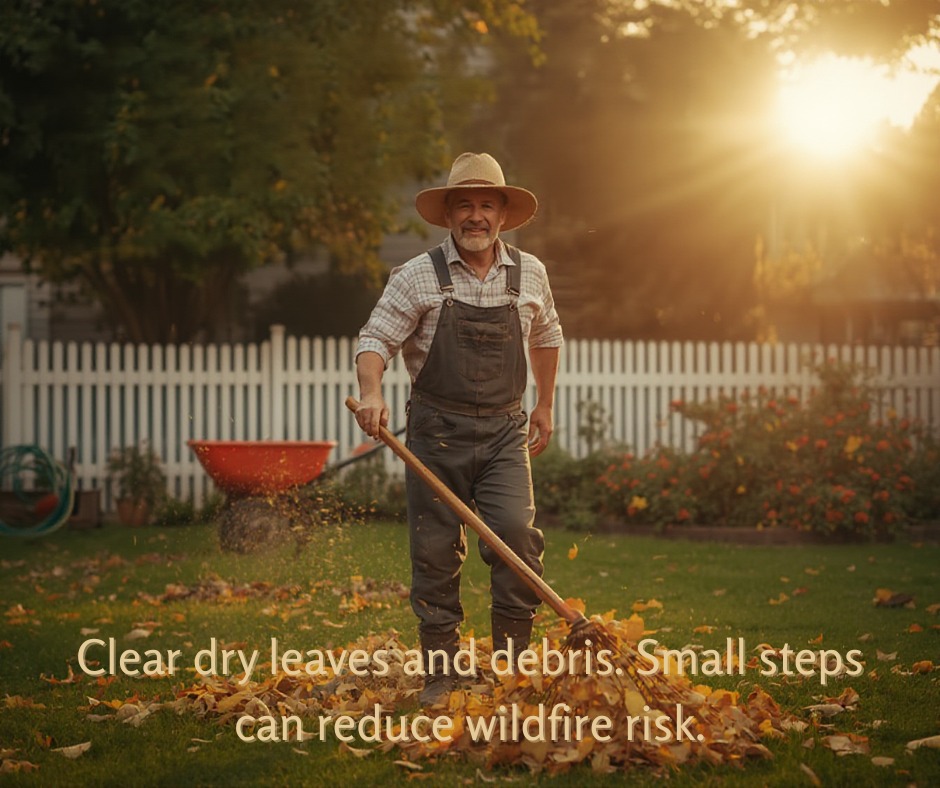
As warmer weather arrives in Whatcom County and yards dry out, the Bellingham Fire Department is urging residents to use their spring cleaning impulse for something that matters: clearing dry leaves, dead vegetation, and accumulated debris from around their homes. The reminder is timed to the period when wildfire risk starts climbing across Western Washington, and the simple act of removing combustible material from the area immediately surrounding a home can make a meaningful difference in how a structure survives a wildfire.
This kind of clearing is called creating "defensible space," and it is the foundation of residential wildfire preparedness. The goal is not to eliminate all vegetation within a certain radius, but to reduce the density and continuity of flammable material so that a fire advancing toward a home doesn't have a direct fuel path to the structure. Defensible space is typically organized into two zones: Zone 1 extends 0 to 30 feet from the home and should be kept lean and green, with dead plants removed, dry leaves raked, and no combustible materials stored against the structure. Zone 2 extends from 30 to 100 feet and focuses on reducing fuel load by spacing out trees and shrubs and removing ladder fuels that allow ground fires to climb into the canopy.
Whatcom County's wildfire risk has been a growing topic of public discussion. The Whatcom Conservation District runs a comprehensive wildfire preparedness program that includes free, nonregulatory home risk assessments for county landowners. In 2024, the district conducted 84 of these assessments in Whatcom County alone, and has helped eight Whatcom neighborhoods achieve Firewise designation, a national standard for communities that have made formal preparedness plans and reduced their collective risk. The Firewise program is coordinated by the National Fire Protection Association and is one of the most evidence-based frameworks for community-level wildfire resilience.
Western Washington is not typically thought of as wildfire country, but the region's fire risk has shifted meaningfully in recent years. Extended dry periods in late summer, drought conditions, and beetle-killed trees have all contributed to an environment where fires that historically would have stayed small can now spread quickly. Bellingham sits near a mix of urban development and forest-adjacent neighborhoods, particularly in the Sudden Valley, Alger, and Birch Bay areas. Even within city limits, properties with significant landscaping and wooded buffers benefit from defensible space practices.
For Bellingham residents wondering where to start, the Bellingham Fire Department recommends beginning with the immediate 5 feet around the foundation of your home. Clear dead leaves from gutters and roof edges, remove flammable materials like wood piles and propane tanks stored against the house, and trim branches that hang over the roof. These are the steps that make the biggest difference in fire survivability and can be accomplished in an afternoon without specialized equipment.
The Washington Department of Natural Resources Wildfire Ready program offers free personalized wildfire readiness plans for Washington residents. By entering your address, you can get a property-specific risk assessment and action list. The program also connects residents with local experts who can walk through a property assessment in person. It is a free resource that many Whatcom County landowners have not yet taken advantage of.
As the Bellingham Fire Department put it, spring cleaning isn't just for closets. Spending an hour or two clearing dead organic material from around your home is one of the most cost-effective things you can do to protect your property as fire weather conditions arrive. Your yard will look better in the process, but the real value shows up if and when a fire gets close. For more on what Whatcom County homeowners can do, visit whatcomcd.org/wildfire.