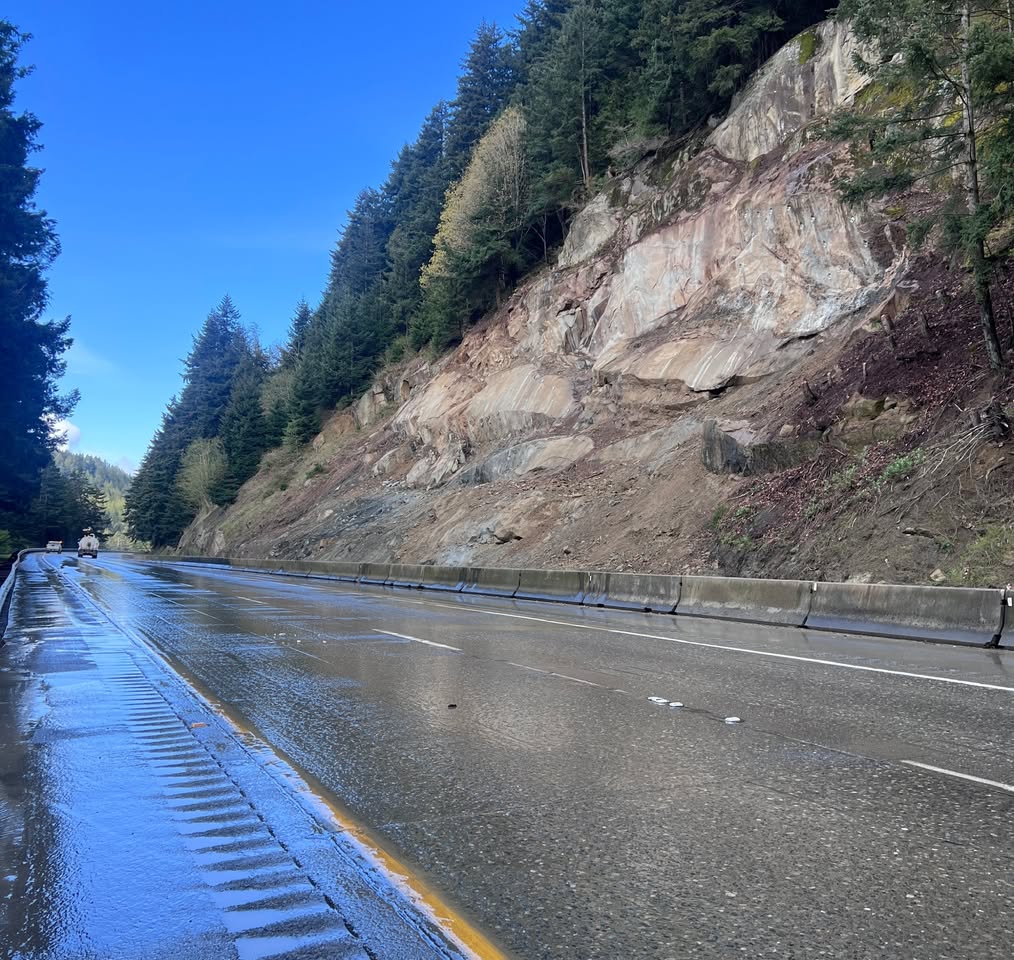
After nearly four weeks of emergency stabilization work, northbound Interstate 5 south of Bellingham is fully open again, and the City of Bellingham is reflecting on what the closure revealed about regional transportation resilience. The City of Bellingham's April 16 Inside Bellingham newsletter called out the coordination effort as a model of what is possible when agencies work together, and signaled intentions to build on those lessons going forward.
The closure began on the evening of March 19, 2026, when debris slides along northbound I-5 near Bellingham sent thousands of cubic yards of boulders, trees, and other material cascading down a steep slope and across nearby freeway lanes. Washington State Department of Transportation classified the event as an emergency and mobilized crews immediately. Workers operated seven days a week throughout the closure, removing debris and stabilizing the slope before reopening the roadway in mid-April.
The City of Bellingham expressed formal appreciation to WSDOT in the April 16 newsletter, as well as to the local and regional partners who stepped in to manage traffic detours, communicate route changes to the public, and respond to community needs during the disruption. For Whatcom County commuters, the closure meant weeks of alternative routing through surface streets and secondary highways, adding significant time to daily commutes for residents who regularly travel southbound toward Skagit County, the greater Seattle metro area, or northbound into Canada.
The regional impact extended well beyond Bellingham city limits. Interstate 5 is the primary north-south spine of the Pacific Coast corridor, and even a partial closure ripples outward quickly. Freight haulers adjusted routes. Public transit operators modified services. Local businesses near affected corridors reported changes in customer traffic. The City's Public Works department and its counterparts in Whatcom County coordinated detour signage and public communications throughout the event.
In its newsletter, the City was candid about what the event exposed. Officials acknowledged that the incident highlighted how closely connected the regional transportation system is and how quickly impacts can extend beyond any one jurisdiction. That interconnection, the newsletter noted, reinforces the importance of strong coordination, clear communication, and shared planning across agencies. While Bellingham handled its portion of the disruption effectively, city officials said they are looking forward to connecting with partner agencies to strengthen planning for future large-scale disruptions of this kind.
The closure also unfolded alongside a broader civic calendar. At the April 13 Bellingham City Council meeting, council members gave third and final approval to an ordinance allowing the city to temporarily close streets and alleys for public health and safety purposes. Though unrelated to the I-5 closure itself, the timing underscored the city's ongoing attention to infrastructure and mobility issues at multiple scales simultaneously.
For an earlier and more detailed look at the reopening itself, full coverage of the reopening announcement is available from yesterday's reporting, including details on the scope of the slide and the emergency stabilization work WSDOT performed.
The northbound lanes are now carrying full traffic. WSDOT has not identified any remaining hazards requiring ongoing closures at the site as of the April 16 reopening announcement. Drivers who became accustomed to alternative routes over the past weeks may find travel times normalizing quickly as the backlog of diverted traffic redistributes across the corridor.
Looking ahead, the City of Bellingham's stated goal of strengthening cross-agency planning for large-scale disruptions suggests that formal after-action reviews may be underway or planned. Those reviews typically result in updated emergency transportation plans, revised communication protocols, and in some cases infrastructure investments to reduce vulnerability at known slide risk areas. The Chuckanut Drive corridor and portions of I-5 south of Bellingham have long-standing geological characteristics that make them susceptible to landslides during wet weather cycles, a reality that regional planners will continue to weigh as they plan for the future.