Washington State's Salmon Recovery Funding Board has awarded nearly $780,000 for three habitat restoration projects in the Nooksack watershed, the latest round of state investment in one of Whatcom County's most ecologically significant river systems. The grants are part of a statewide $21.5 million award across 75 projects, with additional funding flowing to neighboring Skagit County as well.
The three Whatcom County projects target different parts of the Nooksack system and different types of habitat work. Together they represent a coordinated effort to improve conditions for salmon species including Chinook, coho, and steelhead that depend on the Nooksack and its tributaries for spawning and rearing habitat.
The Three Nooksack Projects
The largest of the three grants, more than $470,000, goes to the Nooksack Indian Tribe to build 14 engineered logjams on the North Fork Nooksack River. Engineered logjams are structures built from large wood that mimic the natural function of fallen trees in stream channels. They slow water velocity, create deep pools, trap gravel, and form side channels that juvenile salmon use for refuge from predators and high flows. The North Fork Nooksack originates in the Mount Baker wilderness and flows through some of the most intact salmon habitat remaining in Whatcom County.
The Whatcom Land Trust received $217,000 to purchase and restore eroding riverfront property near Racehorse Creek, a tributary of the North Fork. Riverbank erosion is a chronic problem along Whatcom County streams, where historical clearing of riparian vegetation has left banks unstable and prone to sloughing sediment into the water. Excess fine sediment can smother salmon eggs in the gravel, directly reducing spawning success. By acquiring and stabilizing the property, the Whatcom Land Trust will protect the bank long-term and allow native vegetation to re-establish.
A third grant of $90,000 will support native tree and shrub planting along the South Fork Nooksack River. Riparian vegetation along stream banks provides shade that keeps water temperatures cool enough for salmon, particularly during the warm, dry summers that Whatcom County experiences in recent years. Tree roots also stabilize banks and filter agricultural and stormwater runoff before it reaches the river. The South Fork Nooksack flows through some of the county's most productive farmland before joining the mainstem near Acme.
Why the Nooksack Matters
The Nooksack River system is one of the most important freshwater habitats in northwestern Washington. It supports runs of Chinook, coho, chum, pink, and sockeye salmon as well as steelhead and bull trout, several of which are listed as threatened or endangered under the federal Endangered Species Act. The health of the Nooksack directly affects tribal fishing rights, commercial and recreational fishing, orca recovery efforts in Puget Sound and the Salish Sea, and the broader ecology of Whatcom County.
The Nooksack Salmon Enhancement Association has worked for decades on habitat restoration projects throughout the Nooksack watershed, partnering with landowners, tribes, government agencies, and conservation groups. The current round of grants reflects the ongoing and layered nature of salmon recovery work, which requires simultaneous action on spawning habitat, water temperature, sediment, and connectivity across hundreds of miles of stream channel.
The statewide $21.5 million award also included over $884,000 for projects in neighboring Skagit County, reflecting the regional scale of salmon recovery efforts across northwestern Washington. The Salmon Recovery Funding Board, established under Washington's Salmon Recovery Act, distributes state and federal funds to local projects on a competitive grant basis.
What Comes Next
For the Nooksack Indian Tribe's logjam project, the next step is construction planning and permitting. Engineered logjam projects require coordination with the Washington State Department of Ecology, the Army Corps of Engineers, and tribal and county land managers before physical work can begin in the river. The Whatcom Land Trust's Racehorse Creek acquisition will involve property due diligence and closing before restoration work starts. Riparian planting along the South Fork typically happens in the fall and early winter, when rainfall is sufficient to establish new plants before the dry season.
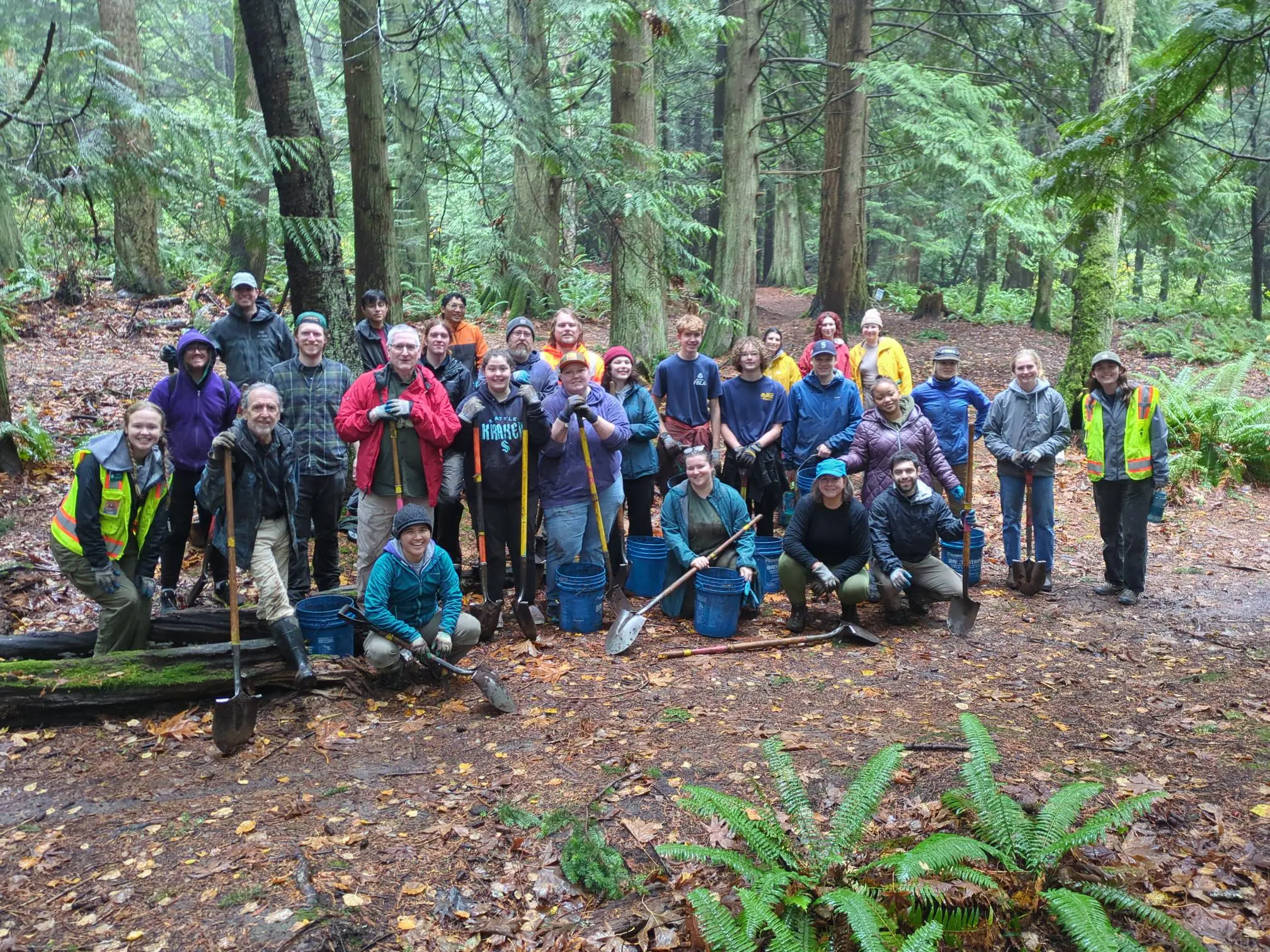
Residents interested in the health of the Nooksack River and local salmon populations can follow project updates through the Whatcom Land Trust and the Nooksack Salmon Enhancement Association. The City of Bellingham has also been involved in urban tributary restoration, including work along Squalicum Creek in Cornwall Memorial Park, connecting the broader watershed recovery effort to Bellingham's own park system. For more on local salmon habitat work happening close to home, earlier coverage of Bellingham's fall parks volunteer season includes details on riparian restoration near Squalicum Creek and how residents can get directly involved in that work.