A 35-year-old man is facing multiple charges after a police pursuit that began in Bellingham and ended in Ferndale early Tuesday morning, September 15, with a detail that made the case particularly unusual: the suspect called 911 himself while being chased, told dispatchers there was a child in the car, and said he had no intention of stopping for police.
Bellingham Police Department officers initially pulled the man over near Bakerview Road. The suspect fled, getting onto southbound I-5. Washington State Patrol Trooper Kelsey Harding said troopers located the suspect driver near Ohio Street, and a pursuit began with the vehicle moving northbound. The chase covered several miles through the Bellingham corridor before spike strips were deployed near the Main Street exit in Ferndale.
The sequence of events raises questions that go beyond the basic facts of the chase. A suspect who calls 911 during his own pursuit is not simply running from police. He is actively attempting to manage the response, inserting himself into the communication channel that law enforcement depends on and using it to shape how officers and dispatchers perceive the situation. The claim that a child was in the vehicle was, investigators later determined, false. But in the moment, it had the potential to alter decision-making in significant ways.
The 911 Call During the Chase
The suspect's decision to call 911 during an active pursuit created an unusual situation for dispatchers. He told them a child was in the vehicle and that he did not plan to stop. That claim affected how the pursuit was managed, as the presence of a child in a fleeing vehicle raises the risk level of any police action to stop the car. Officers and supervisors evaluating whether and how to continue a pursuit must weigh the danger of the chase itself against the risk of losing the suspect, and the presence of a child in the vehicle adds a layer of urgency and caution that can constrain tactical options.
Dispatchers who receive calls from suspects during active incidents face a difficult task. They must relay information to field officers while assessing the credibility of what they are hearing. A caller who identifies himself as the person being chased and simultaneously claims a child is present creates a situation where the information cannot be immediately verified but also cannot be safely ignored. Field supervisors must make real-time decisions under that uncertainty.
When officers ultimately apprehended the man after the spike strip deflation and foot chase, no children were found inside the vehicle. That false report became one of the charges he now faces, along with DUI and related offenses. The false reporting charge reflects Washington State law's treatment of misleading emergency communications, particularly when those communications are made to influence the conduct of a police response. Under state law, filing a false report with a public servant is a gross misdemeanor, and when that false report involves emergency services, prosecutors often treat the conduct as an aggravating factor in charging decisions.
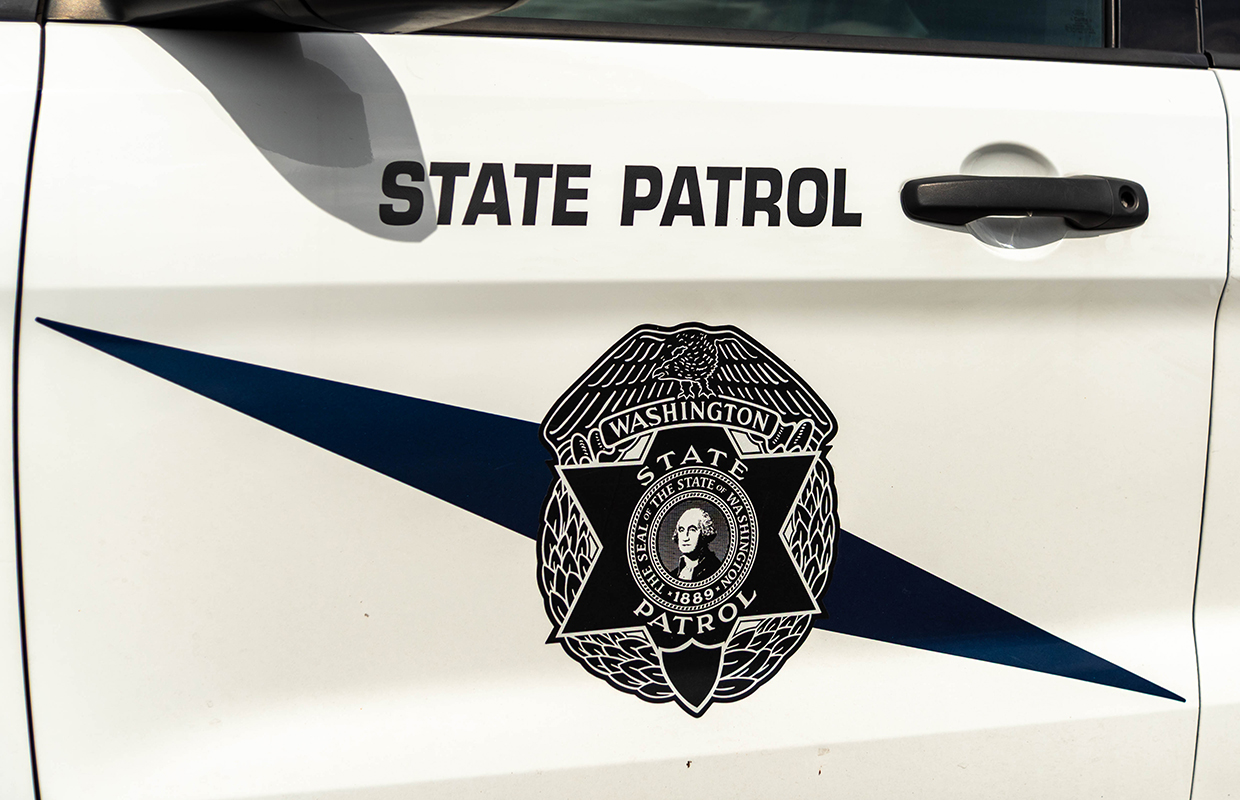
The Washington State Patrol handles a significant share of the pursuit-related calls on Interstate 5 through Whatcom County, coordinating with Bellingham Police and the Whatcom County Sheriff's Office when suspects cross jurisdictional boundaries. In this case, the involvement of multiple agencies across the Bellingham-to-Ferndale corridor was typical of how high-speed pursuits on I-5 are managed in the county. Once a suspect moves from city streets onto the interstate, WSP typically takes the lead, with local agencies providing support and communication.
How the Arrest Ended
After the suspect's car hit the spike strips near the Ferndale Main Street exit, he got out of the vehicle and attempted to flee on foot. He was quickly apprehended by a K-9 unit. K-9 officers are commonly deployed in foot pursuit situations because their speed and tracking ability significantly reduces the risk of a suspect successfully evading officers in low-visibility or off-road conditions. A suspect who has just exited a vehicle after a high-speed chase may be disoriented, injured, or moving through unfamiliar terrain, and a trained police dog can close the gap faster and more safely than officers on foot alone.
Ferndale's Main Street exit is one of the primary off-ramps from I-5 into downtown Ferndale, near a commercial area that includes the city's Civic Campus construction zone. The surrounding area includes businesses, parking lots, and roadways that would be in use even in the early morning hours, making a foot pursuit in that vicinity a potential safety concern for anyone in the area. The use of spike strips at that location is consistent with Washington State Patrol protocols for safely ending high-speed pursuits before they enter more densely populated areas, and the successful deployment here prevented the chase from continuing further into Ferndale's downtown core.
Jail records confirm the suspect was booked on charges including DUI and false reporting. Additional charges may be filed as the case moves through the Whatcom County court system. The DUI charge indicates that alcohol or drugs may have been a factor in the initial traffic stop and the suspect's decision to flee, though the specific basis for that charge has not been detailed in public reporting.
Pursuit Policies and Local Context
Police pursuits on I-5 through Whatcom County are a recurring feature of local public safety news, in part because of the county's position as a corridor between the Canadian border and the greater Seattle area. Suspects fleeing from traffic stops or criminal investigations sometimes use I-5 as an escape route, knowing that high speeds can create distance quickly and that crossing jurisdictional lines may create brief gaps in the responding agency's authority or familiarity with the terrain.
Washington State has ongoing policy discussions about when and how law enforcement should engage in vehicle pursuits, balancing the risk to public safety of a chase against the risk of letting suspects evade apprehension. Research on pursuit safety consistently shows that a significant share of pursuit-related fatalities involve innocent bystanders rather than fleeing suspects, which has pushed many jurisdictions toward more restrictive pursuit policies in recent years. Current state guidelines allow pursuits under defined conditions, with supervisory oversight required as chases extend in duration or distance. Officers must continuously reassess whether the risk of continuing the pursuit is proportionate to the offense and the circumstances.
The Tuesday morning incident unfolded across a section of I-5 that runs through some of Bellingham's busiest commercial zones before crossing into Ferndale, a stretch that carries heavy freight and commuter traffic even at off-peak hours. The successful use of spike strips allowed authorities to bring the chase to a controlled end without a collision, which is the preferred outcome under any pursuit policy framework.
The Bellingham Police Department operates out of its headquarters on Horton Road and covers the city's 35-square-mile jurisdiction, working closely with the Whatcom County Sheriff's Office and WSP on incidents that cross city limits. The September 15 incident is a reminder of how quickly a routine traffic stop can escalate and how inter-agency coordination allows for outcomes like this one, where no bystanders were injured and the suspect was taken into custody. For more on local law enforcement activity in Whatcom County, earlier coverage of criminal cases and public safety developments provides useful context. You can also find background on local law enforcement partnerships in coverage of BPD community events and recent crime news across the county.