A fire broke out Saturday night, September 12, at a cold storage facility on Hilton Avenue in Bellingham, causing significant damage to the building and destroying the frozen fish products stored inside. No one was in the building when the fire started, and no injuries were reported, but the blaze required a coordinated response from two fire agencies before it was brought under control.
How the Fire Unfolded
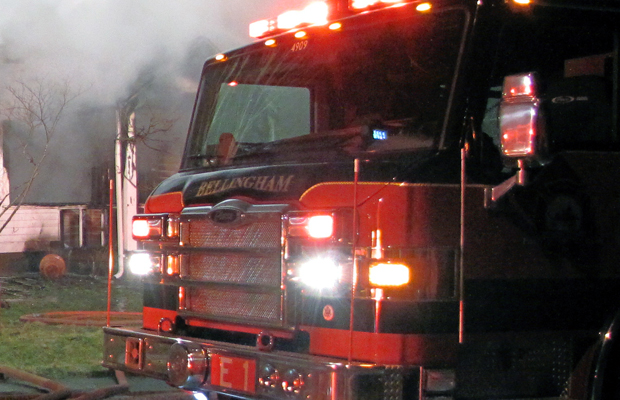
Several witnesses reported the fire to authorities Saturday night. Bellingham Fire Department crews arrived at the Hilton Avenue building and initially attempted to fight the fire from inside. That effort was cut short when the risk of the roof collapsing forced firefighters to retreat from the interior. Ladder trucks from both Bellingham Fire and Whatcom Fire District 7 were then used to direct water onto the roof from above, a tactic known as defensive exterior attack, which is used when interior conditions become too dangerous for crews to operate safely.
Fire Captain Dustin Michaelis confirmed the response in comments to local media, noting that the frozen fish products kept inside the facility were destroyed. Nearby office spaces that were attached to the building were not affected by the fire, and the blaze did not spread to adjacent structures.
An investigation into the cause of the fire is ongoing. Bellingham Fire has not released a preliminary cause determination, and arson investigators may be involved depending on what the initial review finds. Cold storage facilities present particular challenges for fire investigation because the fire suppression systems and materials inside these buildings, including insulation panels and refrigerant systems, can complicate both fire behavior and post-fire analysis.
The Hilton Avenue Location and Bellingham's Waterfront Industry
Hilton Avenue runs along the industrial waterfront area of Bellingham, a stretch of the city that has historically been home to fishing industry operations, cold storage and processing facilities, marine services businesses, and light industrial uses. The area sits between the Georgia-Pacific cleanup site and the working waterfront around Squalicum Harbor, and it has been part of ongoing conversations about the future of Bellingham's waterfront as the city considers redevelopment of former industrial lands.
Cold storage facilities are integral to the seafood processing supply chain in Bellingham. The city has long-standing connections to the commercial fishing industry, both through Squalicum Harbor, which serves as a home port for fishing vessels, and through shore-side processing and storage operations. The loss of frozen fish inventory in a facility fire can represent a significant financial hit for the businesses involved, as the inventory itself may be valued at hundreds of thousands of dollars depending on what species and quantities were stored.
The Bellingham Fire Department responded alongside Whatcom Fire District 7, which covers areas adjacent to and overlapping with the city's industrial waterfront zone. The two agencies have a mutual aid agreement that allows them to support each other on large or complex incidents, and commercial structure fires with roof collapse risk are exactly the type of call that draws multi-agency resources.
Fire Risk in Late Summer Bellingham
The fire came just days after the City of Bellingham lifted its recreational fire ban on September 11, reflecting improved conditions after a stretch of dry summer weather. While the cold storage fire is a structure fire unrelated to outdoor burning conditions, the timing is a reminder that September in Whatcom County can still bring fire risk in various forms. The county has been operating under drought conditions throughout the summer, with the state Department of Ecology having declared a drought affecting Whatcom County as far back as April 2026.
Structure fires in commercial and industrial buildings present different risk profiles than residential fires, partly because of the materials present in those buildings, the size and construction of the structures, and the absence of occupants during certain hours. Cold storage buildings in particular often have thick insulated wall and roof panels that can both contain a fire for a time and then contribute to rapid deterioration of structural integrity once the fire gets into those materials.
What Happens Next
The fire investigation will determine whether any changes are needed in how the facility is permitted, inspected, or insured going forward. If the cause is found to be related to a systems failure, such as an electrical fault or a refrigeration system issue, that finding could have broader implications for similar facilities in the area. If the cause cannot be determined or if arson is suspected, the investigation could involve additional agencies.
The businesses that operated out of the facility and the owners of the fish inventory will be working with their insurers to assess losses. Commercial property insurance in the food processing sector typically covers both structural damage and inventory loss, though claims of this size go through detailed review before payment is made.
For updates on the fire investigation and other public safety news from Bellingham, the City of Bellingham's official news page posts official fire department releases as they become available. The Port of Bellingham, which manages portions of the working waterfront, may also have relevant information if the affected facility operates under a port lease or permit. For prior coverage of Bellingham's waterfront industrial history, earlier reporting on the Harris Avenue Shipyard cleanup provides useful context on the ongoing transformation of the city's shoreline.