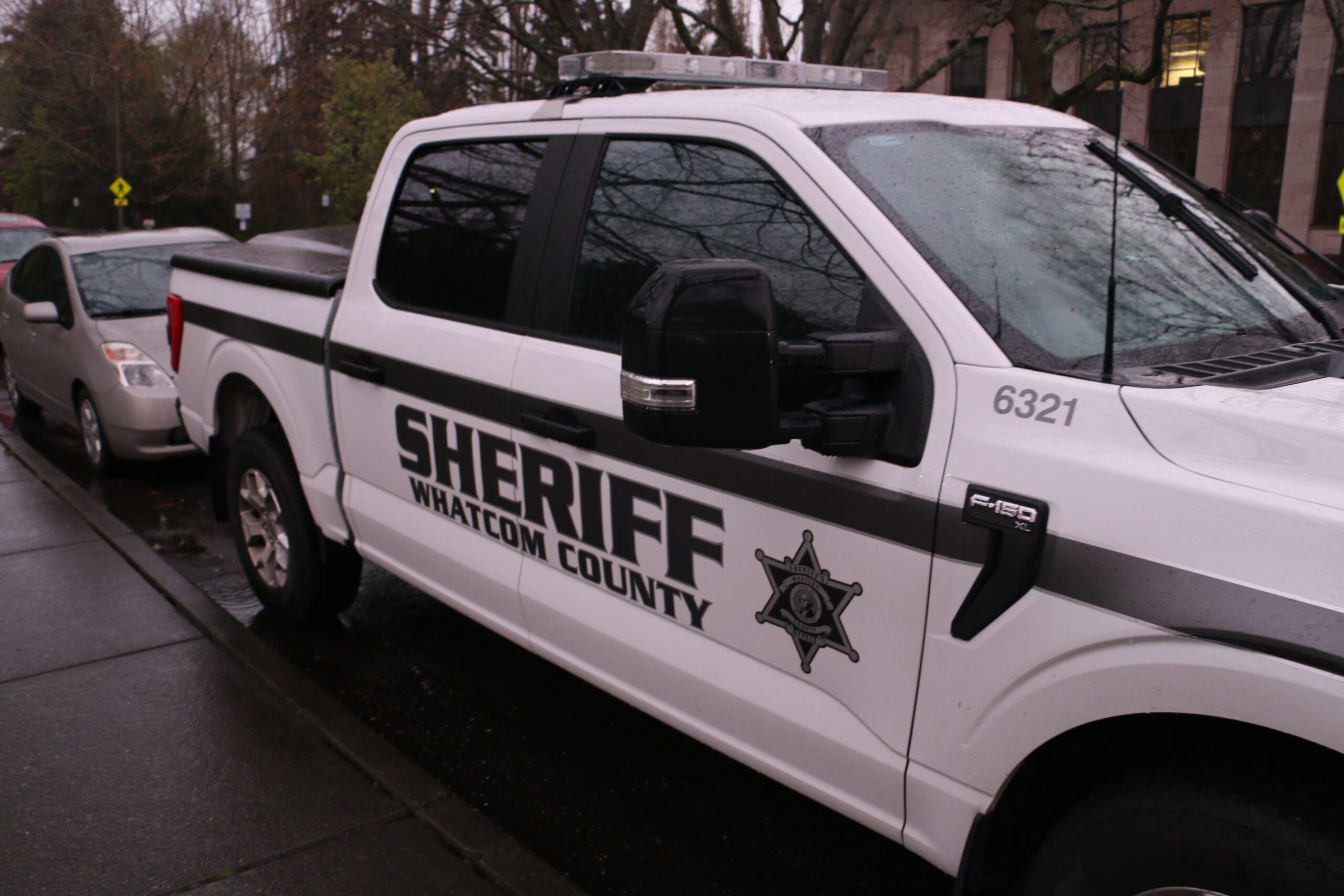
Tom Kunesh had never worked in a restaurant when he started performing food safety inspections for Whatcom County in 1989. Nearly four decades and thousands of inspections later, he became one of the most respected public health figures in the region, known for prioritizing education over enforcement and building lasting relationships with the businesses he oversaw. Kunesh is retiring this month.
His approach was straightforward in principle, even if difficult in practice: treat every inspection as a teaching moment, focus on the people behind the food operation, and reserve formal enforcement for situations where everything else has failed. "But if things get to that point, then we've kind of both failed," Kunesh said. He added: "Wherever we end up, we go there together."
A Career Built on Curiosity and People
Kunesh ran the food safety program within the Whatcom County Health Department's Environmental Health division for the bulk of his career. That program is responsible for inspecting restaurants, food trucks, school cafeterias, farmers market vendors, and other food service operations throughout the county. It also responds to foodborne illness complaints and outbreak investigations.
Beyond routine inspections, Kunesh's career touched a wide range of public health work. He responded to rabies calls, disease outbreaks, and solid waste complaints, reflecting the broad scope of environmental health work in a county that spans everything from dense urban Bellingham to rural farms along the Nooksack River and remote communities near the Canadian border.
His colleagues say the institutional knowledge he carries cannot easily be transferred. Sue Sullivan, the county's environmental health manager, spoke at a county health board meeting in early August. "I have to admit there's an inverse relationship between the amount of time that Tom has at the county and my level of anxiety," she said. "There's just simply not enough time to download the institutional knowledge and information in his brain."
Amy Harley, the public health officer for Whatcom County, described Kunesh as someone who could explain the science of food safety in an approachable way. She credited him with teaching her to carry expertise and wisdom in a way that connects with people rather than intimidates them.
What Food Safety Inspection Actually Looks Like
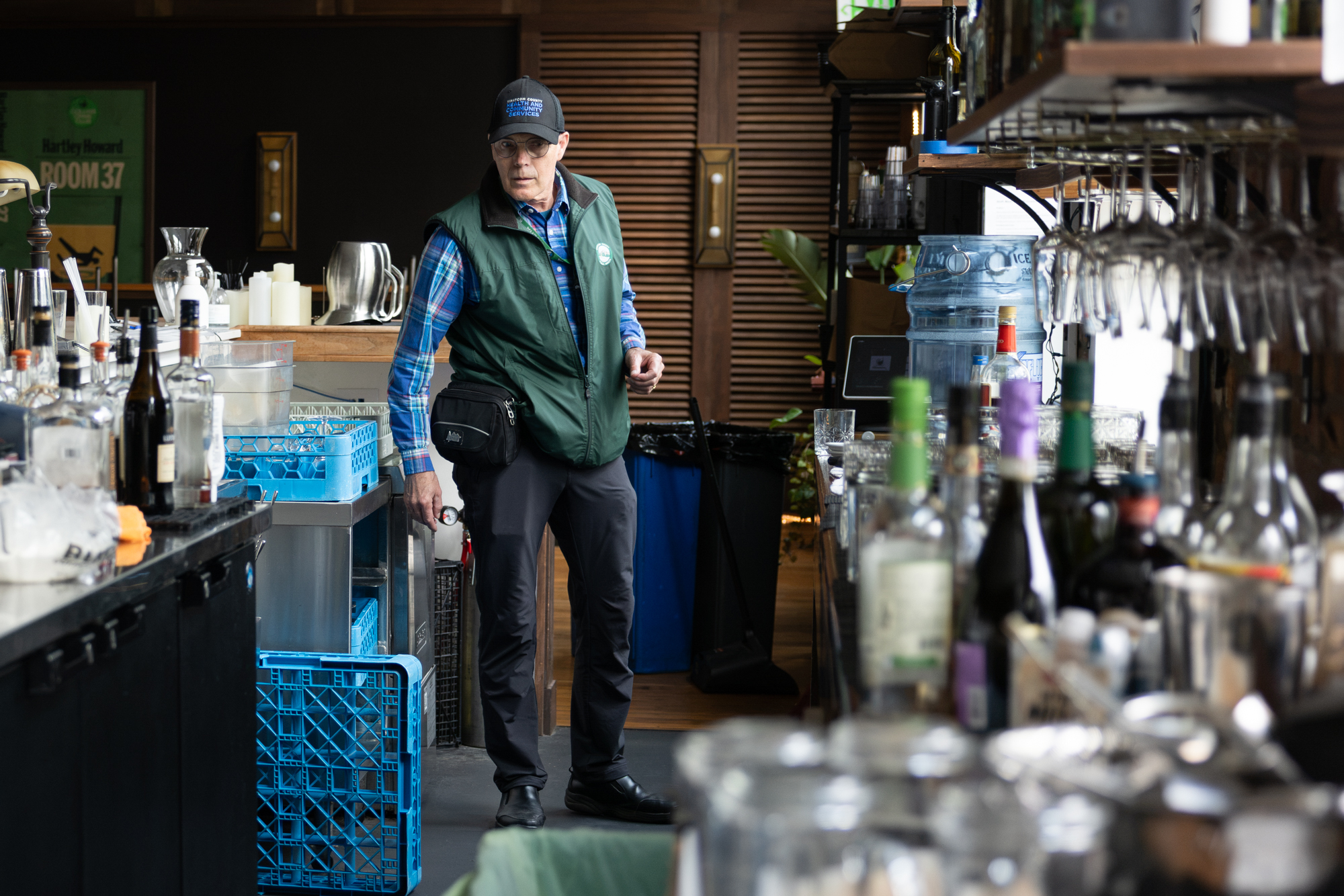
A typical Kunesh inspection included what the county calls courtesy visits: informal walkthroughs that offer restaurants and bars feedback outside the formal scored inspection cycle. On September 1, just days before his retirement, he was photographed walking through Bantam Kitchen and Bar in Bellingham, thermometer in hand, offering informal feedback to the staff.
Those courtesy visits reflect his broader philosophy. Formal inspections can feel adversarial if handled poorly. A restaurant operator who understands why a temperature requirement exists is more likely to maintain compliance than one who simply fears getting cited. Kunesh understood that the goal was never the inspection itself. It was the safety of the people eating the food.
The county's food safety program covers a significant number of establishments. Whatcom County includes Bellingham, the region's largest city with roughly 95,000 residents, along with Ferndale, Lynden, Blaine, Birch Bay, and dozens of smaller communities. The program also covers temporary food vendors at events like the Bellingham Farmers Market and the county fair, which require separate permitting and inspection processes.
Foodborne illness outbreaks make the stakes concrete. Just this month, three Whatcom County residents were sickened in a salmonella outbreak linked to Evergreen Fresh Broccoli Sprouts, an Idaho-based company. Kunesh's program handles exactly those kinds of investigations, tracing illness back to its source, coordinating with state health officials, and notifying the public.
Why the Mentor Role Matters as Much as the Inspector Role
Perhaps Kunesh's most lasting contribution is not any single inspection or outbreak response, but the culture he helped build within the county's environmental health team. Colleagues describe him as a mentor whose warm relationships with area businesses bolstered the county health department's reputation over time.
That reputation matters. A food safety program that restaurant owners view as a partner rather than an adversary gets better information, better cooperation, and ultimately better outcomes for public health. Operators who trust their inspector are more likely to call with questions before a problem becomes a violation. They are more likely to follow through on corrections without requiring formal follow-up.
Kunesh's tenure also spans a significant period of change in the food service industry. When he started in 1989, Bellingham's restaurant scene was far smaller and simpler than it is today. The growth of food trucks, pop-up vendors, commissary kitchens, and food delivery services has complicated the inspection landscape considerably. Staying current across all of those changes while maintaining consistent standards requires exactly the kind of intellectual curiosity his colleagues describe.
The Whatcom County Environmental Health division will continue its food safety inspection work after Kunesh's departure, but his retirement leaves a gap that will take time to fill. The combination of institutional memory, relationship capital, and educational philosophy he brought to the role is not something that transfers automatically to a successor.
What Comes Next for Whatcom Food Safety
The county has not publicly announced who will lead the food safety program after Kunesh's retirement. Sullivan's comments at the August health board meeting suggest the transition is on the department's radar, and staff have presumably been working to document processes and procedures Kunesh has carried in his head for decades.
For Bellingham and Whatcom County residents, the practical impact of Kunesh's retirement is likely to be invisible in the short term. Inspections will continue. Courtesy visits will continue. Outbreak investigations will continue. The question is whether the county can maintain the educational, relationship-first culture Kunesh modeled over 37 years, or whether the program drifts toward a more enforcement-heavy approach under new leadership.
Residents who have questions about food safety inspection records in Whatcom County can search restaurant inspection results through the county health department's online portal. Complaints about food safety at local restaurants can also be submitted through that office. Kunesh spent nearly four decades making that system work. His retirement marks the end of a chapter that shaped how Whatcom County thinks about the relationship between public health and the people it serves.