The Port of Bellingham Board of Commissioners voted unanimously on September 1 to move forward with the final phase of cleanup at the former Georgia-Pacific West Pulp and Tissue Mill site on the Bellingham waterfront. Construction is expected to begin this November and will take three to five years to complete, capping a cleanup effort that has been in progress since the port acquired the 74-acre property from Georgia-Pacific in 2005.
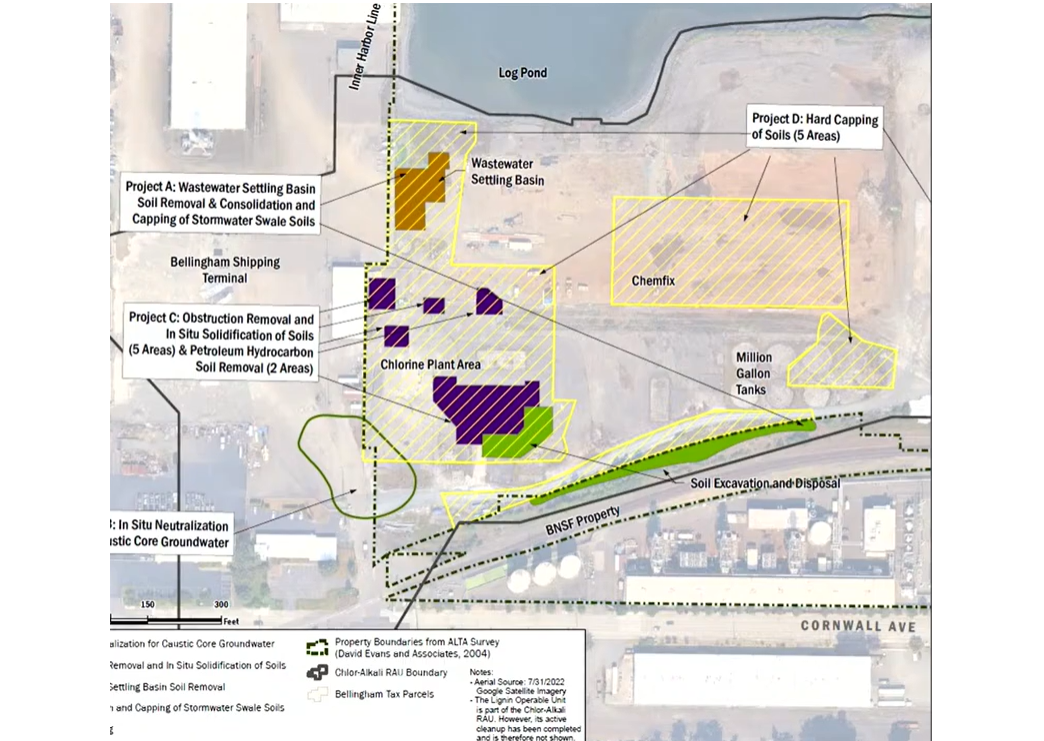
The work centers on the Chlor-Alkali area, the portion of the former mill site located closest to Bellingham Bay. This section contains the most technically complex contamination on the property, including mercury-contaminated soil from the mill's old chlorine plant. The first phase of cleanup, at what is now the Portal Container Village, was completed in 2016. The Chlor-Alkali site is the final piece.
What Is Being Cleaned Up and How
The most challenging element of the project is the former chlorine plant, which contains 15,000 cubic yards of mercury-contaminated soil. Mercury contamination at industrial waterfront sites poses serious risks to both human health and aquatic ecosystems. The element accumulates in fish tissue and can reach toxic concentrations in species like salmon and bottom fish that are part of the local food web and are harvested by tribal and recreational fishers in Bellingham Bay.
There is also 2,600 cubic yards of mercury-contaminated soil at the location of the former wastewater settling basin, and approximately 1,600 cubic yards of petroleum-contaminated soil elsewhere on the Chlor-Alkali site. The updated cleanup plan addresses each of these distinct contamination areas with different methods based on their characteristics and risk profiles.
For the mercury-contaminated soil, the primary method will be solidification, in which the contaminated material is chemically treated and encased in a cement block to prevent leaching. Areas over that solidified material will be hard-capped to prevent surface water from reaching and mobilizing the contaminants. The petroleum-contaminated soil will be excavated and disposed of off-site, the more conventional approach for hydrocarbon contamination.
The Port of Bellingham is conducting the cleanup under a legal agreement overseen by the Washington State Department of Ecology, which has regulated the site as part of the state's Model Toxics Control Act framework. The port assumed cleanup liability when it purchased the property from Georgia-Pacific Corporation in 2005, agreeing to remediate the site as a condition of the acquisition.
The History Behind the Cleanup
Georgia-Pacific's pulp and tissue mill operated on the Bellingham waterfront for decades, and its industrial legacy shaped the waterfront's contamination profile in multiple ways. The chlor-alkali process, which uses mercury cells to produce chlorine and caustic soda, was a source of significant mercury releases at industrial facilities across the country before cleaner alternatives became standard. By the time the mill closed and the port acquired the property, the contamination had been documented and awaited remediation.
The 74-acre site is one of the most significant waterfront redevelopment opportunities in Bellingham. Portal Container Village, the first area cleaned up, is now an active commercial zone near downtown. The Chlor-Alkali area, once remediated, is planned for a mix of commercial, industrial, retail, and residential uses that could significantly expand the active waterfront south of the existing downtown core.
The timeline from November construction start to completion in three to five years means the site could be ready for redevelopment planning as early as 2028 or as late as 2031, depending on how the cleanup proceeds. Waterfront redevelopment of this scale has precedents elsewhere on Bellingham Bay, including the transformation of the Cornwall Beach area and the ongoing work at various port properties north of downtown.
What Comes After
Once the cleanup is certified as complete by the Department of Ecology, the port will move into the redevelopment planning phase for the Chlor-Alkali area. The mix of commercial, industrial, retail, and residential uses described in the port's plans reflects a vision for a mixed-use extension of the waterfront consistent with the broader redevelopment philosophy that has guided other recent port properties.
Residents and waterfront advocates who want to track the cleanup progress can monitor announcements from the port and the Department of Ecology. Public meetings on cleanup progress are typically part of the regulatory process for sites of this complexity. For earlier context on other waterfront cleanup milestones, coverage of the completion of toxic metals removal at the Harris Avenue Shipyard shows the Port's track record of working through the legacy contamination at its waterfront properties. The port's own website maintains project pages for active cleanup and development work across its portfolio of Bellingham Bay properties.