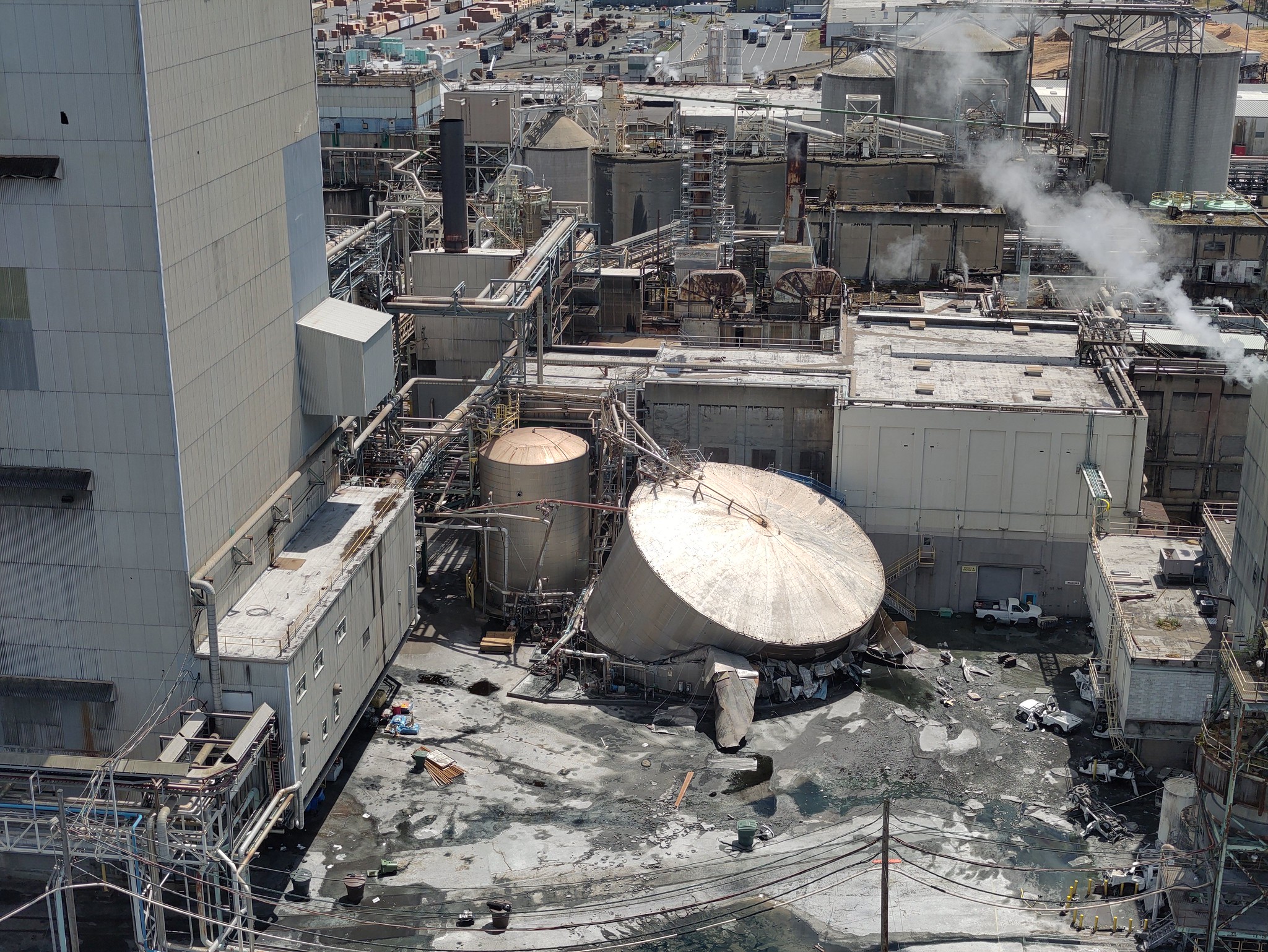
The Washington State Department of Ecology has issued an administrative notice to Nippon Dynawave Packaging detailing 35 environmental violations stemming from a storage tank explosion at the company's Longview paper mill in May 2026. The explosion, one of the deadliest industrial accidents in recent Washington history, killed 11 people and released 900,000 gallons of highly caustic white liquor across the facility, with some of the material bypassing treatment and entering the Columbia River.
What the Violations Cover
The administrative notice was issued on August 26 following inspections conducted by Ecology staff in July. The 35 violations fall into two broad categories: environmental impact violations and operational compliance failures.
On the environmental side, inspectors cited improper treatment of on-site waste, failure to clean up areas affected by spills from the explosion, and dangerous waste gas cylinders stored in close proximity to other materials. The white liquor released in the tank collapse spread into storm drains and entered the company's wastewater treatment system. Some of the caustic liquid bypassed treatment entirely before being discharged into the Columbia River, raising pH levels in nearby water areas and posing risks to aquatic life. Elevated pH, caused by the strongly alkaline nature of white liquor, can stress or kill fish and invertebrates even at concentrations well below those that would visibly discolor the water, making monitoring after the spill critical to understanding the ecological impact.
The operational violations include insufficient labeling of hazardous waste containers, the absence of a generator training plan and program, and a failure to conduct general facility inspections as required under Washington environmental regulations. Inspectors cited violations of two Washington State codes, the company's Air Operating Permit, and standards of performance applicable to its generators. The operational failures are significant because they suggest that even before the explosion, the facility may not have been meeting baseline compliance requirements for hazardous materials management and emergency preparedness.
Nippon Dynawave has 30 days from the issuance of the notice to respond. That response period will precede any decision by the Washington Department of Ecology to impose financial penalties or pursue other enforcement actions. The administrative notice is the formal starting point of the enforcement process rather than a final determination, and the company may contest specific violations, provide additional context, or propose remediation plans during the response window.
What Happened in May
The May explosion at the Longview mill was catastrophic in scale. The collapse of the storage tank sent 900,000 gallons of white liquor, a highly alkaline chemical solution used in the kraft paper-making process, pouring across the facility. Eleven workers died in the incident, making it among the deadliest industrial accidents Washington State has seen in recent decades. The sheer volume of liquid released, equivalent to more than a million standard bathtubs of caustic solution, overwhelmed the facility's containment infrastructure and drainage systems before reaching the Columbia River.
White liquor is primarily composed of sodium hydroxide and sodium sulfide and is extremely caustic. At high concentrations, it can cause severe chemical burns on contact with skin or eyes and is toxic to aquatic organisms at elevated concentrations. The elevated pH levels detected in nearby waters following the spill indicated that the Columbia River absorbed a measurable dose of the material before dilution reduced concentrations downstream. The Columbia River is one of the most ecologically significant waterways in the Pacific Northwest, supporting multiple salmon species, steelhead, sturgeon, and a broad range of other wildlife, making contamination events of any scale a serious concern for resource managers and tribal nations with treaty fishing rights in the river.
Context for Whatcom County Readers
Nippon Dynawave is a Japanese-owned company that operates paper manufacturing facilities in the Pacific Northwest. While the Longview mill is roughly 200 miles south of Bellingham, the case is relevant to Whatcom County residents for several reasons. Industrial paper and pulp operations have historically been significant employers and environmental stakeholders in Northwest Washington. The Georgia-Pacific facility in Bellingham, which was one of the region's largest industrial sites before its closure and subsequent environmental remediation of Bellingham Bay, provides local context for the scale of industrial contamination that can accompany large manufacturing operations and the long-term cost of cleanup when proper safeguards are not maintained.
The Ecology enforcement process that Nippon Dynawave is now navigating is the same system that governs environmental compliance for industrial facilities in Whatcom County, including operations at the Cherry Point industrial cluster, which hosts oil refineries and the largest aluminum smelter on the West Coast. How aggressively Ecology pursues penalties against Nippon Dynawave will be watched by environmental advocates and industry operators across the state as a signal of how the agency weighs accountability following catastrophic incidents.
Washington's environmental enforcement framework gives Ecology significant discretion in setting penalty amounts, which can run into millions of dollars for serious violations. The 30-day response window gives Nippon Dynawave the opportunity to contest specific violations, provide additional information, or propose remediation steps before penalties are set. For more background on environmental issues affecting the broader Northwest Washington region, earlier reporting on freshwater species and ecosystem pressures in Northwest Washington covers the ecological stakes in the region's waterways.
The families of the 11 workers killed in the May explosion have not been publicly identified in state enforcement communications. Separate from the environmental violations, the explosion is expected to trigger investigations by the Washington Department of Labor and Industries and potentially federal workplace safety regulators at OSHA. Those investigations address the workplace safety dimension of the incident, including questions about whether the tank that failed met applicable pressure and structural standards and whether workers had adequate training and protective equipment. The Ecology enforcement action covers only the environmental dimension of the incident, and the full picture of accountability will take shape across multiple regulatory processes over the coming months and years.