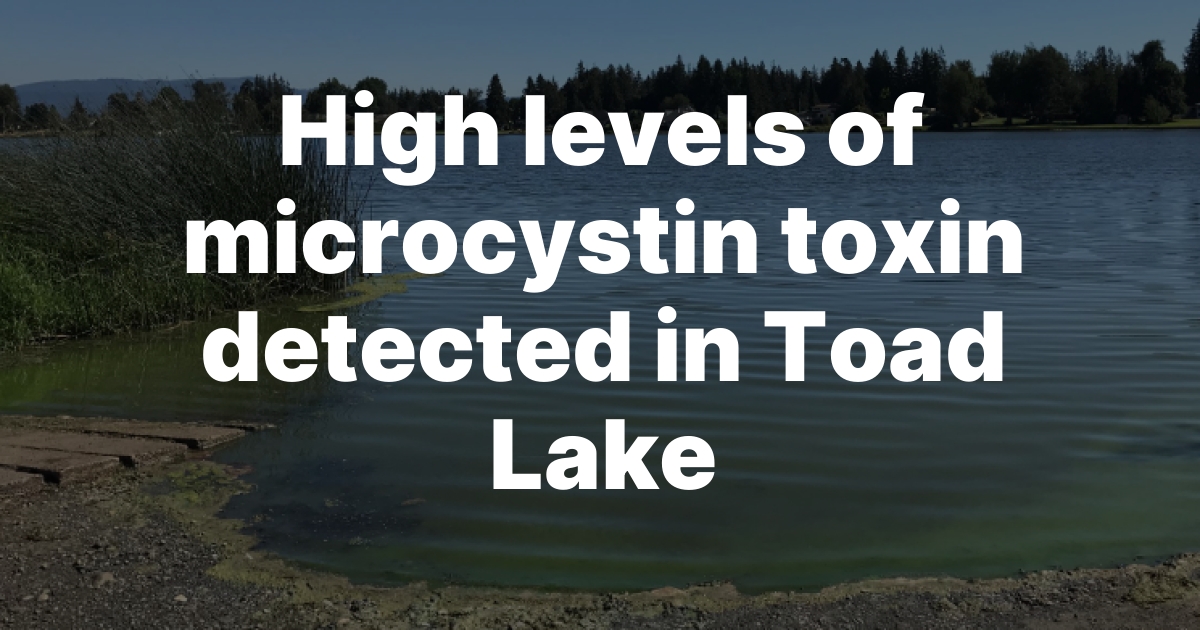
Health officials have issued a surface water advisory for Toad Lake in Whatcom County after testing detected microcystin, a liver-affecting toxin produced by blue-green algae, at levels exceeding federal and state recreational safety guidelines. The advisory, posted Friday, August 21, 2026, warns residents, families, and pet owners to avoid contact with the lake's surface water, particularly in areas where algae mats are visible.
The warning adds Toad Lake to a growing list of Whatcom County water bodies that have faced algae-related advisories in recent years, a pattern that public health researchers increasingly connect to warming summer temperatures and nutrient runoff from surrounding land.
What Microcystin Is and Why It Matters
Microcystin is produced by cyanobacteria, commonly called blue-green algae, which are naturally occurring microorganisms found in lakes and ponds throughout the Pacific Northwest. The toxin primarily damages the liver, and exposure can cause a range of symptoms including abdominal pain, nausea, vomiting, diarrhea, headache, sore throat, blistering around the mouth, and in serious cases, pneumonia.
The U.S. Environmental Protection Agency and the Washington State Department of Health have both established recreational guidelines for microcystin concentrations in surface water. The testing at Toad Lake found levels exceeding both of those thresholds, which is why officials moved to post a formal advisory rather than simply issuing a precautionary notice.
The primary route of exposure is ingestion, meaning the greatest risk comes from swallowing water or algae material rather than from skin contact alone. However, health officials recommend avoiding all contact with visible algae mats or blooms as a precaution.
How the Algae Forms and Where to Watch for It
The advisory explains that the algae mats in Toad Lake form at the bottom of the lake on submerged rocks, sand, mud, or aquatic plants. They then break free and float to the surface, where they can accumulate along shorelines and in calm coves. Importantly, the surrounding water can remain clear even when algae mats have washed up on or near the shore, which means the lake can look safe when it is not.
Floating mats and surface scums are the most visible sign of a bloom, but the toxins can be present even when water appears normal. This makes it especially important to follow official advisory language rather than relying on visual inspection of the water before swimming or allowing children and pets to enter.
Nutrients in fertilizer, pet waste, agricultural runoff, and wildlife waste all contribute to algae growth by providing food for cyanobacteria. Warm, calm summer conditions accelerate bloom development. Whatcom County's mix of agricultural land, residential development near shorelines, and warm late-summer temperatures creates conditions that can promote algae blooms on smaller lakes and ponds.
Protecting Children and Pets
The advisory is particularly specific about risks to children and pets, who are more likely to ingest water or algae material during shoreline play or swimming. Children should not play with or handle algae mat material. Pet owners are directed to keep animals away from water with visible algae or algae clumps along the shore.
If a pet does come into contact with algae, owners should rinse the animal's fur thoroughly with clean water as soon as possible and prevent the animal from licking its fur before it has been cleaned. Dogs are especially vulnerable because they tend to drink directly from lakes and ponds and may roll in or eat algae material on shore. Microcystin poisoning in dogs can be rapid and severe, and pet owners who suspect their animal has been exposed should contact a veterinarian immediately.
Toad Lake is a small lake in the Sudden Valley area of Whatcom County, roughly seven miles south of Bellingham's city center. It sits within a largely residential and forested watershed and is used informally for recreation by nearby residents. The lake is not a managed public swimming area, but its proximity to residential neighborhoods means regular public contact is likely during summer months.
What to Do If You Have Been to Toad Lake Recently
Anyone who swam in or had significant contact with Toad Lake water before the advisory was posted and who is experiencing symptoms consistent with microcystin exposure should contact a healthcare provider. Symptoms typically appear within hours of exposure. Most cases of recreational exposure result in gastrointestinal symptoms that resolve without medical treatment, but liver enzyme levels can be elevated in more serious exposures, which may require clinical evaluation.
The advisory will remain in effect until follow-up testing shows that microcystin levels have returned below recreational safety thresholds. The frequency of retesting varies depending on conditions, weather, and agency capacity. Advisories on Whatcom County lakes have in some recent summers remained in effect for several weeks before conditions improved.
Residents can check the status of the Toad Lake advisory and other surface water warnings through the Whatcom County website or by contacting Whatcom County Health and Community Services directly. The Northwest Clean Air Agency and state health department also publish current environmental health advisories for the region. Anyone with questions about the advisory or its scope can also reach Whatcom County Health at their main public line. For prior coverage of environmental health conditions in Whatcom County this summer, the Harris Avenue Shipyard cleanup reflects the county's broader history of water-quality work along its shorelines.