Salmon get most of the attention when it comes to Northwest Washington's struggling waterways, but scientists and conservationists are increasingly focused on a wider crisis unfolding beneath the surface of the region's rivers and streams. A recent report from the Convention of Migratory Species found that migratory freshwater fish populations have dropped 81 percent worldwide since 1970, and Northwest Washington species are not exempt from those pressures, even as researchers here point to promising new tools and an unusual cross-border collaboration as reasons for cautious optimism.
The Salish Sea's Chinook salmon populations have declined 60 percent since the Pacific Salmon Commission began tracking abundance in 1984, according to the 2024 State of Salmon in Watersheds report. Only 22 of at least 37 historic Chinook populations remain in the Salish Sea ecosystem, and the survivors are at roughly 10 percent of their historic numbers. But researchers who spoke with the Salish Current this week emphasized that salmon are directly connected to roughly 365 other species, many of which have been studied far less and are declining with little public awareness.
The Species Nobody Is Watching
"They're not targeted in fisheries, and oftentimes that just inherently makes them overlooked," said Marie Winkowski, the Washington Department of Fish and Wildlife's native aquatic species lead. "You're not out there looking for your speckled dace or your redside shiners or lamprey that are burrowed in the substrate for most of their life. They're present, but they're not visible."
The Washington Department of Fish and Wildlife has categorized roughly 30 freshwater species under greatest conservation need, a list that includes not only Chinook, chum, and coho salmon but also bull and rainbow trout, freshwater mussels, and Pacific lamprey. Without baseline population data for many of these species, resource managers have been working largely in the dark.
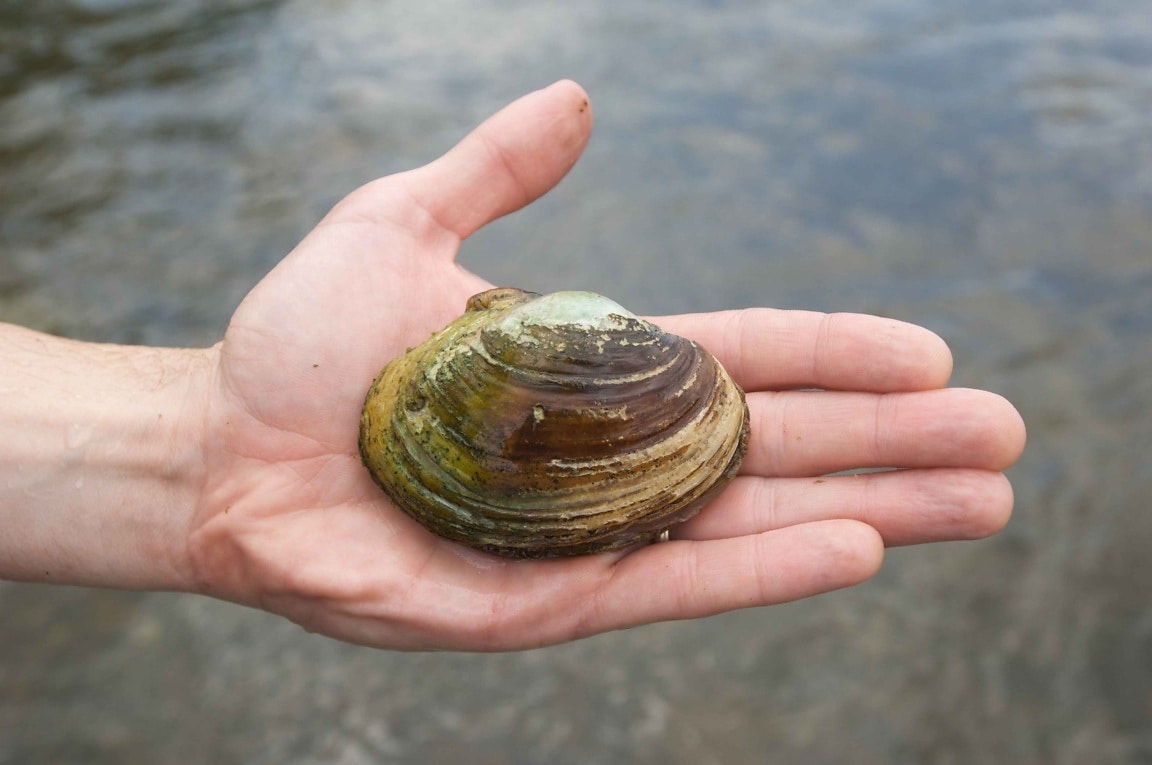
Freshwater mussels, for example, can filter up to 10 gallons of water per individual per day, redistributing nutrients from the water column into the riverbed and cleaning the ecosystem from the bottom up. A significant mussel decline would ripple outward through the food web in ways that are difficult to predict and harder to reverse. Lamprey, which spend most of their lives burrowed in stream sediment, are similarly invisible to casual observation but play roles as both prey and ecological engineers in healthy stream systems.
"A lot of the fishes that we are focused on require the entire ecosystem in order to be healthy," Winkowski said. "If we have a healthy ecosystem, we will promote at every kind of level of the food chain, including those ones that we do fish for, like salmon and steelhead."
New Tools: Environmental DNA in Whatcom County Waters
To fill the data gaps, Winkowski's program has turned to environmental DNA, or eDNA, a technique that allows researchers to collect water samples from a stream and scan them for the genetic traces left behind by species living in that water. Fish shed cells, scales, and biological material as they move through waterways, leaving microscopic signatures that can be matched against reference databases to produce a map of what species are present without requiring researchers to physically catch or observe them.
"You end up with these microscopic telltale signs that a species was there," Winkowski said. "We compare that with reference databases that are available, and then we can have a snapshot of what species are present within that water body."
Winkowski said the eDNA program will soon produce data for Whatcom, Skagit, and San Juan counties, giving local managers their first comprehensive picture of which freshwater species are present across the region's streams. Knowing where species are is the essential first step toward protecting them. Without occupancy maps, conservation resources tend to flow toward species that are already well-studied, perpetuating the neglect of less charismatic animals like dace and lamprey.
The Nooksack River watershed, which drains much of Whatcom County before entering Bellingham Bay, is a key area of concern for these efforts. The Nooksack Salmon Enhancement Association has been active in the watershed for years, focusing primarily on salmon habitat restoration but increasingly attentive to the broader ecological context that determines whether restoration work succeeds or fails.
Habitat as the Central Problem
"All the research, all the science, all the data that's been analyzed shows us that habitat is by far the leading threat," said Annitra Peck, executive director of the Nooksack Salmon Enhancement Association. "Salmon are an anadromous species; they utilize freshwater and saltwater, they need to be able to travel back and forth in their unique life cycle, and if they don't have the habitat to do that, then that falls apart."
Habitat degradation takes many forms in Whatcom County: agricultural runoff that raises water temperatures and adds sediment, urban stormwater that flushes pollutants into streams, culverts and barriers that block fish passage, and timber harvest practices that remove the streamside vegetation that keeps waterways cool and stable. These pressures compound each other and affect the entire suite of freshwater species, not just salmon.
Climate change adds another layer of stress. The U.S. Drought Monitor currently shows most of Whatcom County as abnormally dry, with far eastern portions in moderate drought. Lower summer stream flows concentrate fish in smaller volumes of water, raise temperatures, and reduce dissolved oxygen, creating conditions that stress even robust populations. With snowpack declining across the North Cascades, the summer low-flow problem is expected to worsen in coming decades.
Researchers and agencies working on these challenges emphasize that the window for effective intervention is still open, but it is narrowing. The eDNA data coming for Whatcom and Skagit counties over the next year will represent a significant step forward in understanding what is actually present in local waterways and what needs protection. Residents interested in following the science or supporting local habitat work can connect with the Nooksack Salmon Enhancement Association or with the Washington Department of Fish and Wildlife for updates on conservation programs across the region.