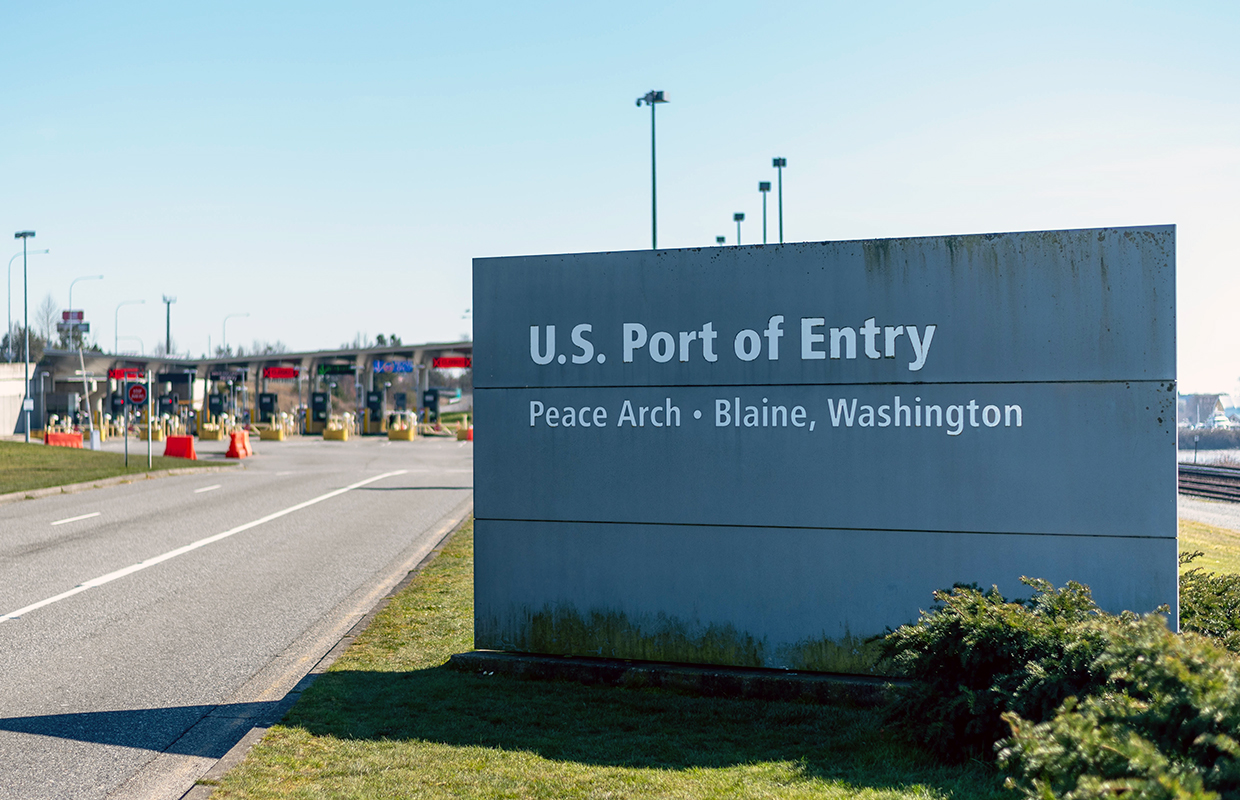
After a hopeful stretch in the spring, Canadian visitor traffic to Whatcom County dropped sharply again in July, according to new data from Western Washington University's Border Policy Research Institute. The decline puts pressure on local businesses that had hoped the early-summer trends might signal a sustained recovery in cross-border travel after a difficult 2025.
The July Numbers
The Border Policy Research Institute, based at Western Washington University, tracks British Columbia license plates crossing into Whatcom County as a proxy measure for Canadian visitor activity. In July 2026, that count fell 36 percent compared to the same month in 2024. The drop represents a meaningful reversal after BC plate crossings had begun climbing back in April, May, and June, raising hopes among local business owners that the worst of the slowdown was behind them.
"If we look at July, the numbers are down again. I think there was a little bit of a hope that the World Cup would boost those numbers significantly, but it doesn't look like that happened, at least for the month of July," BPRI Director Laurie Trautman told media. The FIFA World Cup, portions of which were held in the United States in 2026, was widely anticipated as a potential driver of cross-border travel, particularly among Canadian sports fans. The data suggests that boost did not materialize in meaningful numbers for Whatcom County in July.
The Business Impact
The effects of reduced Canadian traffic are being felt directly by Whatcom County businesses. According to a BPRI survey conducted in spring 2026, nearly 80 percent of local businesses reported that the drop in Canadian visitors was damaging their operations. The impact is not evenly distributed across business types or tenure. Among businesses that have been open for less than 10 years, 67 percent said they are worried about their survival.
The data reflects a structural vulnerability in the Whatcom County economy. Proximity to the Canadian border has historically been an economic asset for the region, drawing Canadians south to shop, dine, and access services, including healthcare and gas, that often cost less on the American side. The Peace Arch border crossing at Blaine and the Pacific Highway crossing in Blaine collectively process millions of crossings each year in a typical period. When that flow slows, businesses from Blaine to Bellingham and across the county feel it in their revenue.
The downtown cores of Blaine and Lynden, which have historically attracted significant Canadian foot traffic due to their proximity to the border, are among the areas most exposed to the slowdown. Retailers, restaurants, gas stations, and service businesses in those communities have been among the most vocal about the impact.
How the Slowdown Developed
Canadian cross-border travel to Whatcom County began declining in 2025 in response to a combination of factors, including political tensions between the United States and Canada stemming from trade disputes and rhetoric around tariffs and even annexation. Those tensions prompted some Canadian travelers to consciously avoid spending money in the United States, a sentiment that was notably stronger among younger and more politically engaged Canadian consumers.
The 2026 numbers began even below already-depressed 2025 levels in the early months of the year before the partial recovery in the spring. That recovery appears to have been temporary, with July's numbers snapping back down. BPRI has been tracking border crossing data for years and provides the most consistent longitudinal look at cross-border travel trends available for the Whatcom County region. More of the institute's data is available on its publications page.
What It Means Going Forward
Whether August and September bring any improvement remains to be seen. The late summer and early fall period has historically been strong for cross-border retail traffic as Canadian shoppers take advantage of back-to-school shopping and late-summer travel, though last year those patterns were disrupted. Local businesses are hoping that some combination of improved diplomatic relations, changing consumer sentiment, and seasonal habits will produce better numbers in the weeks ahead.
For Whatcom County, which sits at the northern edge of the continental United States and has long positioned its geographic position as an economic asset, the prolonged slowdown in Canadian visits is a reminder of how sensitive local commerce can be to bilateral political conditions. The Bellingham Regional Chamber of Commerce and tourism organizations across the county have been working to attract visitors from other markets, but replacing the volume of Canadian traffic with domestic or other international visitors is a long-term project rather than a quick fix.
For more on the cross-border economy and how businesses in Whatcom County are navigating the current environment, see the BPRI's ongoing research at Western Washington University. And for context on the broader economic picture facing Whatcom County this summer, earlier coverage explored pressures on other local industries tied to natural resources and regional economic trends.