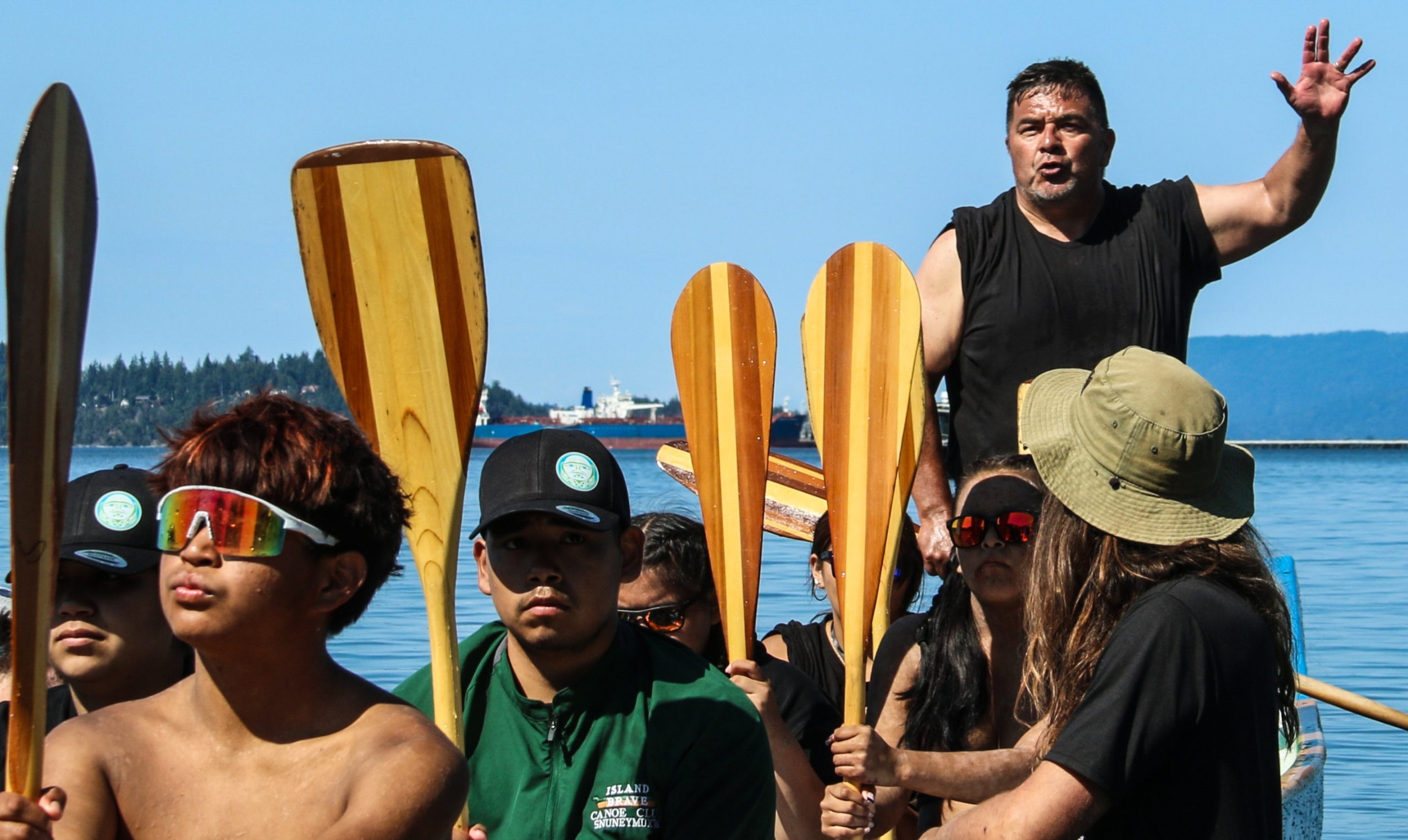
More than 100 canoes from Indigenous nations across Alaska, Washington, Oregon, and British Columbia landed on the shores of the Nisqually Tribe's homelands in southern Puget Sound on July 31, completing the 2026 Intertribal Canoe Journey. The weeklong cultural celebration that followed marked the 32nd annual gathering since the event began in 1993, and for pullers like Emma Kortuem of the Samish Nation, it was a profound homecoming to ancestral waters.
Kortuem, who grew up in Southern California separated from her Samish heritage by distance, paddled with the Samish Nation canoe Eshas through the calm waters of Fidalgo Bay on July 25, part of the journey segment that passed through the shores of the Swinomish Indian Tribal Community. Each stroke was made in time to travel songs led by the skipper, a practice that connects modern paddlers to a mode of travel and ceremony that sustained Coast Salish peoples for thousands of years.
"I think the part that connects me the most is spending time with relatives and knowing that the strength in our relationships is what our ancestors wanted for us," Kortuem said. "They wanted us to feel strong in our identity and in our relationships with our family members and to continue these sorts of practices."
What the Canoe Journey Is and How It Began
The Intertribal Canoe Journey grew out of the 1989 Paddle to Seattle, organized as part of Washington state's centennial celebration by Quinault Nation culture bearer Emmett Oliver. A retired Coast Guard officer and member of the state's centennial commission, Oliver recognized that the centennial risked overlooking the First Peoples of the state entirely. He organized the paddle to ensure their presence and their history were woven into the celebration.
The event unleashed decades of suppressed cultural practice. Canoe carving, gifting ceremonies, regalia making, and the revitalization of Indigenous languages all received new momentum from the gathering's energy. The first annual Canoe Journey followed in 1993, and the event has continued every year since, paused only in 2020 and 2021 by the COVID-19 pandemic.
Each year, a different Indigenous nation serves as host. The 2025 journey was hosted by the Lower Elwha Klallam Tribe on the Olympic Peninsula. The 2026 journey concluded at Nisqually. A different nation will host in 2027, with canoe families already beginning to plan their routes and preparations.
The journey involves far more than the final landing. Canoe families from across the region depart their homelands in early July and travel by water, stopping at Indigenous territories along the route. When each canoe arrives at a stop, the skipper stands and asks permission in his or her language to come ashore. The host nation provides meals and lodging, and the evenings fill with traditional foods, songs, dances, and gifting ceremonies. Participants wear traditional clothing woven of cedar and adorned with elaborate beadwork.
The Samish Nation and the Waters of Whatcom County
The Samish Nation, whose ancestral territory includes the San Juan Islands and the shores of Fidalgo Bay near Anacortes, is one of the tribal nations whose connections to the Salish Sea run directly through Whatcom County waters. The Samish canoe's route through Fidalgo Bay during the 2026 journey brought pullers past landscapes their ancestors traveled for millennia.
The Samish Indian Nation is one of several federally recognized tribes in the region with deep connections to the waters and lands of what is now Whatcom and Skagit counties. Other tribal nations with ties to this region, including the Lummi Nation, Nooksack Indian Tribe, and Swinomish Indian Tribal Community, also participate in the annual journey.
The Lummi Nation, whose reservation sits on a peninsula in northwestern Whatcom County west of Ferndale, has been a consistent presence in the Canoe Journey for decades. The journey's emphasis on paddling through ancestral waters aligns directly with the Lummi Nation's own deep relationship with the marine environment, including the tribe's ongoing advocacy for salmon recovery in the Nooksack River watershed.
Cultural Renewal and the Next Generation
Doug Chilton, a noted Tlingit artist who leads the One People Canoe Society from Alaska, told organizers of the transformative effect the journey has had on young people. He recalled watching a girl of about six years old walk to a microphone at a Canoe Journey event in 2000 and introduce her canoe family in her Indigenous language before drumming and singing as her family danced in.
"I looked at my son and I said, 'This is what we need back in Alaska,'" Chilton said. The experience led him to build the One People Canoe Society's participation over the following years.
For Kortuem and others like her who grew up in the diaspora, separated from their tribal communities by circumstance, economics, or family history, the Canoe Journey offers a rare and powerful form of reconnection. "Canoe Journey brings everyone closer together," she said. "It's a time where you can share stories and language and songs, and it's an uninterrupted time together, and that just feels good to me. I hope (the ancestors) feel proud and can rest a little easier knowing that our language and our culture are going to carry on and our family's still together."
More information about the journey's history and future gatherings is available through the Salish Current, a nonprofit regional newsroom that covers Indigenous and environmental issues across the Salish Sea region. For related coverage of Indigenous land and burial rights in the Pacific Northwest, earlier reporting on the Lummi burial site case provides important context on how tribal sovereignty issues play out in the courts.