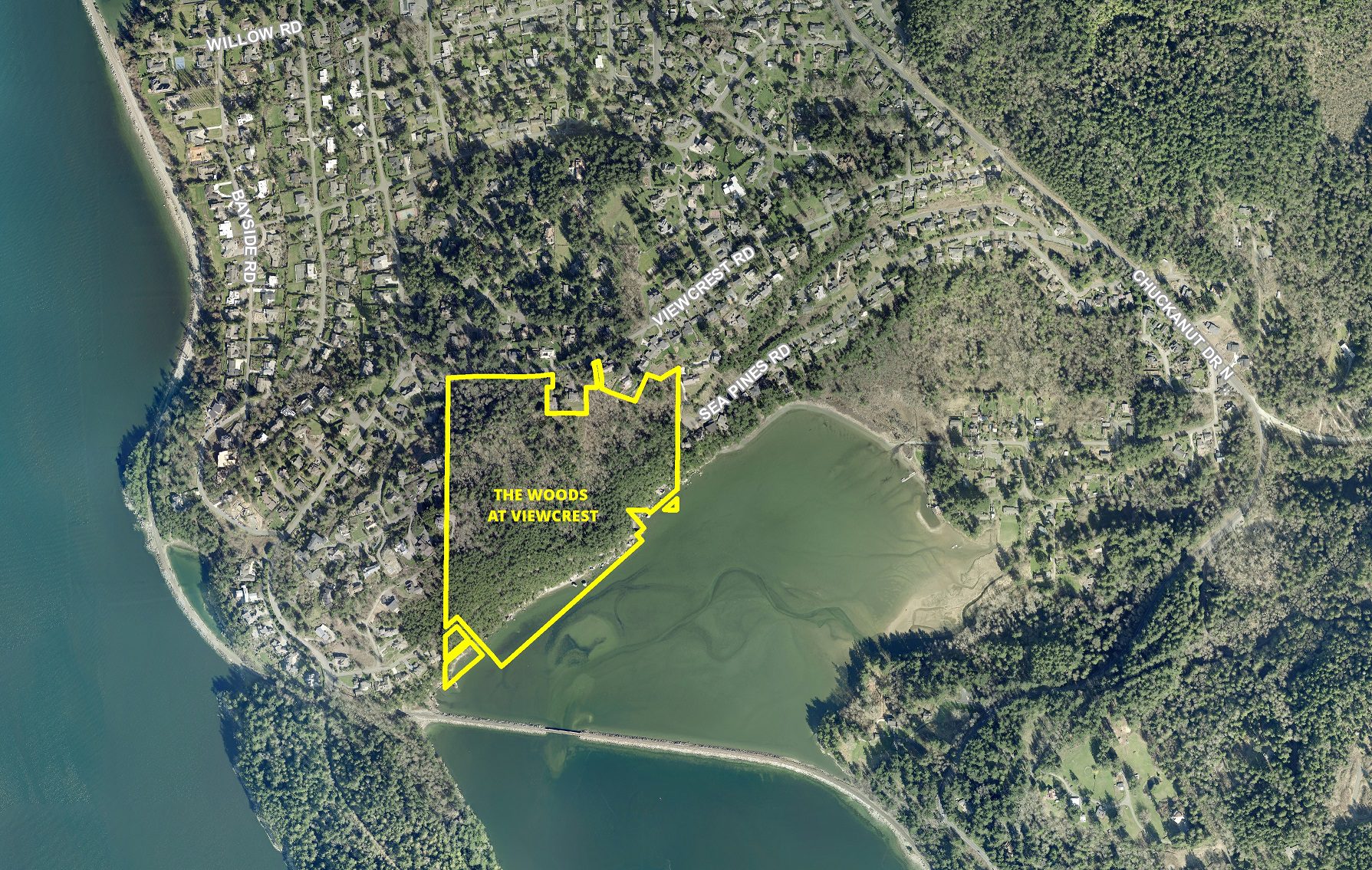
The Bellingham City Council has scheduled a special meeting on Monday, August 10, to hear an appeal challenging the proposed Woods at Viewcrest subdivision in south Bellingham's Edgemoor area. The appeal was filed in June by a local group called Protect Mud Bay Cliffs, which argues the project poses unacceptable risks due to erosion hazards, landslide activity, and ecological fragility on the site.
What Is Being Proposed and Where
The Woods at Viewcrest is a proposed residential subdivision in the Edgemoor neighborhood, a largely wooded, hillside community on the south end of Bellingham overlooking Mud Bay and the Chuckanut Mountains. The project area sits on terrain that slopes toward the water, with the kind of clay-rich soils common in south Bellingham that are known to be susceptible to saturation and slope failure.
The subdivision received a consolidated permit approval after Bellingham's Hearing Examiner determined that a full Environmental Impact Statement was not required. That decision triggered the appeal by Protect Mud Bay Cliffs, which was filed on June 18. The group argues that waiving an EIS for a development in an area with known geological hazards was an error, and that the potential for erosion and landslides was not adequately analyzed before the permit was approved.
The appeal was filed with the Bellingham City Council, which acts as a quasi-judicial body in land use appeal proceedings. Under the city's process, the council will hear the appeal, review the record from the Hearing Examiner's decision, and then issue a final written decision at a later date.
The Mud Bay Cliffs Area and Its Hazards
Mud Bay is a shallow tidal inlet at the south end of Bellingham Bay, bordered by steep slopes that run up toward the Edgemoor and Viewcrest neighborhoods. The cliffs and hillsides in this area have experienced natural erosion and occasional slumping over the decades, a fact that has shaped how earlier development in the neighborhood was approached. Several properties in the area have restrictive covenants or setback requirements tied to slope stability concerns.
South Bellingham's geology includes thick layers of glacial till and lacustrine sediments deposited during the last ice age, and the transition between those layers can create planes of weakness that fail under saturated conditions. Winter rain events, which are common in Western Washington, regularly trigger small slides on steeper slopes in the area. A large residential development that introduces impervious surfaces, alters drainage patterns, or places structures near the slope edge could exacerbate those risks, the appeal argues.
Protect Mud Bay Cliffs also raised concerns about ecological fragility, citing the proximity of the site to Mud Bay's marine environment. Stormwater runoff from a new subdivision, if not carefully managed, can carry sediment, nutrients, and contaminants into the tidal flat, affecting shellfish habitat and water quality in ways that are difficult to reverse.
What Happens at the August 10 Hearing
The special meeting is scheduled for Monday, August 10. It is expected to be a public quasi-judicial proceeding, meaning that while community members may be able to observe, the formal record is typically limited to parties who have already submitted materials as part of the appeal process. The council will review arguments from Protect Mud Bay Cliffs and from the applicant, consider the Hearing Examiner's record, and weigh whether the decision not to require an EIS was legally justified under the State Environmental Policy Act.
A final written decision from the council will be issued at a later date after the hearing concludes. If the council upholds the appeal, the project could be required to undergo a full environmental review before any permits are finalized. If the council denies the appeal, the project would move forward under the existing permit conditions, though further legal challenges could follow.
Residents interested in the outcome can attend the meeting or review the agenda and materials through the City of Bellingham's website. Meeting agendas, supporting documents, and streaming information for council proceedings are typically posted several days in advance. For context on related development and land use debates in Bellingham, earlier coverage of how the city is approaching growth and zoning changes provides useful background on the regulatory landscape in which this appeal is taking place.